
Gojek founder’s prison sentence tests Indonesia investor confidence
Nadiem Makarim’s corruption conviction has split analysts over whether Indonesia’s courts are strengthening or weakening confidence in its economy.
By Daniel Okafor · Business Editor
4 min read
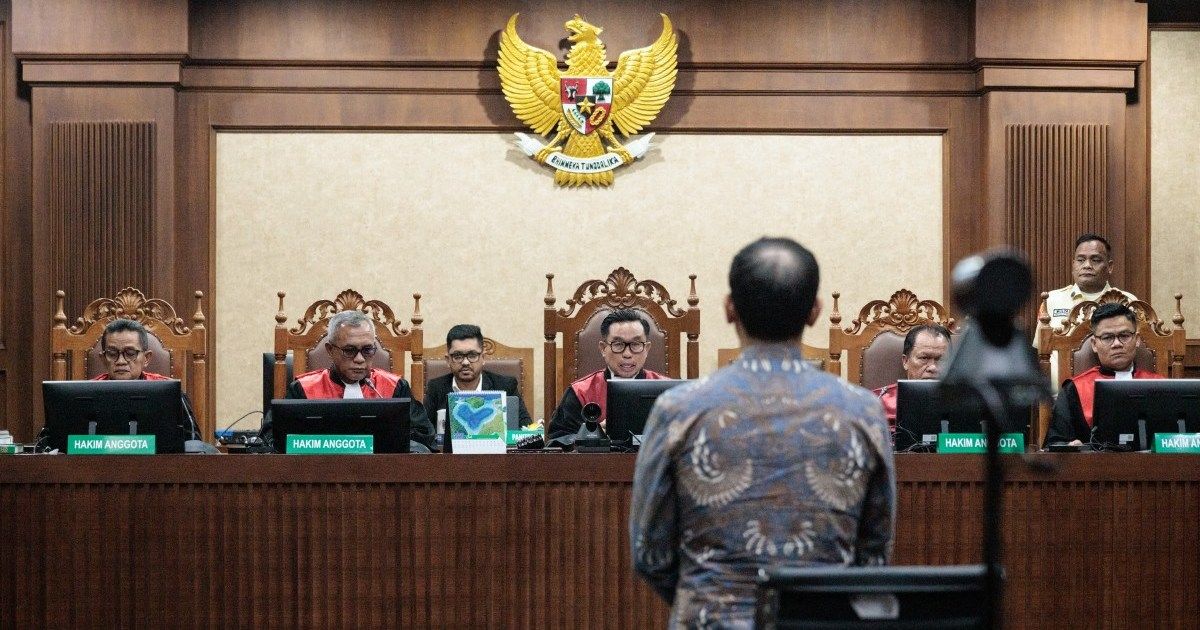
The 10-year prison sentence handed to Gojek cofounder Nadiem Makarim has intensified concerns about legal risk and investor confidence in Indonesia, Southeast Asia’s largest economy. The case matters because Makarim became a symbol of Indonesia’s startup rise before serving as education minister.
An Indonesian corruption court found Makarim guilty on June 30 of abusing his authority in a school laptop procurement programme during the COVID-19 pandemic. Prosecutors said the programme caused $120m in state losses and alleged that Makarim gave favourable treatment to Google, an early investor in Gojek’s then-parent company, Aplikasi Karya Anak Bangsa.
Makarim served as education minister under former President Joko Widodo from 2019 to 2024. The case centred on the purchase of more than 1 million Chromebook laptops for schools in remote and poorer areas.
Prosecutors argued that Makarim should have known the devices would struggle in areas with weak internet access. Judge Sunoto said at sentencing that selecting equipment dependent on internet connections despite uneven infrastructure showed a mismatch with what schools needed.
Google denied giving or offering inducements to Indonesian authorities to win the tender. The company was not charged in the case.
Political and business concerns
Critics of the prosecution have said the evidence against Makarim was weak and have linked the case to what they describe as political retaliation under President Prabowo Subianto. Nicky Fahrizal, a researcher at the Centre for Strategic and International Studies in Jakarta, told Al Jazeera that the verdict would make foreign investors more cautious.
Fahrizal said investors consider legal certainty and judicial quality as essential conditions before committing capital. He also said authorities appeared unable to establish enough evidence to prosecute Google, while the company’s role in Indonesia’s digital economy gave it significant influence.
Trissia Wijaya, a research fellow at the University of Melbourne’s Asia Institute, told Al Jazeera that the prosecution and broader uncertainty under Prabowo could weaken market confidence. She said Makarim represents the optimism that surrounded Indonesia’s startup sector in the mid-2010s, when Gojek drew attention from global investors.
Prabowo, who took office in 2024, has faced criticism over economic policy, including heavy spending on public programmes. Al Jazeera reported that his free lunch programme is expected to cost about $15bn this year, and that the rupiah fell to an all-time low against the US dollar in June amid investor concern over his populist policies.
Prabowo has rejected claims that he is hostile to foreign investment. Speaking last month in Lampung, he said he had met many investors preparing to enter Indonesia and argued that law enforcement was part of creating a favourable environment for business.
Mixed readings of the verdict
Siwage Dharma Negara of the ISEAS-Yusof Ishak Institute in Singapore told Al Jazeera that Indonesia’s investment reputation had been weakening before the Makarim verdict. He said investors were questioning the credibility of government policy and institutions, including the executive, legislature and courts.
Teguh Yudo Wicaksono, an economics lecturer at Universitas Islam Indonesia, told Al Jazeera he did not expect the case to strongly affect foreign investment. He warned, though, that it could discourage Indonesians educated or working abroad from returning home.
Makarim studied at Brown University and Harvard Business School before returning to Indonesia in 2006. He cofounded Gojek in 2010, and the company later grew from ride-hailing into a super-app offering food delivery and digital payments. In 2019, Gojek became Indonesia’s first technology company valued at more than $10bn.
Other observers read the case differently. I Gusti Ngurah Bayu Pradana, a business law expert at Malekat Hukum International Law Firm in Bali, told Al Jazeera that enforcing corruption law can signal stronger governance rather than higher risk.
The court acquitted Makarim of a charge that he directly sought to enrich himself, and the 10-year sentence was below the 18 years requested by prosecutors. Judge Andi Saputra also issued a dissenting opinion, saying he saw no evidence of malicious intent and little causal link between a conflict of interest and corporate crime.
Pradana said the dissent showed judicial independence and careful fact-finding. He told Al Jazeera that investors should focus on clear contracts, transparent business processes and compliance with Indonesian law.
This story draws on original reporting from Al Jazeera.