
Sudan court sentences RSF leader Hemedti to death over Darfur crimes
A Port Sudan court convicted Mohamed Hamdan Dagalo and 15 other RSF figures of war crimes, crimes against humanity and genocide in West Darfur.
By Daniel Okafor · Business Editor
4 min read
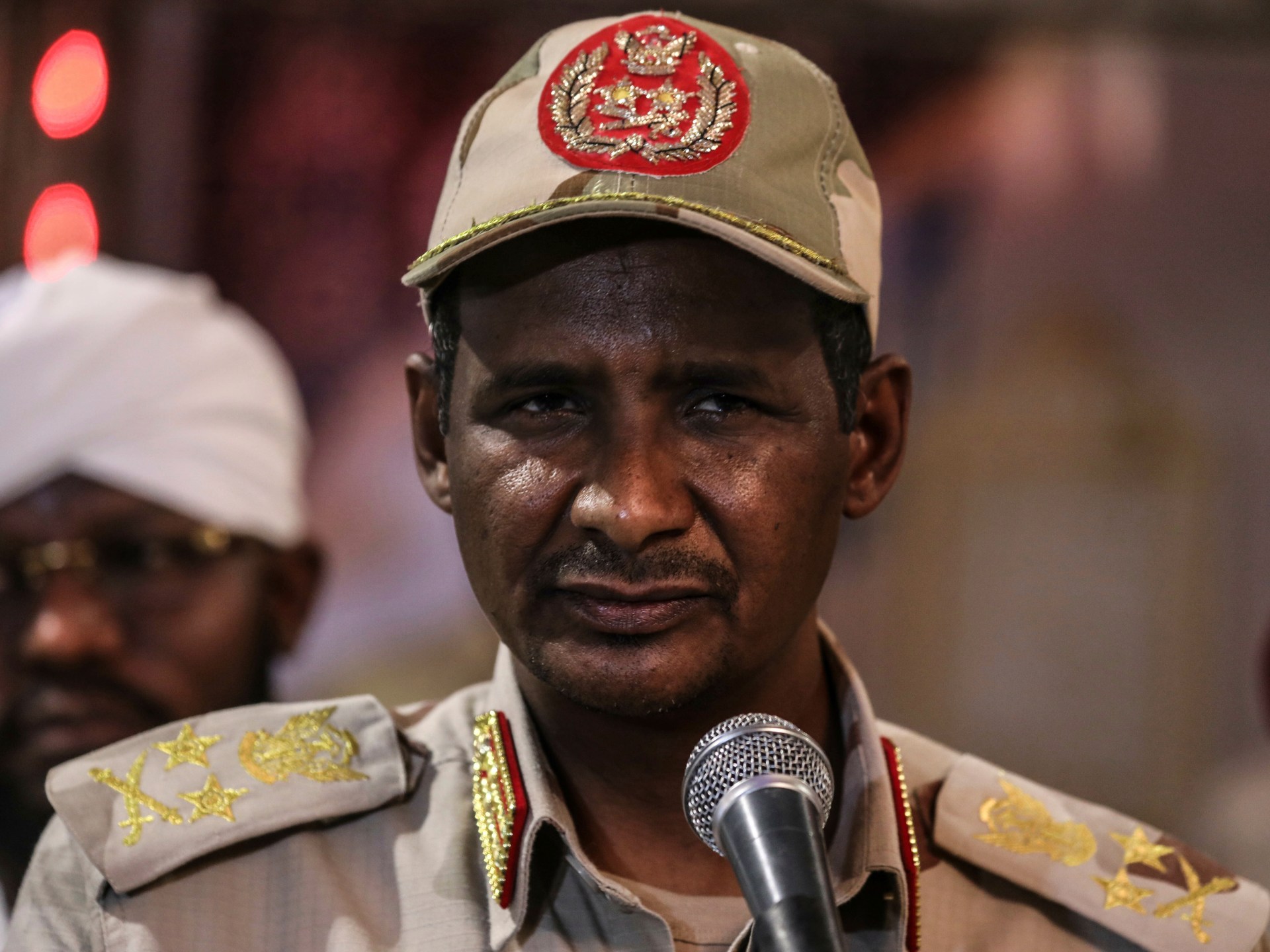
A Sudanese court has sentenced Rapid Support Forces leader Mohamed Hamdan Dagalo, known as Hemedti, to death after convicting him over atrocities in West Darfur. The ruling is the first conviction of the RSF’s top leadership since Sudan’s war began in 2023, though its immediate effect is unclear because the defendants remain outside the army-led authorities’ reach.
The court, sitting in Port Sudan, convicted Hemedti of war crimes, crimes against humanity and genocide, according to Al Jazeera. Fifteen other senior RSF figures received death sentences on the same charges.
Hemedti was tried in absentia, and his location is not publicly known. Al Jazeera reported that the Sudan Founding Alliance, a political coalition that includes the RSF, rejected the ruling. The RSF has not directly commented on the verdict, but it has repeatedly denied allegations that it committed war crimes.
What the court found
The case centered on violence in el-Geneina, the capital of West Darfur, including the June 2023 killing of West Darfur Governor Khamis Abakar. The court found Hemedti and the other defendants guilty of directing attacks on civilians, widespread looting and destruction, and assaults on schools, places of worship and residential areas.
Those sentenced included Hemedti’s brother and deputy, Abdelrahim Hamdan Dagalo; another brother, al-Qoni Hamdan Dagalo; and the RSF’s West Darfur commander, Abdul Rahman Juma Barkallah. Judge Mohamed al-Amin also ordered the confiscation of RSF assets and told authorities to seek Interpol red notices for the arrests and extraditions of those convicted.
The judgment comes during a war that has displaced millions of people. The RSF controls large parts of western Sudan, limiting the ability of the Port Sudan-based authorities to enforce the sentences.
How the war reached this point
Sudan’s civil war began on April 15, 2023, after a power struggle between army chief Gen. Abdel Fattah al-Burhan and Hemedti. Their forces had previously operated alongside each other, but tensions grew over plans to fold the RSF into the regular army during Sudan’s attempted transition back to civilian rule.
Fighting began in Khartoum and spread across the country. The RSF took much of the capital while the army held key military sites and used its air power. In Darfur, the RSF and allied militias were accused of ethnically targeted killings, sexual violence, looting and mass displacement of non-Arab communities, especially the Massalit in and around el-Geneina.
The army later regained ground, including Wad Madani and much of Khartoum. In March 2025, it recaptured the presidential palace and pushed the RSF out of most of the capital, according to Al Jazeera.
The fighting then shifted heavily west. The RSF consolidated control across much of Darfur and captured el-Fasher, the capital of North Darfur and the army’s last major stronghold in the region, in October 2025. Combat also intensified in Kordofan, a region linking Darfur with central Sudan.
Hemedti’s rise
Hemedti was born around 1974 into the Mahariya branch of the Rizeigat community in Darfur. He rose through the Janjaweed, the mainly Arab militias used by former President Omar al-Bashir’s government during the Darfur war in the early 2000s.
In 2013, al-Bashir’s government folded many Janjaweed fighters into the newly created RSF and put Hemedti in command. Hemedti later joined Sudan’s military leadership in removing al-Bashir during the 2019 uprising, then became one of the two dominant figures in the military-led order alongside al-Burhan. The two men jointly removed the civilian-led transitional government in an October 2021 coup before their alliance collapsed.
International scrutiny
The United States sanctioned Hemedti in January 2025 after determining that RSF members and allied militias had committed genocide in Sudan. The International Criminal Court’s deputy prosecutor said this month that investigators had obtained evidence linking atrocities in el-Geneina and el-Fasher to top RSF leaders, though the court has not publicly named potential suspects.
A United Nations fact-finding mission said Wednesday that the RSF committed genocide during its siege and capture of el-Fasher, citing mass killings, gang rapes, abductions and the use of starvation against civilians as part of an intentional and systematic policy. UN investigators have also accused both the RSF and Sudanese army of large-scale attacks on civilians and vital infrastructure.
This story draws on original reporting from Al Jazeera.