
Gaza women safe space offers war support in Deir el-Balah
A women-only programme in central Gaza is giving displaced women counselling, peer support and practical guidance during the war.
By Lucas Ferreira · Science & Environment Writer
3 min read
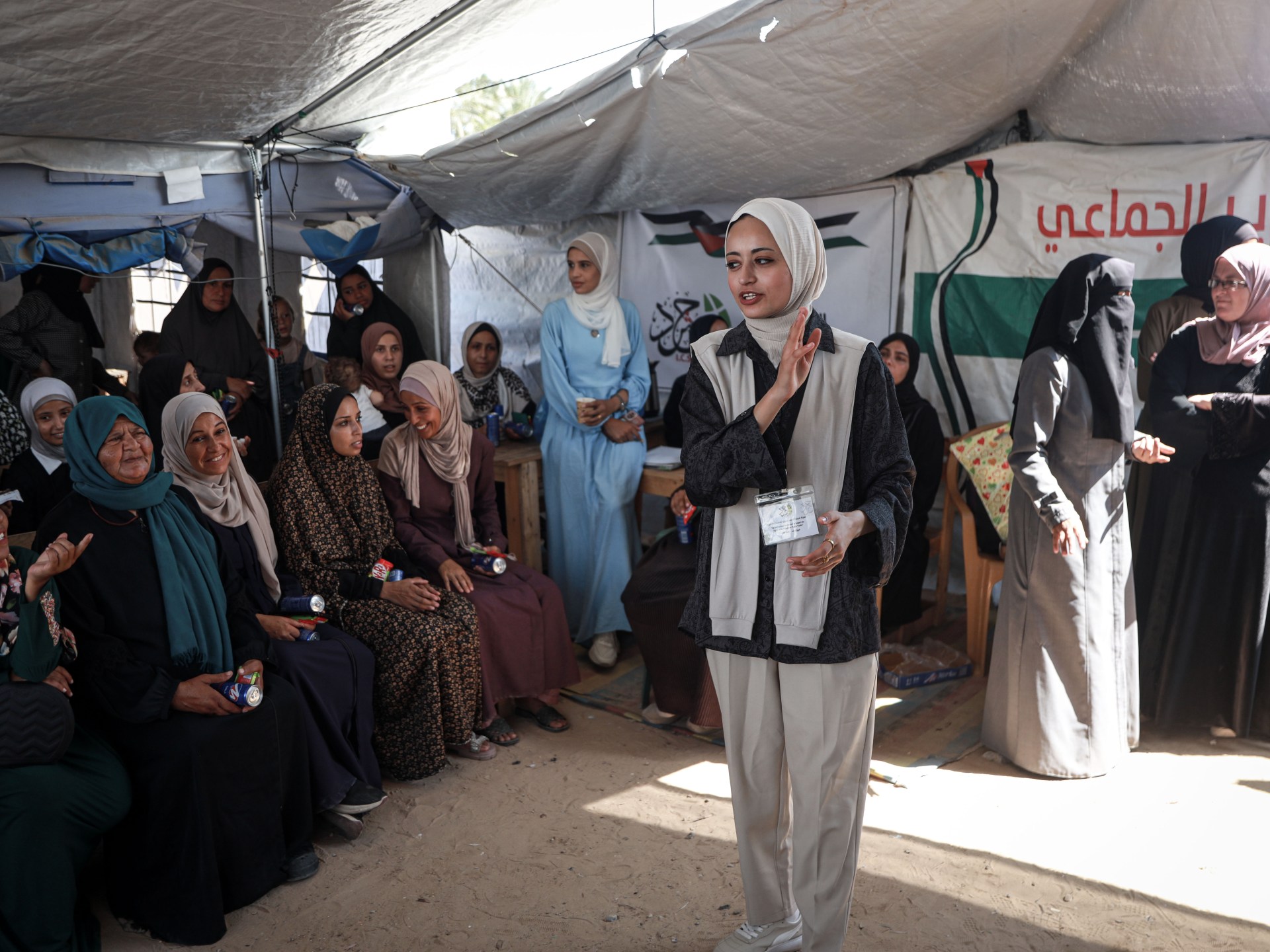
A Gaza women safe space in Deir el-Balah is giving displaced women a rare place to talk, grieve and receive support as the war leaves many families without homes or providers, Al Jazeera reported. The programme, held in a tent at al-Amal camp and at al-Farah School in central Gaza, brings women together for psychological support, group discussion and advice on coping with daily pressures.
One regular participant is Ola Saleh, 39, who leaves the tent where she lives with her five children each morning after tending to their needs, according to Al Jazeera. Her husband, Abdul Jalil Saleh, 43, was killed last August while going to buy food and household goods for the family, she told the outlet.
Saleh said she does not know whether her husband was killed by a sniper or a quadcopter. Since then, she has been raising children aged five to 17 while displaced in Deir el-Balah, carrying both grief and the work of keeping the family alive.
What is the Gaza women safe space?
The safe space is a women-only programme offering counselling, peer conversation and practical guidance for women affected by war, displacement and family strain. Al Jazeera reported that the initiative is run as part of a wider programme by Collective Development Projects, with sessions designed to let women speak openly and receive support from psychologists and other participants.
Alaa Daoud, the field coordinator for the safe space, told Al Jazeera the effort was created to give women a protected setting where they can express themselves and get help with emotional and practical problems. She said women arrive with different experiences, needs and hopes for change.
UN Women estimates that 16,000 women in Gaza have lost their husbands since the war began in October 2023, Al Jazeera reported. The UN agency says about one in seven families in Gaza is now led by a woman.
For many women, grief has been pushed aside by the demands of survival, according to Al Jazeera. Families in displacement camps are living in tents, often without electricity or ventilation, while trying to find food, water and other basics.
The programme in central Gaza began last week and is expected to expand to more displacement sites across the Strip, Al Jazeera reported. Similar sessions are also taking place in northern Gaza.
Daoud said attendance rose quickly, from about 60 women on the first day to 65 on the second, and later to roughly 70 to 75 participants as word spread. The sessions cover family pressure, financial hardship, mental health and the strain of caring for children while displaced.
Saleh told Al Jazeera the meetings do not remove her loss, but they help her endure it. She said listening to other women, joining discussions and hearing specialists discuss trauma and stress give her a measure of relief.
Another participant, 63-year-old Suad al-Gharabali, comes to the sessions after losing two sons, aged 24 and 35, in separate air attacks in Shujaiya, according to Al Jazeera. Her home in Gaza City’s Shujaiya neighbourhood was destroyed, and she now shares a tent in Deir el-Balah with her son, his wife and their children.
Al-Gharabali often uses the meetings to advise younger mothers, drawing on her experience raising eight children. She told Al Jazeera the gatherings help women exchange lessons, reduce isolation and face the problems their families are confronting under war and displacement.
This story draws on original reporting from Al Jazeera.