
France wildfire evacuations expand as Spain eases some orders
French officials ordered 4,000 more people from Atlantic coast sites as fires across France and Spain displaced about 330,000.
By Lucas Ferreira · Science & Environment Writer
3 min read
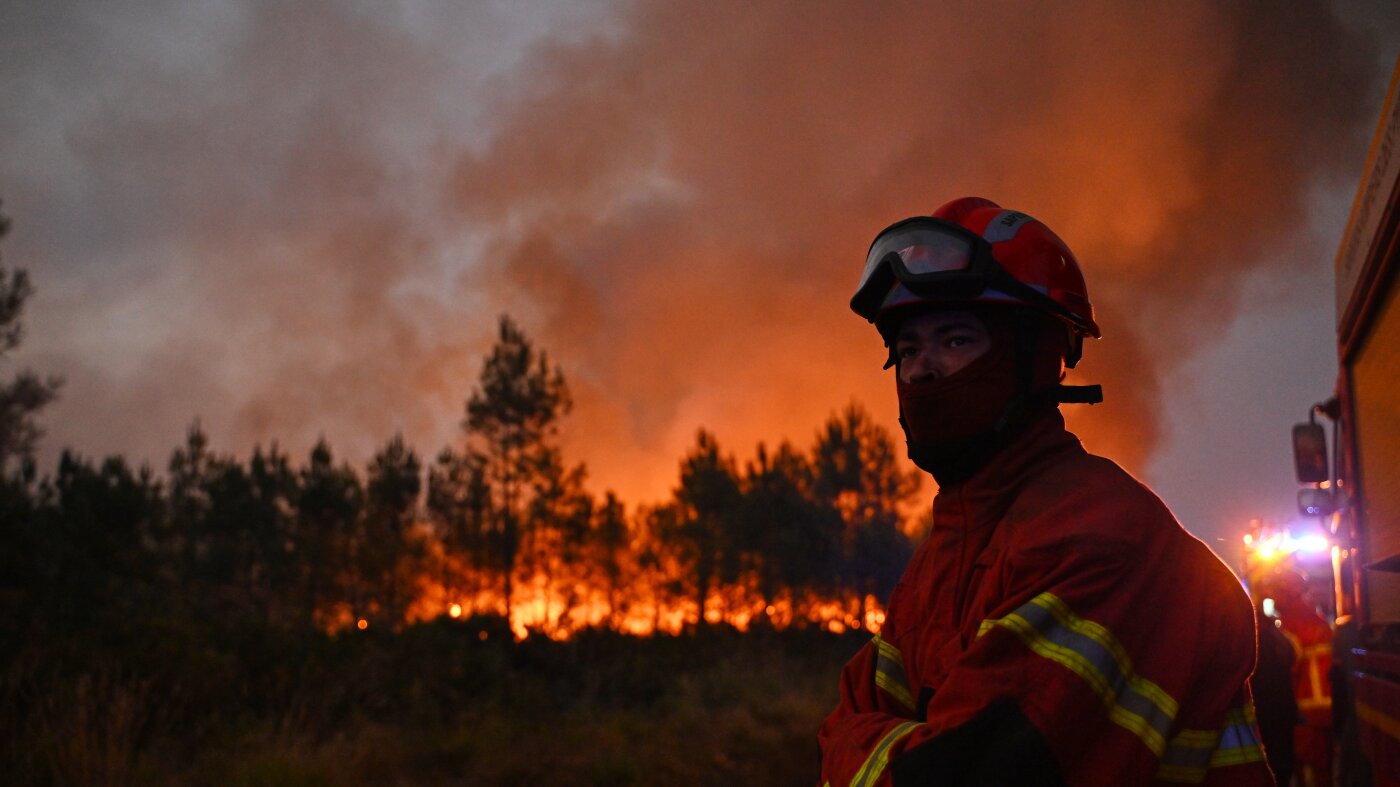
French authorities ordered another 4,000 people to leave Atlantic coast tourist areas Tuesday as France wildfire evacuations expanded and a return of heat threatened firefighting gains west of Bordeaux, The Associated Press reported. Across France and Spain, about 330,000 people have been forced from homes and vacation areas by major wildfires, according to the AP.
Local authorities said new flames broke out near Grand Crohot, a popular beach on the Lège-Cap-Ferret peninsula. The AP reported that 23 aircraft, up from 18, were dropping water and retardant while crews tried to prevent the renewed fire from spreading.
Gironde prefect Sophie Brocas said the situation remained difficult, even as authorities allowed about 60,000 people evacuated from Le Haillan and parts of Mérignac and Eysines near Bordeaux to return. Brocas said no fires had started in those areas, but residents were told to keep phones on and emergency bags ready.
How many people have been evacuated by the France wildfires?
The Gironde blaze has forced 220,000 people to evacuate and has burned an area four times the size of Paris, the AP reported. Interior Minister Laurent Nuñez has said it is “very likely” the largest civilian evacuation operation in France outside wartime.
Gironde regional authorities said the latest precautionary order covered campsites, holiday villages, tourist residences and leisure parks near Lacanau. Eric Brocardi, spokesperson for France’s national firefighters federation, told BFMTV that firefighters would keep attacking the blaze despite higher temperatures in the forecast.
France’s national weather service placed Gironde under a yellow heat warning starting Tuesday midday, with inland temperatures expected to reach 33 to 35 C, or 91 to 95 F, according to the AP. Officials warned that hot spots, lower humidity and rising temperatures could trigger new fire activity along the perimeter.
In Le Porge, west of Bordeaux, the municipal government said about 150 homes had been destroyed. The prefecture said at least 110 firefighters had been injured, while authorities said crews had cut 103 kilometers, or 64 miles, of firebreaks.
What is a pyrocumulonimbus cloud?
A pyrocumulonimbus cloud is a thunderstorm generated by a severe fire, capable of producing lightning, powerful winds and new ignitions. The AP reported that the Gironde fire produced France’s first recorded example of the phenomenon.
In Landes, regional authorities allowed about 15,000 evacuees to return after a separate wildfire stopped advancing, the AP reported. President Emmanuel Macron said Monday that the fire there was “fixed,” but authorities warned it was not extinguished and that surveillance and cooling operations could continue for days or weeks.
Spain also began easing some emergency measures Tuesday after overnight progress by firefighters, according to the AP. Francisco Martín, the central government’s representative in the Madrid region, said orders would be lifted in 10 towns, allowing about 20,000 evacuees to go home and ending stay-at-home orders for another 14,000 people.
Spanish authorities said additional residents were being allowed back in parts of Ávila, Toledo and Castellón, though several major fires were still burning. Spain’s national weather service said the country was preparing for its fourth heat wave of the summer, with temperatures expected to top 40 C, or 104 F, in some places.
The Spanish government has declared a national emergency over the fires, the AP reported. At least 13 people have died in wildfires in Spain this year, and Ecology Minister Sara Aagesen said fires have burned 1,530 square kilometers, or 590 square miles, across the country.
The European Union’s Copernicus climate service says Europe is warming at more than twice the global average. Copernicus said western Europe had its hottest June on record, with extreme heat and dry conditions helping fires spread and intensify in France and Spain.
This story draws on original reporting from NPR.