
France’s top court upheld conviction tied to Palestine resistance comment
François Burgat says the Makni case shows French courts are treating political speech on Palestine as a criminal matter.
By Daniel Okafor · Business Editor
3 min read
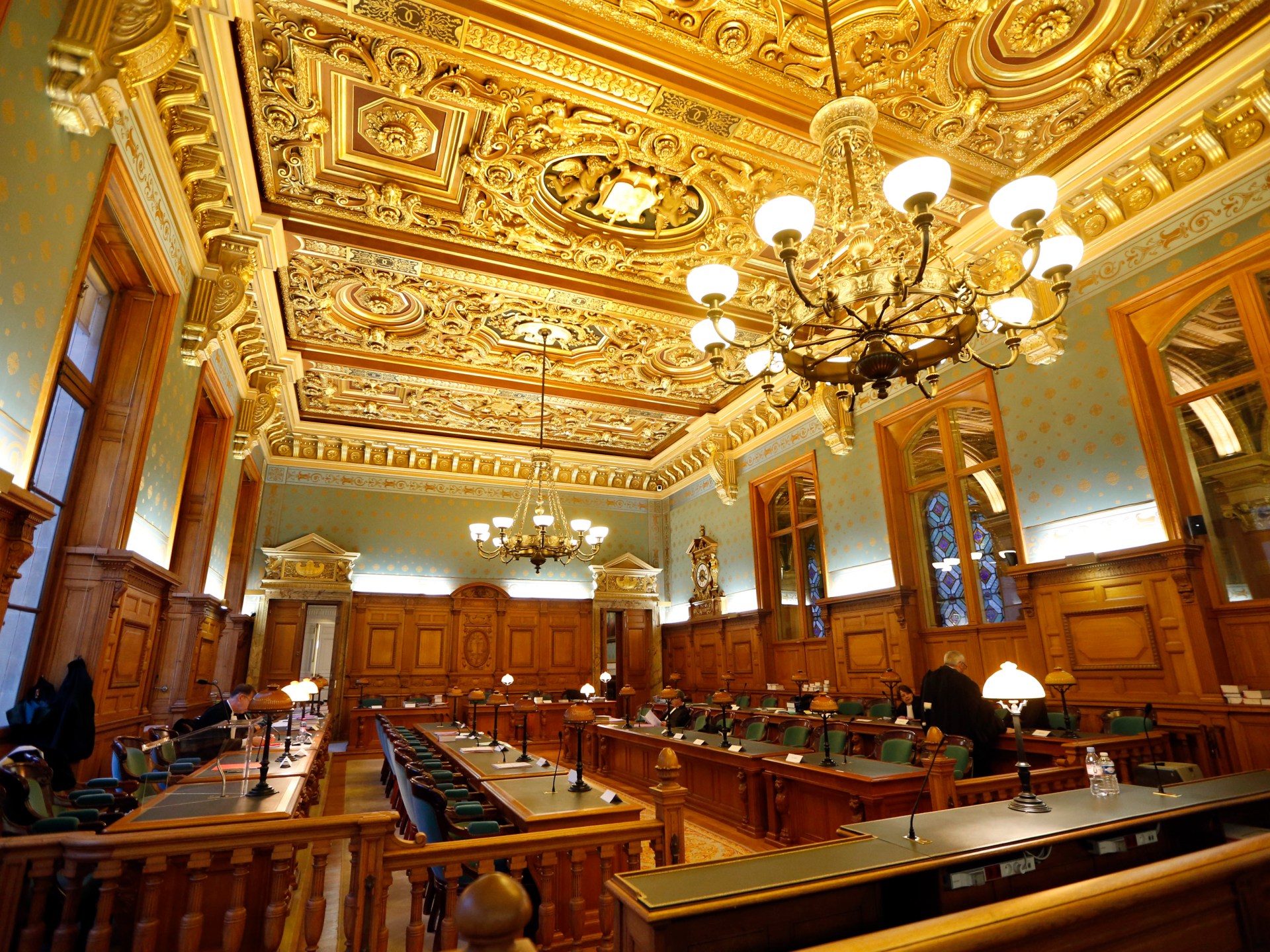
France’s highest court upheld a conviction over a statement linking Palestinian actions to resistance, a case François Burgat says reflects a broader judicial turn against pro-Palestinian political speech. Writing for Al Jazeera, Burgat said the ruling matters because it tests whether people in France can discuss occupation and resistance without facing terrorism-related charges.
The case concerns Mohamed Makni, described by Burgat as a businessman, father and deputy mayor of Echirolles. Burgat said France’s Court of Cassation upheld Makni’s conviction in March after lower courts had ruled against him.
According to Burgat, the statement at issue was a single sentence: “They are quick to qualify as terrorism what in our eyes is a clear act of resistance.” Burgat said Makni was citing Ahmed Ounaies, a former Tunisian foreign minister and former ambassador to Russia and India under President Zine El Abidine Ben Ali.
Burgat said Makni received a four-month suspended prison sentence and a four-month ban on holding public office. He wrote that the Court of Appeal also upheld the ruling before the Court of Cassation confirmed it.
A dispute over terrorism and resistance
Burgat argued that the conviction did not involve incitement to violence, but punished the act of placing Palestinian actions in the frame of resistance to occupation. He said the case is part of a broader political and legal fight in France over how to describe Palestinian resistance after the Hamas-led attacks in Israel on October 7, 2023.
According to Burgat, the French government has increasingly used the offence of glorifying terrorism to police public discussion of Palestine. He wrote that the charge was originally used against Islamic State propaganda and recruitment, but has since been applied to statements that connect October 7 to a longer history of occupation, displacement and denial of Palestinian national rights.
Burgat said the central dispute is whether October 7 should be treated as an isolated event or as part of a wider historical process. He argued that many in the Arab world, Africa, Asia and Latin America view Palestinian resistance through the latter frame, while official France has moved in another direction.
Burgat also cited his own legal case. He said that on May 27, the Court of Appeal of Aix-en-Provence ordered him to pay €17,000, including compensation to associations he described as Zionist groups that were civil parties to the case.
Broader criticism of French courts
Burgat said the Makni ruling goes beyond one local official because it affects French citizens of foreign origin, Arab political figures and what he called elites in the Global South who share Ounaies’s interpretation. He argued that the ruling narrows the space for political debate on Palestine.
He also referred to former French President Charles de Gaulle, saying de Gaulle had acknowledged in 1967 a link between resistance to unlawful occupation and the tendency of occupying powers to call that resistance terrorism.
Burgat concluded that the ruling raises a direct question about whether people in France can say occupation drives resistance without being accused of glorifying terrorism. He accused French courts of acting under government influence and suggested the government itself was subject to foreign influence.
This story draws on original reporting from Al Jazeera.