
Colombia votes in runoff dominated by armed group policy
The election pits Abelardo De La Espriella’s military-first pledge against Iván Cepeda’s support for peace talks with rebel factions.
By Sofia Marchetti · World Affairs Correspondent
3 min read
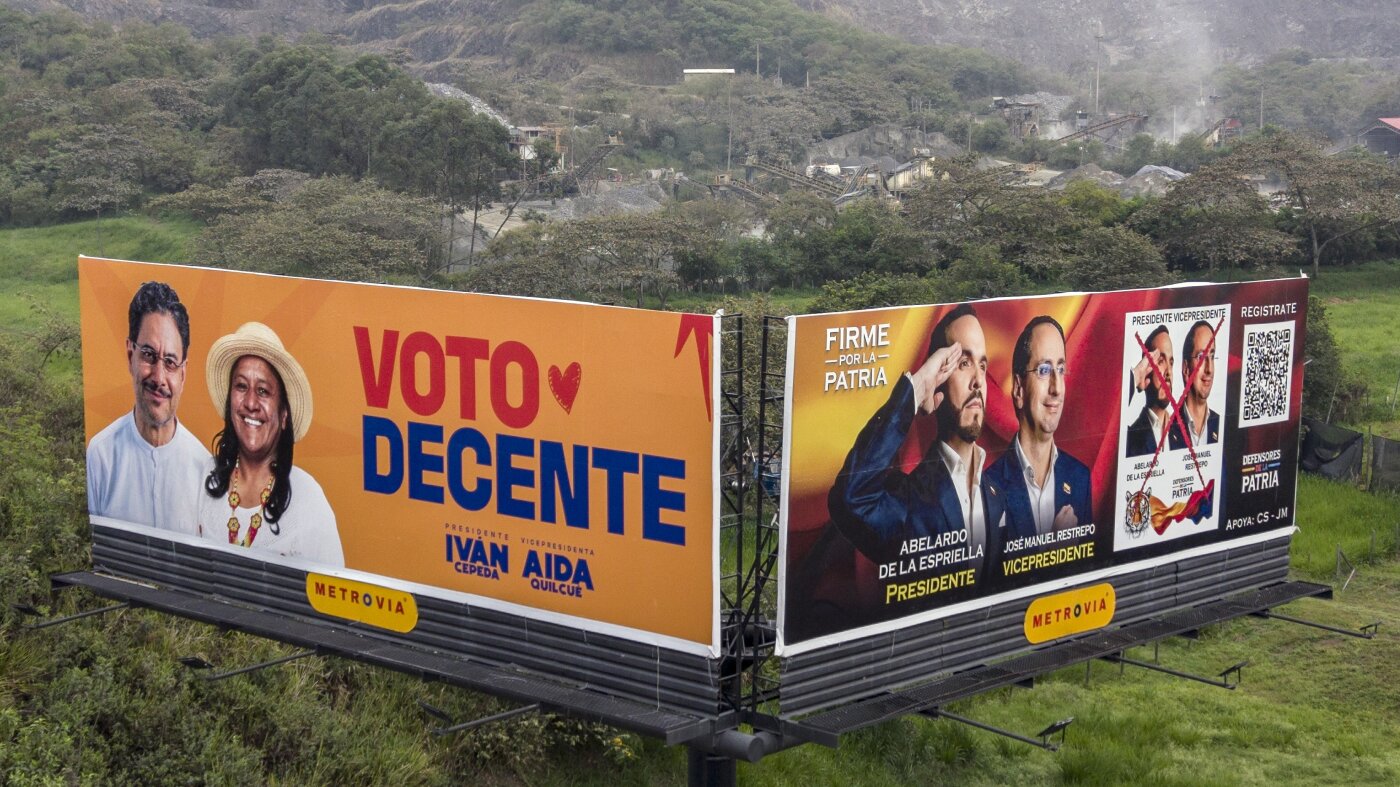
Colombians voted Sunday in a presidential runoff that could sharply change how the country deals with armed groups tied to drug trafficking and illegal mining. NPR reported that polls favored Abelardo De La Espriella, a far-right criminal defense lawyer and political newcomer, over Iván Cepeda, a left-wing senator aligned with outgoing President Gustavo Petro.
The vote comes after a rare disarmament ceremony in southern Colombia, where NPR’s John Otis reported that about 100 members of the Border Commandos handed over rifles, pistols and ammunition in the jungle near La Hormiga. The event was meant to show progress under Petro’s “Total Peace” policy, but NPR reported it could be the last such ceremony for some time if De La Espriella wins.
De La Espriella, who has been endorsed by President Trump, has said he would order a military campaign against guerrilla groups after taking office, according to NPR. In a Colombian television interview cited by NPR, he said he would order bombing of camps holding “narco-terrorists” and would target aircraft and boats used to move cocaine.
Cepeda has argued for talks as a way to reduce violence, NPR reported. At a recent rally, he said Colombia had chosen “life, democracy, hope and peace” even during its hardest periods.
Petro’s government has spent four years holding talks with nearly a dozen armed factions, according to NPR, but most efforts have produced limited results. The Border Commandos unit that disarmed Thursday was the first group of fighters to turn in weapons under Petro, NPR reported.
The scale of that step was modest. NPR reported that the Border Commandos have about 1,000 fighters, meaning the ceremony involved roughly 10% of the group. Antonio Paguey, a social worker from the village of La Ruidoso, told NPR that partial disarmament made little sense if other members remained armed.
Many of Colombia’s current rebel organizations grew out of the Revolutionary Armed Forces of Colombia, or FARC, NPR reported. The FARC signed a 2016 peace agreement, after decades of war against the state, and nearly all of its 15,000 combatants demobilized. NPR reported that some fighters stayed in the jungle and helped build newer groups that focus heavily on cocaine trafficking, extortion, illegal gold mining and illegal logging.
Security analysts cited by NPR say armed groups expanded during Petro’s presidency, reaching about 27,000 fighters. Kyle Johnson of the Bogotá-based Conflict Responses Foundation told NPR that Colombia’s security situation is worse than it was four years ago and said the Border Commandos ceremony removed only a small share of fighters from the conflict.
NPR reported that critics accused Petro’s government of using the ceremony to help Cepeda days before the runoff. The event included a stage, speeches, Colombia’s national anthem and the Border Commandos’ hymn, according to NPR.
The ceremony also underscored the group’s criminal activity, NPR reported. La Hormiga sits near coca fields, and NPR identified the Border Commandos’ leader as Geovanni Andrés Ríos, who was arrested last year on drug-smuggling charges. NPR reported that Ríos addressed the fighters by video from a Bogotá prison and ordered them to give up their weapons.
After surrendering their arms, the ex-fighters changed from camouflage into jeans and T-shirts with a message supporting the peace process, NPR reported. They were moved into housing where officials said they would receive job training and other support.
Armando Novoa, the government envoy handling talks with the Border Commandos, told NPR the partial demobilization could encourage more fighters to quit. He also warned that a new government focused on military action could leave former rebels without a civilian path.
This story draws on original reporting from NPR.