
FIFA’s World Cup hydration breaks draw heat and tactical scrutiny
FIFA is requiring three-minute breaks in every World Cup half, citing heat risks, while critics question their timing, length and effect on play.
By Lucas Ferreira · Science & Environment Writer
3 min read
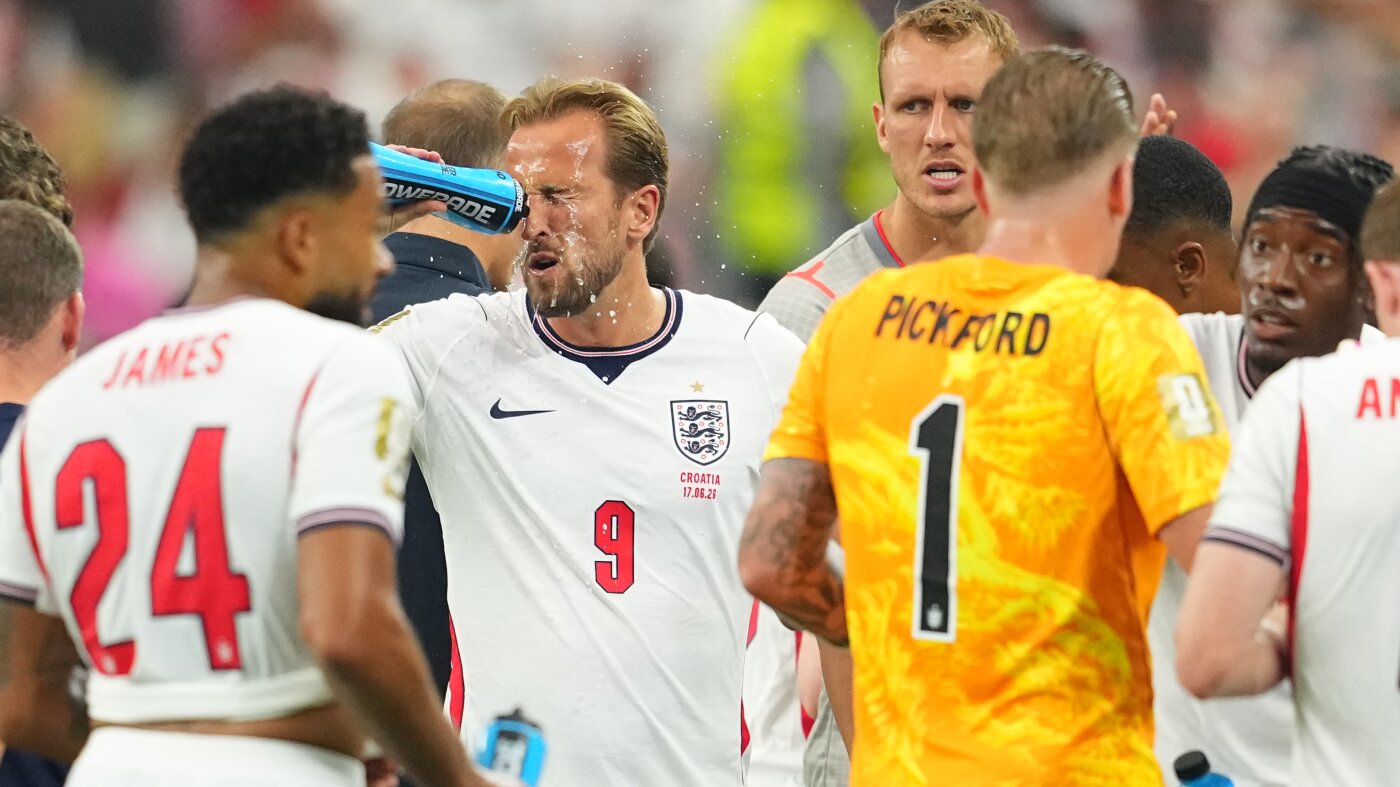
FIFA has made three-minute hydration breaks mandatory midway through each half at the 2026 World Cup, a first for the tournament. The rule is meant to reduce heat-related danger for players and referees as experts warn the U.S., Mexico and Canada event could become the hottest World Cup on record.
The policy applies in every match, regardless of the weather, stadium roof or air-conditioning conditions, according to FIFA. The governing body said the uniform rule is intended to provide equal conditions for all teams and reflects lessons from recent competitions, including last summer’s FIFA Club World Cup in the United States, where temperatures reached the 90s Fahrenheit in many locations.
The change has drawn objections from two directions. Some coaches and critics say the stoppages disrupt the rhythm of matches and can give managers a chance to influence momentum. Some scientists say three minutes may be too brief to cool and rehydrate athletes enough in severe heat.
Joshua L. DeVincenzo, assistant director of applied research services at Columbia University’s National Center for Disaster Preparedness, told The Associated Press that the breaks should be viewed as a way to reduce the chance of a medical emergency.
Why heat is a player-safety issue
Elite athletes can still suffer exertional heat illness when they work hard in hot, humid conditions, according to experts cited by The Associated Press. The condition occurs when the body’s temperature climbs too high and places strain on the heart, nervous system, muscles and central nervous system.
Symptoms can include muscle cramps, severe fatigue, reduced performance, headache, irritability, nausea, dizziness and dehydration. Yuri Hosokawa, an associate professor at Waseda University’s Faculty of Sport Sciences in Japan, told The Associated Press by email that confusion, aggression or loss of consciousness can occur when internal body temperature rises above 105 degrees Fahrenheit, or 40.5 degrees Celsius, and can signal exertional heat stroke requiring immediate care.
Hosokawa was among the scientists who signed a May letter urging FIFA to adopt stronger heat-safety rules, including cooling breaks of at least six minutes. Exertional heat stroke during sports is among the leading causes of death in athletes, according to The Associated Press.
Dehydration can raise the risk. Athletes competing in heat may sweat 1 to 2 liters an hour, and many drink less than they lose, according to The Associated Press. A loss of 2% of body weight through dehydration can hurt performance.
What three minutes can do
Ryan Calsbeek, a biological sciences professor at Dartmouth College, told The Associated Press that the body can perform better when warm, but performance drops sharply beyond a critical threshold. He said trouble begins when the wet bulb globe temperature, a measure that includes heat, humidity, wind and cloud cover, rises above about 95 degrees Fahrenheit, though tolerance varies by person.
Douglas Casa, chief executive of the University of Connecticut’s Korey Stringer Institute and another signer of the letter to FIFA, told The Associated Press that effective cooling during a break can include wet, cold towels on exposed areas such as the neck, head, back and arms. Done well, he said, that approach could lower body temperature by about 0.22 degrees Fahrenheit per minute.
Casa said the length of the stoppage limits how much cooling and fluid replacement can occur. He said some athletes can drink more comfortably during a short pause than others, and argued that five or six minutes would have a larger effect.
Bharat Venkat, director of the Heat Lab at the University of California, Los Angeles, told The Associated Press that recovery time varies by athlete. He said breaks help keep the body from having to cool itself without rest, and added that sports will need to adjust where, when and how they are played as the planet gets hotter.
This story draws on original reporting from NPR.