
Ebola response strains under conflict and mistrust in eastern Congo
Health teams in Ituri province are expanding treatment and safe burials as a Bundibugyo Ebola outbreak spreads without an approved vaccine.
By Daniel Okafor · Business Editor
3 min read
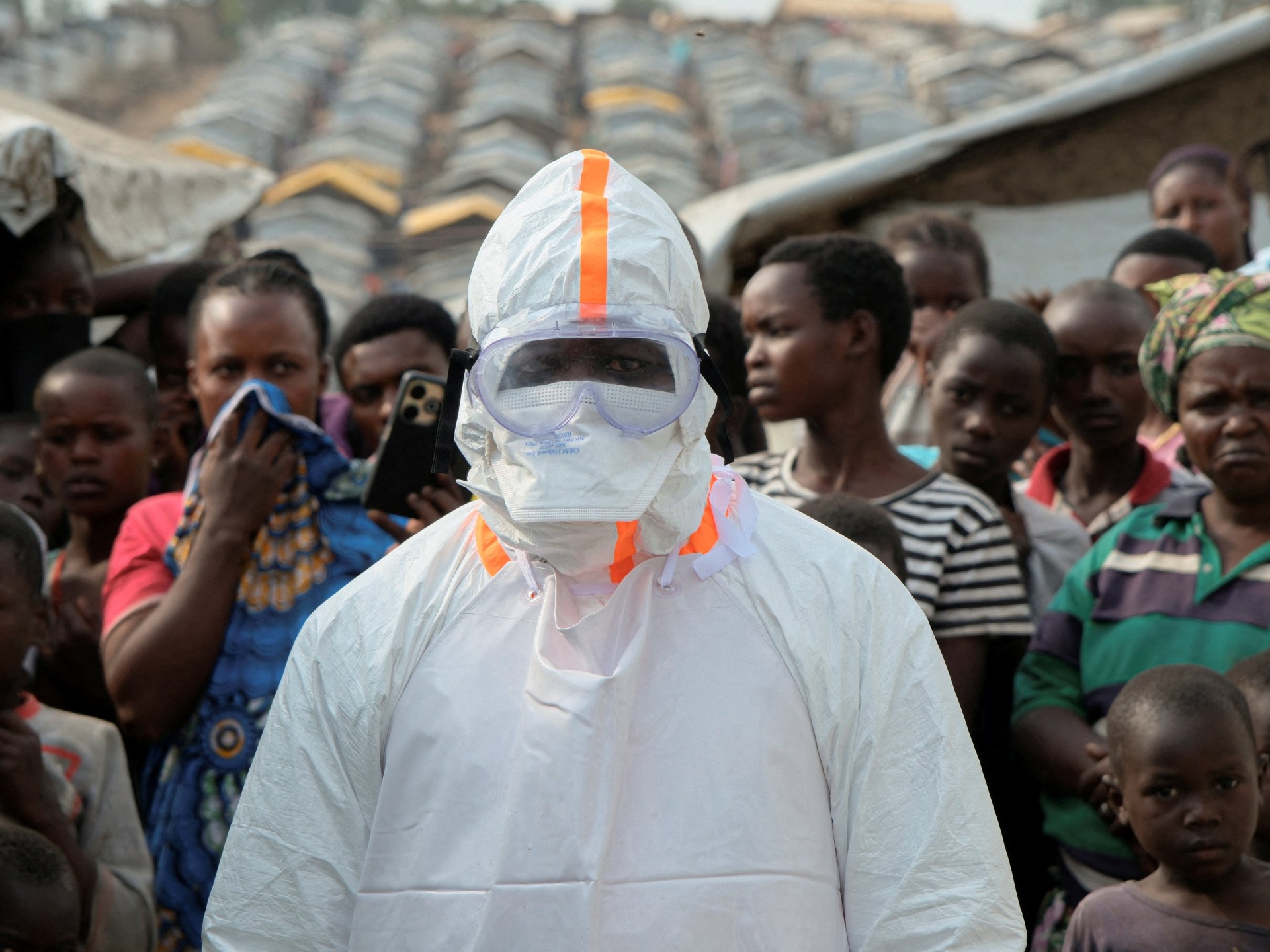
Health workers in eastern Democratic Republic of the Congo are racing to contain an Ebola outbreak that has filled treatment sites, complicated burials and exposed responders to attacks. Al Jazeera reported from Bunia, the capital of Ituri province, where airport screening, public health broadcasts and warning billboards now mark daily life.
The World Health Organization declared the outbreak a Public Health Emergency of International Concern in May, after the virus had already circulated for weeks in Mongbwalu, Rwampara and Bunia and then moved into nearby provinces, according to Al Jazeera. The outbreak involves the Bundibugyo strain, which Al Jazeera reported is considered less deadly than some Ebola strains but has no approved vaccine.
Treatment centres under pressure
At Bunia General Hospital, the Ebola treatment centre had reached its 50-patient capacity, Al Jazeera reported. Construction was under way to add 86 more beds.
John Katabuka, who leads the hospital, told Al Jazeera that the strain can be hard to spot early because symptoms may not show until a patient is gravely ill. He said health teams can no longer rely on the bleeding and fever patterns often associated with Ebola in previous outbreaks.
Al Jazeera also spoke with a man identified only as Tresor, whose wife had tested positive and who was waiting for his own results. He said communities need more education and should take the virus seriously.
The Congolese government is leading the response with Africa CDC, the United Nations and other partners, according to Al Jazeera. Diedonne Mwamba, head of the National Institute of Public Health, told the broadcaster that contact tracing is difficult because many people live in displacement camps or in areas that require negotiations for safe access.
More than 1.3 million people are living in displacement camps after years of conflict, Al Jazeera reported. That movement and insecurity have added pressure to a response that depends on finding contacts quickly.
Burials become a flashpoint
In Rwampara, about an hour from Bunia, a health centre is serving as an Ebola treatment facility run by the Alliance for International Medical Action, or ALIMA, according to Al Jazeera. Gabriel Tshiwisa, who works there, told the broadcaster that at least one person dies of Ebola each day.
Tshiwisa said fear, rumours and disbelief are slowing containment efforts. Some residents do not accept that Ebola is present, while others say outsiders brought the disease to profit from the emergency, according to Al Jazeera.
Several treatment sites and health workers have been attacked, Al Jazeera reported. In mid-May, relatives and friends of a young man believed to have died of Ebola set fire to isolation tents in Rwampara after they were blocked from taking his body for burial.
Safe burials are a central part of the response because bodies of Ebola victims can spread the virus, according to Al Jazeera. Red Cross volunteer Richard Lifungula told the broadcaster he had buried more than two dozen people since the outbreak began and said burial teams sometimes face hostility at cemeteries.
Alex Lock of the International Federation of Red Cross and Red Crescent Societies told Al Jazeera that volunteer safety remains a concern after two injured volunteers had to be evacuated to Kinshasa three weeks earlier.
Yap Boum, Africa CDC’s head of preparedness and response, told Al Jazeera that laboratory capacity, surveillance and treatment centres have improved, but cases and deaths continue to rise. He said officials are considering faster decentralisation, more health worker deployments and expanded treatment capacity.
Al Jazeera reported that survivors are also joining the response, including Gladys Munguromo, who lost three relatives, became infected after a funeral in Mongbwalu and later recovered. Survivors are unlikely to be reinfected, making them useful in patient care and community outreach, according to the report.
This story draws on original reporting from Al Jazeera.