
Dutch public pressure on Israel grows after activist’s acquittal
A court win for Amin Abu Rashid has added to signs of growing Dutch criticism of Israel, while analysts say government policy remains largely unchanged.
By James Whitfield · Staff Writer
4 min read
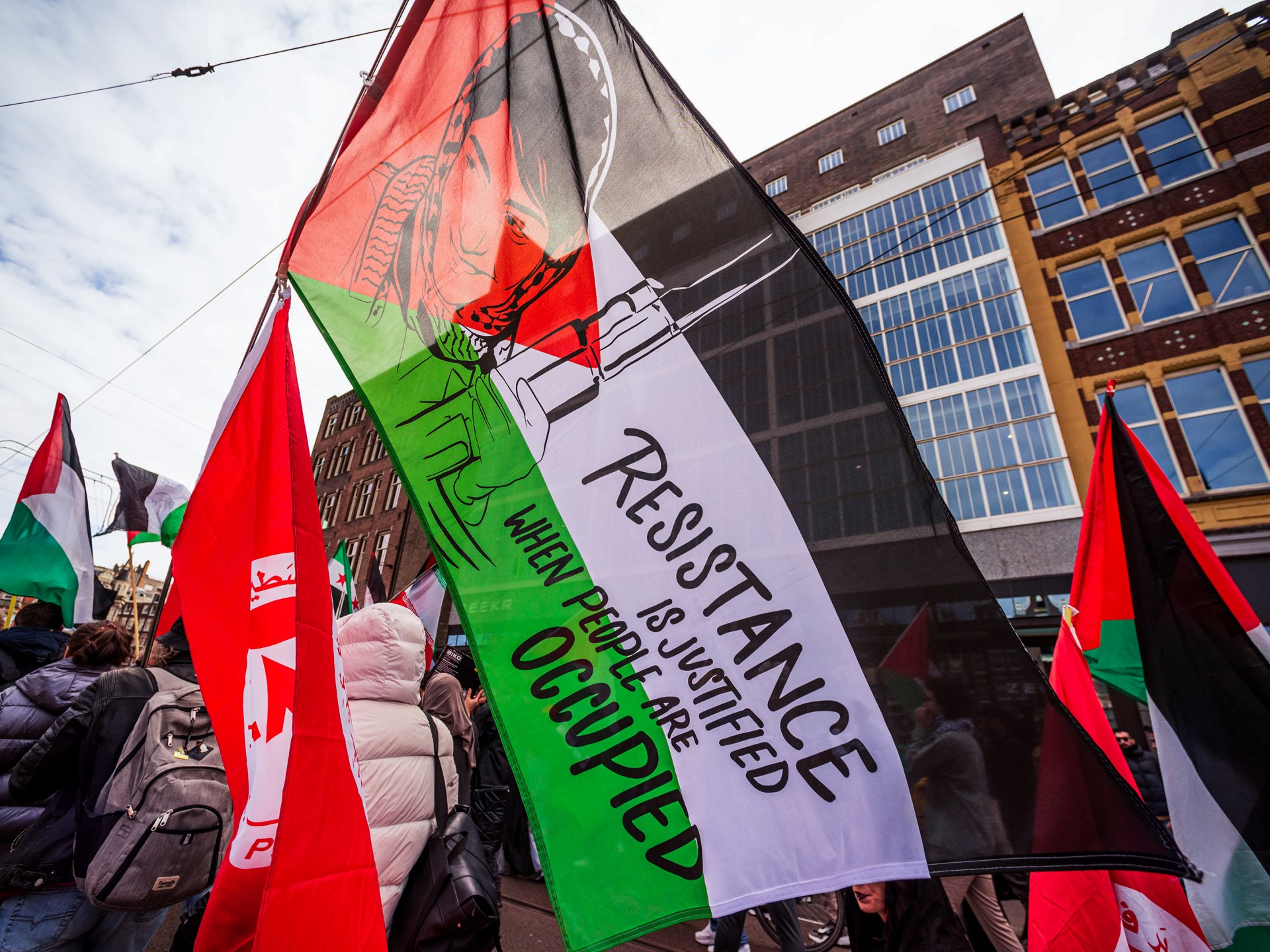
A Dutch court’s acquittal of Palestinian-Dutch humanitarian worker Amin Abu Rashid has become a focal point for pro-Palestinian groups in the Netherlands, Al Jazeera reported. Analysts cited by the broadcaster said the case fits a wider pattern: public sympathy for Palestinians is rising, even as Dutch governments have long maintained close ties with Israel.
Abu Rashid, a 59-year-old refugee turned aid worker, had been accused of transferring funds to Hamas after providing financial support to orphans in Gaza, according to Al Jazeera. He told the broadcaster that he viewed the case as political rather than criminal.
Al Jazeera reported that Abu Rashid spent almost a year in solitary confinement and that his health worsened to the point that a doctor recommended he be released so he could die at home. After his acquittal, Abu Rashid described the outcome to Al Jazeera as a victory for the truth he said he had maintained from the start.
Legal case seen as a test for activism
Haroon Raza, co-founder of the Hind Rajab Foundation, told Al Jazeera the ruling was an unusual win in a country where successive governments have strongly backed Israel. The foundation said after the acquittal that the court had found humanitarian aid activity did not fall under sanctions rules, and argued that prosecutors had no basis for the case.
Evalien Stapper, the Netherlands monitor at the European Legal Support Center, told Al Jazeera that counterterrorism and financial rules have been used repeatedly against Palestinians in the country. She said Palestinians had faced scrutiny for sending money to relatives in Gaza or supporting aid efforts there.
Stapper also accused the Netherlands of prosecuting Palestinians while remaining financially tied to what she described as genocide and illegal occupation. That allegation was presented by Al Jazeera as part of a broader debate over Dutch policy toward Israel.
Government ties remain firm
Al Jazeera reported that the Netherlands has been among Israel’s strongest supporters inside the European Union and that Dutch public opinion was historically broadly favorable toward Israel after 1948. The broadcaster also cited a report saying about two-thirds of EU investments in Israel originate from the Netherlands.
Maurits Berger, a professor of Islam and the West at Leiden University, warned against treating Abu Rashid’s acquittal as proof of a government shift. He told Al Jazeera that Dutch-Israeli relations remain difficult to separate after decades of close ties, though he said criticism of Israeli policy has grown.
Berger said he doubted the Netherlands would abandon its pro-Israel position. At most, he told Al Jazeera, the country may become more critical.
Polls and boycotts point to public shift
Al Jazeera cited an Ipsos I&O survey that found about two-thirds of Dutch residents did not support the government’s handling of Israel and the war in Gaza. The broadcaster also reported that other polls showed support for reviewing the Netherlands’ long-standing backing for Israel.
Public pressure has also appeared outside formal politics. Al Jazeera reported that Extinction Rebellion protesters blocked railway tracks at Utrecht Central Station on May 23, 2026, while demanding a full economic embargo on Israel and an end to arms supplies.
Dutch public broadcaster AVROTROS said it would not take part in or air the 2026 Eurovision Song Contest because of Israel’s war in Gaza and alleged political interference in the competition, according to Al Jazeera. AVROTROS Managing Director Taco Zimmerman said culture connects people, but not at any cost, and cited humanity and press freedom as non-negotiable values.
Sai Englert, a lecturer at Leiden University, told Al Jazeera that the war in Gaza, wider US-Israeli military actions in the region and sustained solidarity campaigns had sharply changed Dutch perceptions. He said debate had moved toward how far boycott, divestment and sanctions actions should go.
Stapper told Al Jazeera that continued public pressure could eventually affect government policy. For now, the broadcaster reported, the Netherlands shows a widening gap between official alliances and a public increasingly questioning them.
This story draws on original reporting from Al Jazeera.