
Damascus expands security after bombings during Macron visit
Syria has tightened security in the capital after two attacks in a week exposed pressure on its post-Assad transitional government.
By Daniel Okafor · Business Editor
3 min read
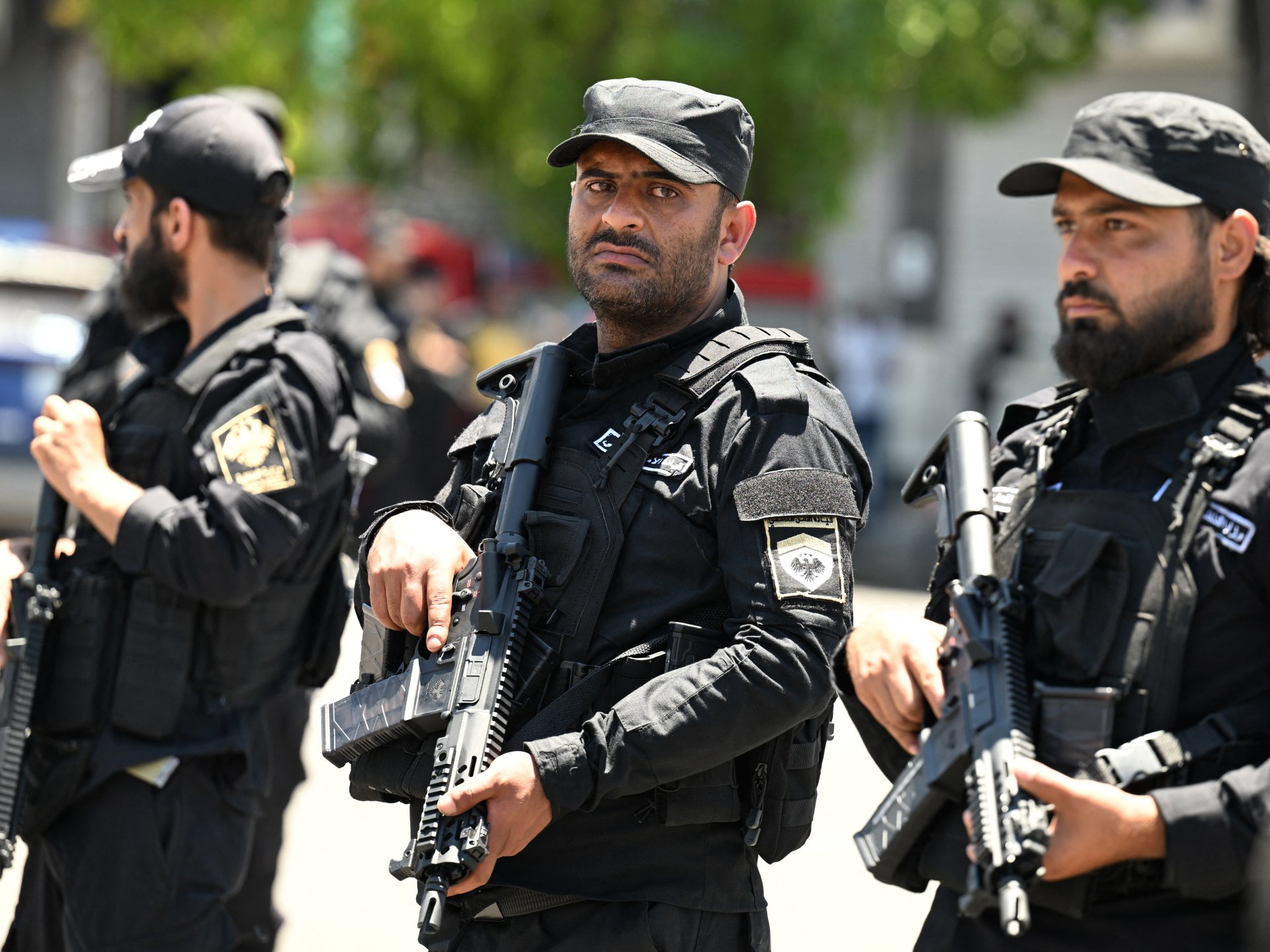
Syrian authorities have tightened security across Damascus after a cafe bombing and a second attack during French President Emmanuel Macron’s visit, Al Jazeera reported. The measures underscore the pressure on Syria’s transitional government as it tries to show it can protect the capital and rebuild foreign ties.
According to Al Jazeera, the Ministry of Interior has deployed heavily armed patrols, restored checkpoints at major intersections and expanded restricted areas around government offices, courts and diplomatic sites. Concrete blast walls and vehicle searches have been added at sensitive locations, the report said.
The latest attack took place on Tuesday at about 10:15am local time, when two improvised explosive devices detonated as bomb-disposal teams were preparing to defuse them, according to authorities cited by Al Jazeera. One device had been placed in a roadside rubbish bin and another in a parked car.
At least one person was killed and 36 others were wounded, authorities said. The blasts occurred relatively close to the hotel where Macron had stayed overnight, but outside the security zone set up for the French delegation, Interior Ministry spokesperson Nureddin al-Baba said.
Al-Baba told reporters at the scene that the explosions posed “no direct threat” to Macron. He also said investigators had found an initial lead pointing to possible perpetrators, but did not give further details.
Investigators look for links
Officials cited by Al Jazeera said Tuesday’s attack had similarities to a July 2 explosion at a busy central Damascus cafe near the Palace of Justice. That blast killed at least 10 people and wounded dozens, according to the report.
No group has claimed responsibility for either attack, Al Jazeera reported. The bombings come about 18 months after longtime ruler Bashar al-Assad was removed following years of war.
Special security units have begun field operations using local surveillance video to trace the vehicle used in Tuesday’s bombing and to search city infrastructure for other possible devices, according to Al Jazeera. A member of Syria’s security apparatus, speaking anonymously because they were not authorised to talk to media, told Al Jazeera that General Intelligence forces have been seizing large quantities of explosives and explosive drones linked to the Iranian Revolutionary Guard Corps.
The same security official claimed the most active cells seen in central and southern Syria were linked to the IRGC, and said Tuesday’s attack was carried out by a Palestinian-Syrian connected to Iranian-backed cells. Al Jazeera did not report an independent confirmation of that claim.
Security push tests transition
Navvar Saban, a researcher in security and military affairs at the Arab Center for Contemporary Studies in Syria, told Al Jazeera that patrols and checkpoints can reassure residents but cannot by themselves stop such attacks. He said prevention depends on intelligence work, tracking networks, monitoring explosives and improving cooperation with local communities.
Damascus Governor Maher Marwan al-Idlibi said security had generally improved since the post-Assad transition began, while warning that Syria’s stability had opponents, according to Al Jazeera. Macron also told reporters that “certain groups” wanted to block Syria’s return to the international community.
Despite the attack, Macron signed more than a dozen bilateral agreements during the visit, Al Jazeera reported. The transitional authorities are also rebuilding security and military institutions while reintegrating former Assad-era personnel and fighters from the former Syrian Democratic Forces, according to the report.
Saban said Syria’s security institutions are still being rebuilt after years of conflict. He warned that the materials needed for such explosives are relatively inexpensive and said authorities need to shift from responding after attacks to preventing them through real-time intelligence, including human and signals intelligence and threat analysis.
This story draws on original reporting from Al Jazeera.