
US pushes Libya power-sharing plan tied to oil investment
Washington is pressing rival Libyan camps to form a joint government as a banking strain and oil opportunity raise pressure for a deal.
By Lucas Ferreira · Science & Environment Writer
3 min read
The United States is leading a renewed push to bring Libya’s rival authorities into a single governing arrangement, with potential oil investment serving as an incentive. The effort matters because Libya’s divided institutions have strained state finances while leaving much of Africa’s largest proven oil reserves caught between competing power centers.
The initiative is led by Massad Boulos, President Donald Trump’s adviser on Arab, Middle Eastern and African affairs, according to Al Jazeera. Boulos, whose son Michael is married to Trump’s daughter Tiffany, has been travelling to Libya since early 2025, Al Jazeera reported.
Libya has been split for years between the United Nations-recognised Government of National Unity in Tripoli, led by Prime Minister Abdul Hamid Dbeibah, and an eastern-based administration aligned with Khalifa Haftar’s Libyan Arab Armed Forces, widely known as the Libyan National Army. The division followed the 2011 NATO-backed uprising that ended with the capture and killing of longtime ruler Muammar Gaddafi.
Oil sits at the center of the proposal
Details of the US approach became public through a June interview Boulos gave to the Financial Times, according to Al Jazeera. The plan links political cooperation to a US push for American companies to invest in Libya’s oilfields.
The arrangement faces a practical obstacle. Any international oil agreement would have to involve the Tripoli government because it is recognised by the UN, while Haftar-aligned forces control key oilfields and terminals, Al Jazeera reported. The Central Bank of Libya has also warned that it cannot keep financing both rival governments indefinitely.
Tim Eaton, a senior research fellow at Chatham House, told Al Jazeera that Washington is trying to broker a unified government among Libya’s rival elites. He said the effort appears to focus on securing an agreement between the Dbeibah and Haftar families, even as US public messaging stresses inclusivity.
Leaked details cited by Al Jazeera suggest Washington has discussed a power-sharing formula under which Dbeibah would remain head of government while Saddam Haftar, Khalifa Haftar’s son and the LNA’s army chief, would effectively serve as president.
Progress and risks
Eaton told Al Jazeera that the clearest result of the mediation so far has been Libya’s unified national budget for 2026, signed in April. It was the country’s first unified budget in more than a decade. He said there is still no agreement on forming a unified government.
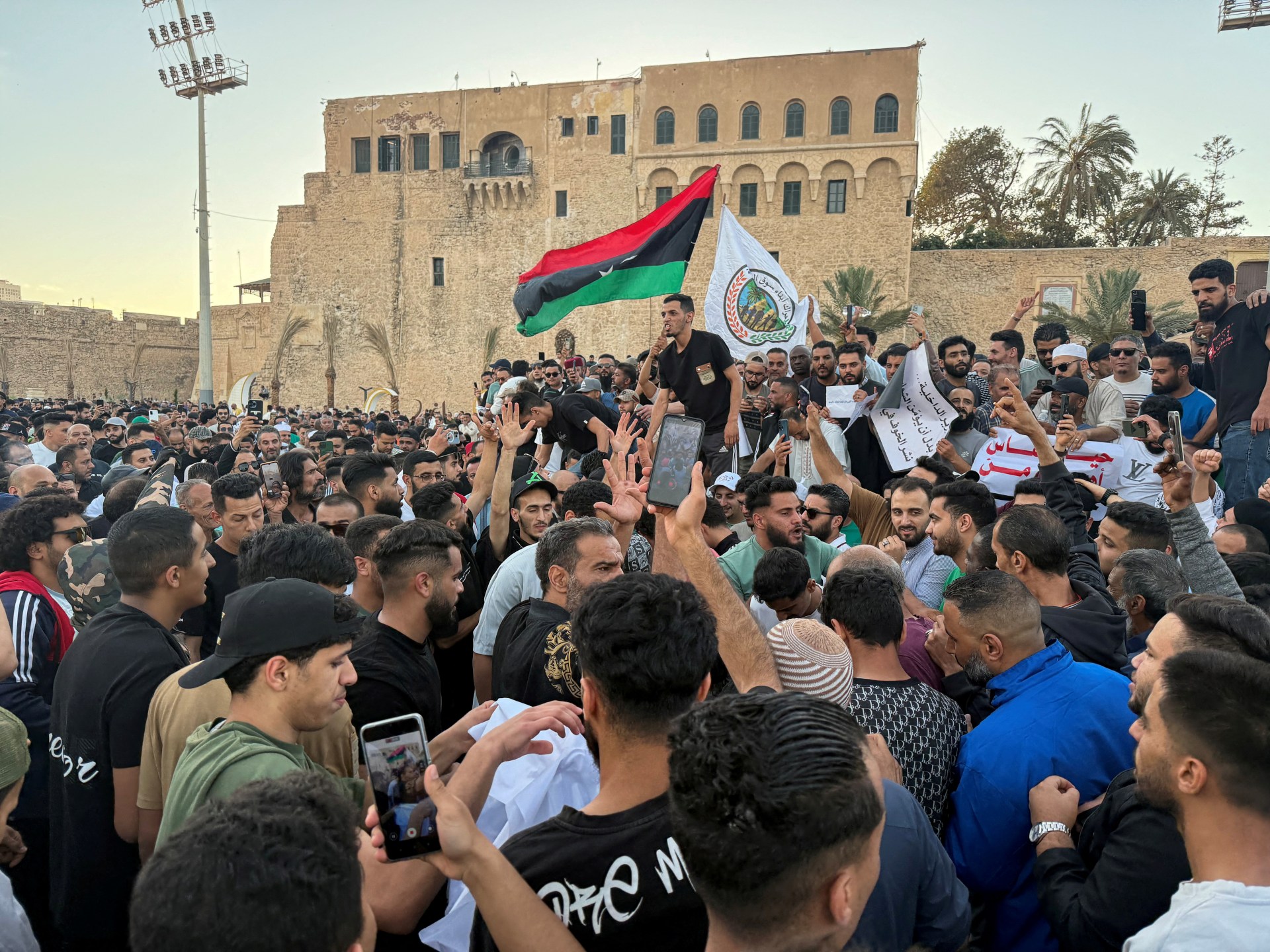
Saddam Haftar is believed to support the initiative and met US Secretary of State Marco Rubio in Washington last week, Eaton told Al Jazeera. The Dbeibah camp has not agreed, Eaton said, citing strong opposition to the Haftars in western Libya and concerns that any deal could be used as a step toward a military takeover.
Reuters reported that a summary of a proposed Libya reunification plan describes a 36-month transitional power-sharing arrangement called the Government of National Consensus and Presidential Council. Reuters also reported, citing two unnamed Pakistani sources, that Pakistan has joined mediation efforts; Al Jazeera said it could not independently verify that account.
Pakistan’s army chief, Asim Munir, met Saddam Haftar in Rawalpindi last month, followed days later by Haftar’s Washington visit, Al Jazeera reported. The US State Department said Rubio welcomed Libyan leaders’ efforts to overcome divisions and reaffirmed US support for Libyan unity.
Analysts cited by Al Jazeera said Washington also sees broader interests in Libya, including energy security and reducing irregular migration through the country to Europe. Eaton said greater investment by international oil companies could benefit Libya if handled well, but warned that many Libyans view a family-based settlement as a poor foundation for stability.
This story draws on original reporting from Al Jazeera.