
Ken Griffin says companies are blurring the meaning of AI
The Citadel founder told a Goldman Sachs event that many corporate AI claims are really machine learning, optimization or digitization.
By Maya Lindqvist · Senior Technology Correspondent
3 min read
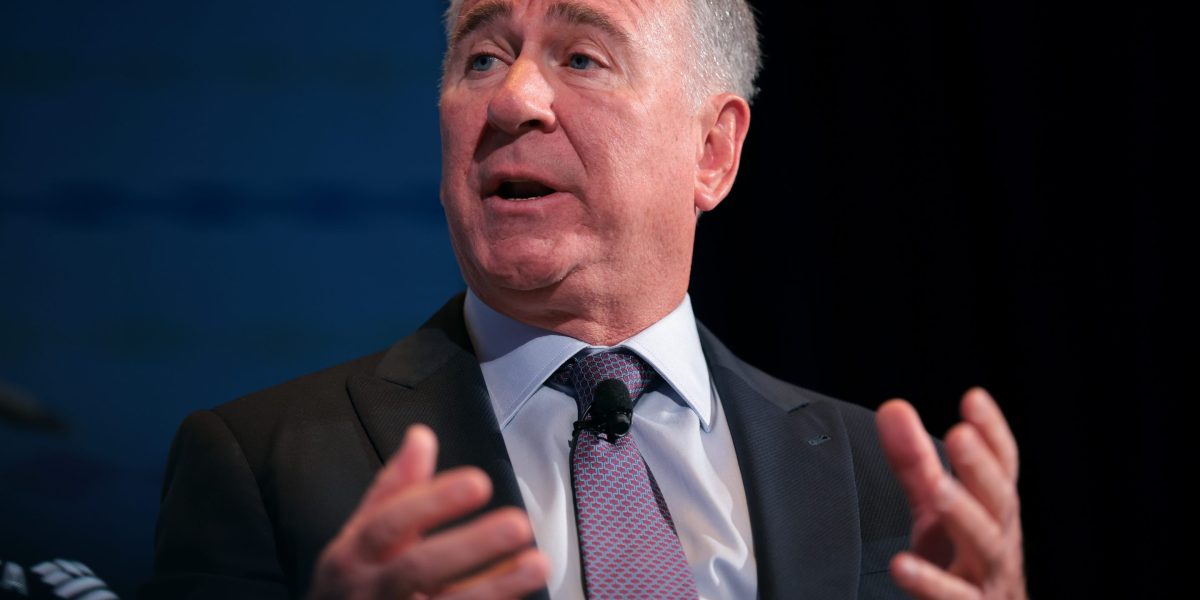
Citadel founder Ken Griffin said corporate America is mislabeling many technology gains as artificial intelligence, Fortune reported. His distinction matters because he argued that confusion is shaping expectations for jobs, productivity and the economy.
Griffin made the comments in a June 2 conversation with Goldman Sachs’s Raj Mahajan at the firm’s Apex Symposium, according to Fortune, which said it had access to audio of the event. The remarks expanded on comments Griffin made earlier at Stanford Business School, where he said he had been unsettled by the latest AI capabilities after previously dismissing the technology as “garbage” at Davos.
Griffin draws a line between AI and older tools
Griffin told Mahajan that about two years ago he dined with several major CEOs and asked them to describe how AI was changing their companies, Fortune reported. After hearing several examples of productivity improvements, Griffin said he concluded they did not involve AI.
He described the examples instead as machine learning, optimization or digitization, according to Fortune. In Griffin’s framing, machine learning systems can find patterns in data and improve at defined tasks, while the kind of AI that concerned him can plan, carry out and check multistep work.
Fortune reported that Griffin said executives often lose that distinction when discussing technology. He told Mahajan that AI is part of a broader technology shift, but only one part of it.
A Citadel project changed his view
The example that drew Griffin’s attention came from inside Citadel, Fortune reported. He said one employee built an AI system that could review academic finance papers, reproduce their methods, verify results and test findings outside the original sample.
Griffin said that work usually takes a highly trained researcher six to eight weeks, according to Fortune. The system completed the process in two to three hours per paper, he said.
Griffin emphasized that the task resembled master’s- or PhD-level work, Fortune reported. Even so, he said Citadel had not reduced headcount because of the breakthrough and argued that productivity gains would let employees address more problems.
He also said workers and students should become lifelong learners and use AI tools to learn differently, according to Fortune. Griffin identified translation as one field where workers may need serious retraining, while predicting that agentic systems could let small teams compete with companies that once needed 30 or 40 employees.
Markets, China and politics
Griffin also discussed global markets, Fortune reported. He said record highs in the S&P 500, despite wars in the Middle East and Europe, reflected factors including some U.S. insulation from energy shocks, lower Chinese oil demand and continued oil flows from the region.
On China, Griffin said the country leads in roughly 67 to 68 of the 75 most important global technologies, according to Fortune. He argued that the U.S. response should focus on education rather than tariffs.
Griffin warned that a blockade around Taiwan that cut off access to TSMC chips could reduce U.S. GDP by 8% within six months, Fortune reported. He said Boeing would stop building planes, automakers would stop making cars and the economy would face a depression-like freeze.
Asked about New York City Mayor Zohran Mamdani, Griffin said Citadel would remain a force in finance longer than Mamdani would be mayor, according to Fortune. He criticized New York’s taxes and services, pointing to Goldman Sachs’s Dallas headquarters plan and Citadel’s 1.7 million-square-foot Miami tower as examples of firms expanding elsewhere.
Griffin also criticized socialist politics, naming Bernie Sanders and Mamdani, Fortune reported. He argued that China’s shift toward markets lifted 1 billion people out of poverty; Fortune noted that the World Bank put the figure at 800 million over 40 years as of 2022.
In other comments, Griffin said art has been an unimpressive investment over the past 20 years and expressed skepticism about planning family wealth four or five generations ahead, according to Fortune.
This story draws on original reporting from Fortune.