
China Taiwan maritime patrols expand east of island
Chinese coastguard activity east of Taiwan has increased, prompting warnings that Beijing is testing ways to isolate the island.
By Daniel Okafor · Business Editor
4 min read
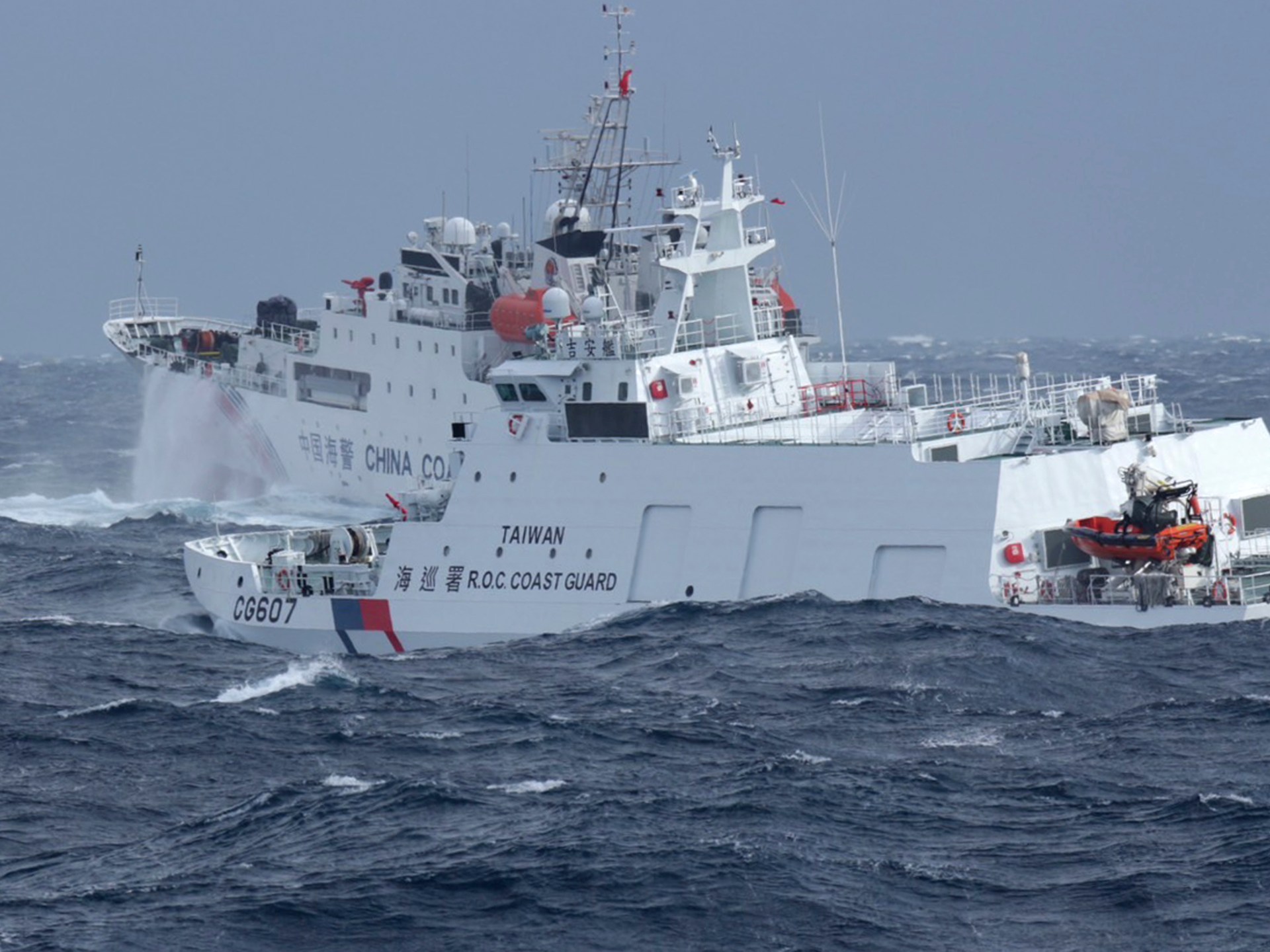
China Taiwan maritime patrols have expanded into waters east of the island in a rapid series of operations, adding pressure on a route that would matter in any attempt to isolate Taiwan. Analysts told Al Jazeera the activity suggests Beijing is moving beyond routine operations in the Taiwan Strait and testing control around a wider ring of waters.
China’s Maritime Safety Administration and coastguard carried out several patrols and “special maritime law enforcement operations” in June and July, according to official government announcements. China often sends patrols through the Taiwan Strait, which separates Taiwan from China’s coast and is about 180km wide on average, but analysts said the recent east-of-Taiwan activity is unusual because of its pace and location.
K Tristan Tang, a nonresident fellow at the National Bureau of Asian Research in the United States, told Al Jazeera that Beijing is trying to show administrative reach over waters east of Taiwan. He said the move signals an effort to surround Taiwan rather than focus pressure mainly in the strait.
Why are China Taiwan maritime patrols raising concern?
Taiwanese authorities said Chinese “law enforcement” operations have included patrols and requests for commercial ships to provide details about where they came from and where they were going. Security analysts told Al Jazeera such actions could become more coercive if Chinese vessels begin stopping, inspecting or redirecting ships.
Taiwan reported 55 sightings of Chinese coastguard and research vessels in June, compared with 30 in May. Those sightings included activity near the Taiwan-controlled Dongsha Islands, also called the Pratas Islands, in the South China Sea.
Beijing has linked some of the operations to talks between Japan and the Philippines over maritime boundaries. Chinese state media said those talks infringe on China’s territorial sovereignty and maritime rights and interests.
Some waters near southern Japan and the northern Philippines overlap with Taiwan’s exclusive economic zone, which extends 200 nautical miles, or 370km, from its coast. China claims Taiwan as a province and therefore regards Taiwan’s maritime zone as falling under Chinese jurisdiction. Beijing also claims broad areas of the South China Sea and East China Sea, where it has disputes with Japan, the Philippines, Vietnam, Malaysia, Indonesia and Brunei.
Could the patrols lead to a blockade?
Ray Powell, who leads the Stanford University-based maritime transparency project Sea Light, told Al Jazeera he sees the patrols as part of a “boa constrictor strategy” aimed at tightening pressure on Taiwan over time. He said radio challenges today could be followed by ship inspections or rerouting, including pressure on energy supplies such as liquefied natural gas.
Taiwan is exposed to that kind of pressure because it imports nearly all of its energy supplies. China has already rehearsed blockade scenarios in military exercises, including a simulated blockade during drills in December, according to Al Jazeera.
Taiwanese officials describe many Chinese actions as “grey zone” tactics: pressure measures below the level of open war that force Taiwan to spend resources and test public morale. Taiwan’s National Security Bureau has cited examples including exclusion from international bodies such as the World Health Organization, drone and fighter jet incursions and alleged cyberattacks.
Chauluen Lin, an asymmetric warfare specialist at Taiwan’s Institute for National Defense and Security Research, told Al Jazeera that China’s coastguard can function like a “second navy.” The force is not a civilian police agency; it sits under China’s Central Military Commission as part of the People’s Armed Police.
How have other governments responded?
The United Kingdom, Germany and France issued a joint statement in late June saying China’s actions threaten regional stability, freedom of navigation and the safety of international shipping. The three governments also said they oppose any unilateral change to the status quo through force, threats or coercion.
US Secretary of State Marco Rubio said last week that Washington opposes the expanded patrols and views them as damaging to regional stability. The United States does not recognise Taiwan as a country but has committed to helping it defend itself through measures that include weapons sales, training and intelligence sharing.
William Yang, Crisis Group’s senior analyst for Northeast Asia, told Al Jazeera that Beijing may see an opening while Washington is focused on the war in Iran. He also pointed to US President Donald Trump’s comment after a May meeting with Chinese leader Xi Jinping that weapons sales to Taiwan could be used as a negotiating chip with China.
This story draws on original reporting from Al Jazeera.