
China’s second-quarter growth slows to 4.3% as demand weakens
Official data showed China’s economy cooled in the April-June quarter despite strong exports tied to AI and electric vehicles.
By James Whitfield · Staff Writer
3 min read
China’s economy lost speed in the second quarter, underscoring how weak household spending and business investment are limiting the gains from a strong export sector. Government data released Wednesday showed growth slowed to a 4.3% annualized rate in April through June, according to The Associated Press.
The reading was below forecasts and marked the weakest quarterly pace in more than three years, AP reported. It also fell sharply from the 5% growth rate recorded in the January-March period.
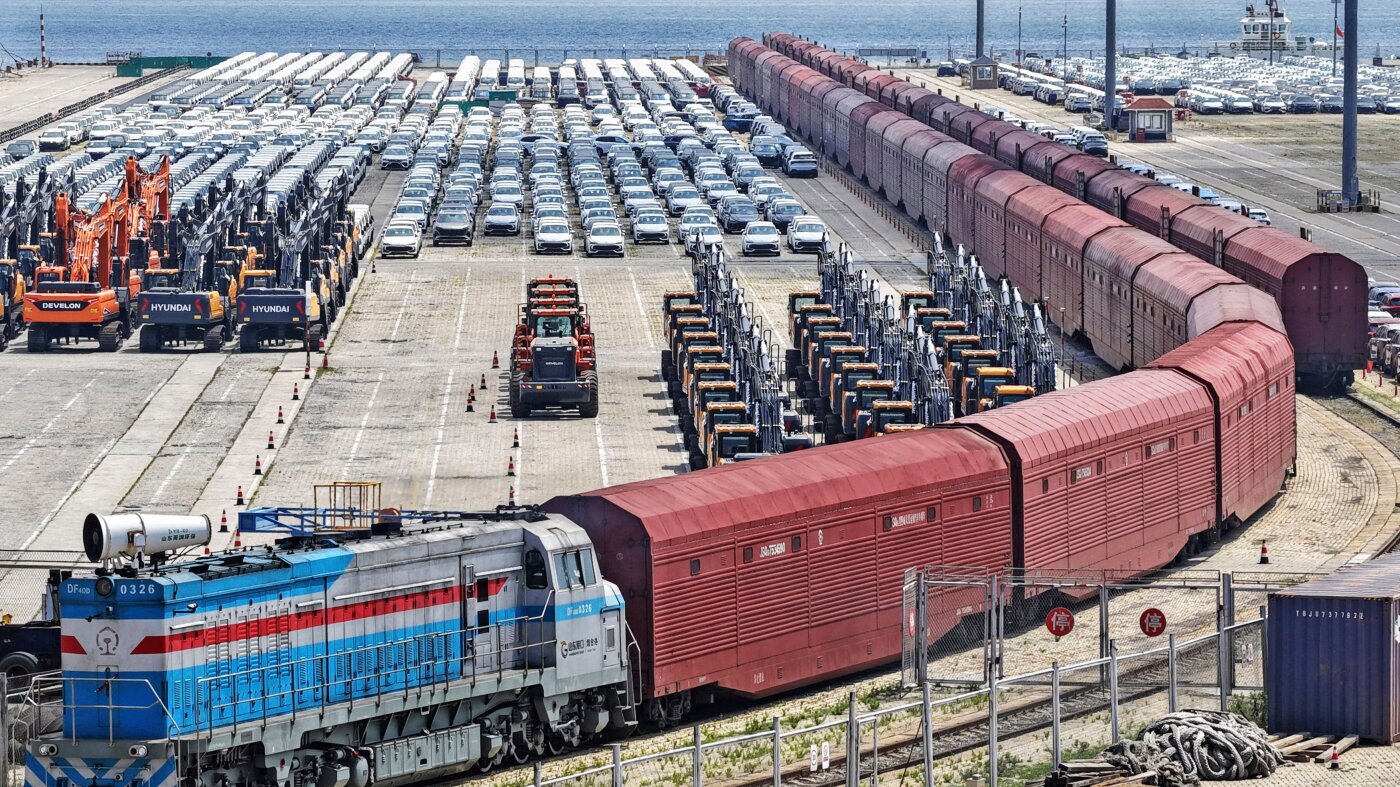
Exports remained a bright spot, helped in part by demand linked to artificial intelligence and Chinese electric vehicles. Customs data cited by AP showed exports rose 17.6% in the first half of the year from a year earlier and climbed 27% in June.
China has avoided broader damage from the Iran war, even as higher energy prices fed global inflation, AP reported. Still, the export surge has not been enough to offset softer activity at home.
Domestic demand stays weak
China’s recovery has struggled to regain force since pandemic-era lockdowns disrupted parts of the country, according to AP. Lynn Song, chief economist for Greater China at ING Bank, said in a note cited by AP that the second-quarter figure was the slowest since the lockdown-hit fourth quarter of 2022.
Official figures showed fixed-asset investment, which includes spending on items such as factory equipment, fell 5.7% in the first half of the year from a year earlier. Retail sales of consumer goods rose just 1.3%, and home prices continued to decline, AP reported.
Chinese households have pulled back on large purchases as the property downturn drags on and worries over employment and pay persist, according to AP. Those pressures have made it harder for Beijing to shift more of the economy toward domestic consumption.
Eswar Prasad, a Cornell University professor of economics and trade policy, told AP that China remains dependent on exports to support overall growth and that its growth model has become more unbalanced. He said lifting domestic demand substantially will be difficult while confidence remains weak.
High-tech push creates uneven growth
Economists cited by AP said the economy is becoming more uneven as state support and private capital flow into advanced industries including artificial intelligence, semiconductors and robotics. Other sectors, including lower-value manufacturing and service industries that create jobs, have lagged.
Exports of high-tech products, including electric vehicles, chips and other electronics, have increased sharply, AP reported. Beijing has made advanced technology a central priority and has supported those sectors heavily.
China recorded a $1.2 trillion global trade surplus last year, according to AP, drawing criticism from policymakers abroad who say state subsidies contribute to excess manufacturing capacity that is shipped overseas. Industrial output by value rose 5.4% in the first half of this year from a year earlier.
Mao Shengyong, deputy head of China’s National Bureau of Statistics, told reporters that the global environment has grown more unstable and uncertain, while the domestic mismatch between strong supply and weak demand “remains acute,” AP reported. He said China would work to strengthen its home market and support stable employment as it pursues higher-quality growth.
Chinese leaders have set a 2026 growth target of 4.5% to 5%, compared with 5% growth last year, AP reported. First-half growth stood at 4.7%, while the International Monetary Fund recently raised its 2026 forecast for China to 4.6% and projected 4.1% growth in 2027.
This story draws on original reporting from NPR.