
US missile use in Iran war raises stockpile concerns
CSIS estimates that the Iran war has sharply cut into several US missile and air-defense stocks, with replacement timelines running from months to years.
By Sofia Marchetti · World Affairs Correspondent
3 min read
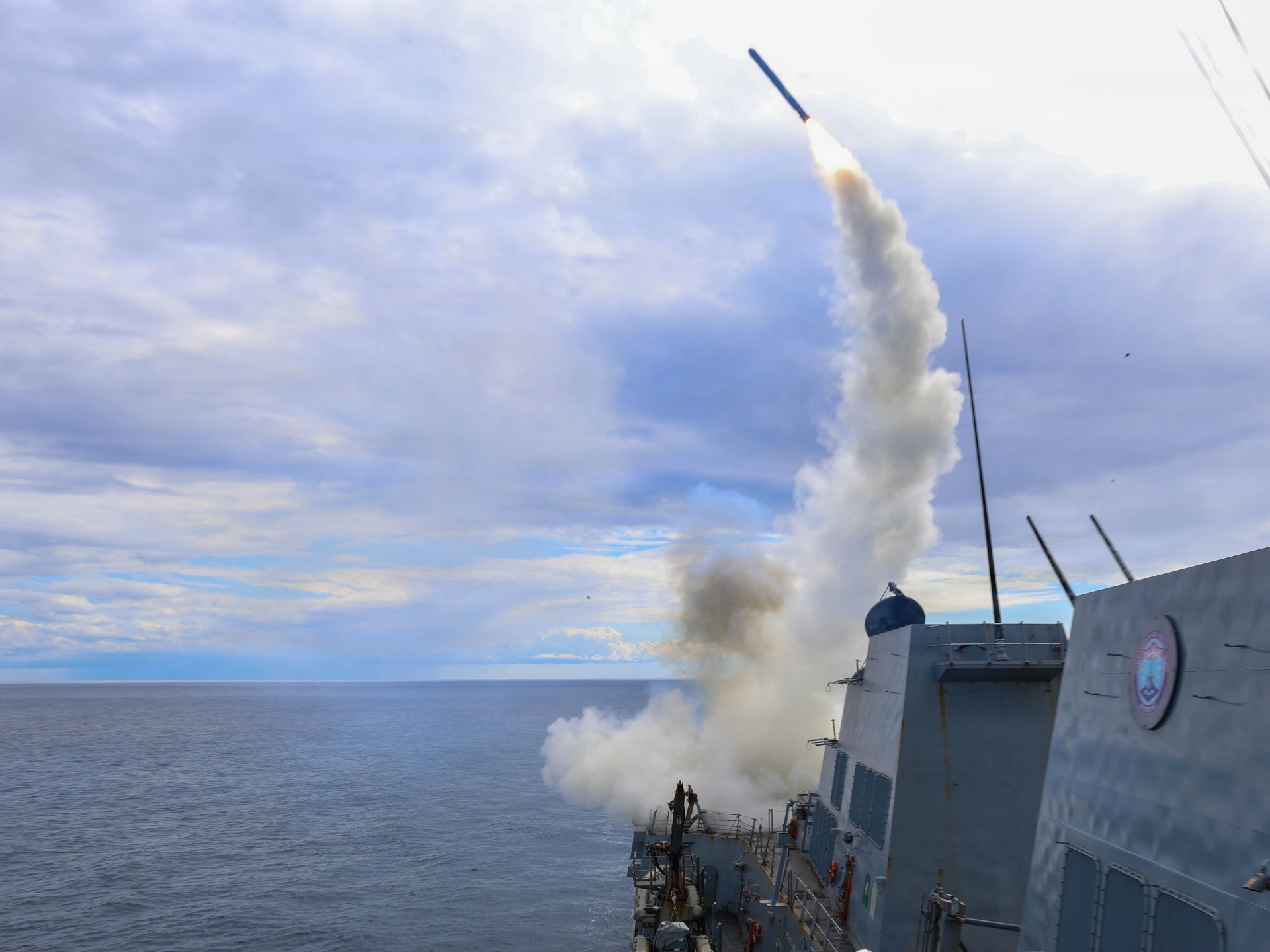
Renewed US attacks on Iran have intensified questions about how long Washington can sustain a high-tempo missile campaign. A Center for Strategic and International Studies analysis says the war has consumed large shares of several of the US military’s most important weapons.
President Donald Trump is due to speak Wednesday at a defense summit at the US Army War College in Carlisle, Pennsylvania, where Al Jazeera reported he is expected to praise military investment. The address comes after US Central Command resumed heavy strikes on Iranian military sites last week, saying the attacks were meant to weaken Tehran’s military capabilities.
Conflict resumes after ceasefire
Al Jazeera reported that the US and Iran had reached a ceasefire in April and signed a memorandum of understanding in June. The fighting escalated again after Iran fired on three commercial ships in the Strait of Hormuz, which Tehran said had used a shipping route it had not approved, according to the report.
US attacks have continued for several nights, including strikes on railway tracks and bridges, Al Jazeera reported. Iran’s Islamic Revolutionary Guard Corps has carried out retaliatory attacks on US military assets in Bahrain, Oman, Qatar and Kuwait, according to the same report.
More than a dozen people have been killed in Iran since the latest US strikes began, including civilians, Al Jazeera reported. In a Fox News interview aired Tuesday, Trump threatened to hit Iranian power plants and bridges unless Tehran negotiates; attacks on civilian infrastructure are prohibited under international law.
CSIS says key stocks have fallen
CSIS said US weapons supplies have been reduced but are not yet at a critical level. Because official stockpile figures are classified, the Washington think tank based its estimates on available data and reported use during the first 39 days of the war, when it said the US struck more than 13,000 targets.
CSIS focused on seven major systems: Tomahawk cruise missiles, Joint Air-to-Surface Standoff Missiles, Precision Strike Missiles, Standard Missile-3 interceptors, Standard Missile-6 missiles, Terminal High Altitude Area Defense interceptors and Patriot missiles.
- CSIS estimated the US used more than 1,000 Tomahawks from a prewar inventory of about 3,000.
- It estimated about 1,100 JASSMs were fired from an inventory of roughly 4,000.
- For the newer Precision Strike Missile, CSIS estimated 40 to 70 were used out of about 90 delivered since 2023.
- CSIS estimated the US used 130 to 250 SM-3 interceptors, 190 to 370 SM-6 missiles, 190 to 290 THAAD interceptors and 1,060 to 1,430 Patriots.
CSIS analysts said the US likely can keep striking Iran in the near term. They warned, however, that reduced stocks could leave Washington less prepared for another major conflict, especially one involving China.
Replacement could take years
Defense Secretary Pete Hegseth said in May that replenishment could take “months and years,” depending on the weapons system. CSIS estimated replacement timelines of about one year for JASSM, eight months for Precision Strike Missile, three years for SM-3, SM-6 and Patriot stocks, three to three and a half years for THAAD, and four to five years for Tomahawks.
Trump said in March that executives from major defense firms, including Lockheed Martin, Boeing, Raytheon, BAE Systems, Honeywell Aerospace, L3Harris Missile Solutions and Northrop Grumman, had promised to quadruple production. In June, Trump signed a Defense Production Act order directing weapons manufacturers to speed output, citing conditions that may threaten national defense readiness.
The strain is already affecting partners, according to Al Jazeera. Hegseth said Japan’s order for 400 Tomahawks could face a two-year delay, while Switzerland began talks with France, Israel and South Korea after delays in its US missile-defense order.
This story draws on original reporting from Al Jazeera.