
Belfast riots draw scrutiny of neo-Nazi 'active clubs'
Researchers say far-right youth networks praised and promoted tactics around Belfast unrest, though their direct role remains unproven.
By Sofia Marchetti · World Affairs Correspondent
4 min read
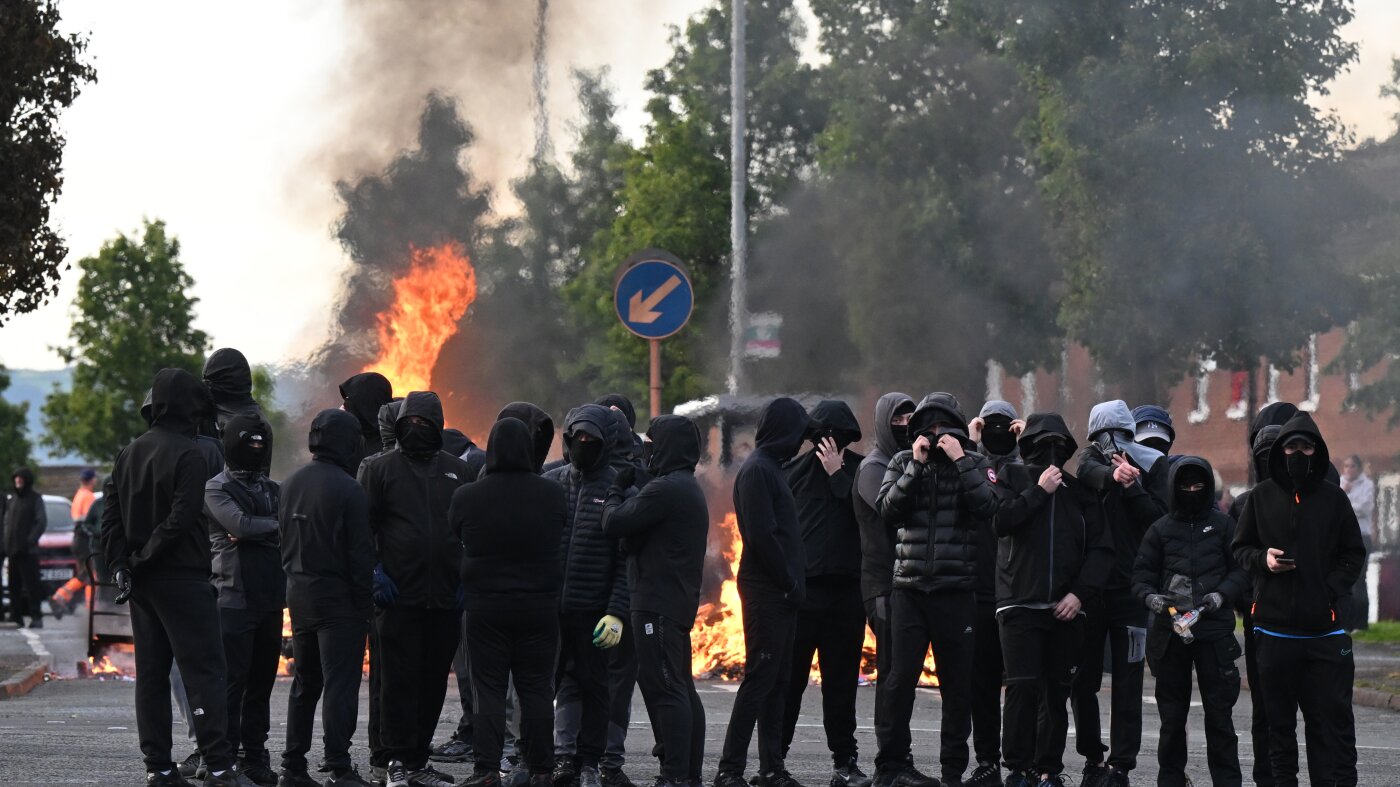
Racist violence in Belfast has renewed scrutiny of neo-Nazi youth networks known as “active clubs,” after mobs attacked ethnic minority areas following a stabbing. Researchers told NPR the groups’ online activity around the unrest raises questions about their influence, though there is no confirmed evidence that their members took part in the violence.
The disorder followed the June 8 stabbing of 44-year-old Stephen Ogilvie, an attack that was filmed and widely shared on social media, NPR reported. Ogilvie survived with serious injuries, and a 30-year-old Sudanese man seeking asylum in the U.K. has been charged with attempted murder.
After the stabbing, masked anti-immigrant crowds set fire to vehicles and homes in neighborhoods with large ethnic minority populations, according to NPR. The violence forced scores of ethnic minority residents from their homes.
Questions over rapid mobilization
Attention has turned to “active clubs,” a network of fascist and white nationalist youth groups that organize locally while maintaining international ties through online platforms and conferences, NPR reported. The groups often center their activities on mixed martial arts and other combat sports.
Michael Colborne, a journalist and researcher with the investigative group Bellingcat, told NPR that these groups view combat sports as preparation for political violence rather than fitness or self-defense. He said the scenes in Belfast matched a model some extremists would want to imitate: masked young men carrying out political violence.
Wired reported that social media activity by active club accounts before and after the Belfast unrest suggested the groups may have helped instigate or organize attacks. NPR reported that such a role, if proven, would mark an escalation in their public activity.
Other extremism analysts urged caution. Sid Venkataramakrishnan, an analyst and editorial manager at the Institute for Strategic Dialogue, told NPR that the U.K. is already experiencing a volatile period of anti-immigrant mobilization and that Belfast might have seen violence even without active club promotion.
Telegram posts drew attention
A Telegram account for the Ulster Youth Club, a neo-fascist group in Northern Ireland, helped fuel speculation about active club involvement, NPR reported. The account shared a post from another U.K.-based channel urging white men to target non-white people.
On the morning after the stabbing and before riots began, the Ulster Youth Club account posted advice for people going into the streets, according to NPR. The guidance told people not to bring smartphones or smartwatches, and to wear hats and gloves and cover tattoos.
After the unrest, a Substack account linked to the active club movement praised rioters’ security practices, including efforts to stop bystanders from recording footage that could identify people committing crimes, NPR reported. Colborne said the posts offered a clear framing for a far-right audience on how to carry out this type of violence.
Still, NPR reported that no known active club members have been publicly identified among those on the streets in Belfast on June 9.
Older networks may also matter
Researchers also pointed to Northern Ireland’s history of sectarian violence and loyalist paramilitary activity. Venkataramakrishnan told NPR that Belfast’s political history makes it difficult to attribute the unrest to active clubs alone.
Violent anti-immigrant mobilizations have become a recurring summer pattern in Northern Ireland in recent years, NPR reported. In 2024, Belfast was among U.K. locations where the killing of three girls at a dance class in England triggered disorder; in 2025, an alleged sexual assault in Ballymena led groups to target Roma residents and drove hundreds from the town.
A representative of The Accountability Project, a volunteer group that tracks anti-immigrant networks on Facebook, told NPR that some people in Northern Ireland’s anti-immigration networks identify themselves as former loyalist prisoners. She said public Facebook activity showed planning for street mobilization, while younger masked men seen in violence may have used closed apps such as Signal, WhatsApp or Telegram.
Police in Northern Ireland are still investigating the unrest, NPR reported. Researchers said one unanswered question is how open anti-immigrant networks, closed messaging channels and possible paramilitary links may have intersected before the violence.
This story draws on original reporting from NPR.