
Australia and Vanuatu sign pact barring foreign military bases
The agreement gives Canberra a security assurance while increasing economic and policing cooperation with Vanuatu.
By Sofia Marchetti · World Affairs Correspondent
3 min read
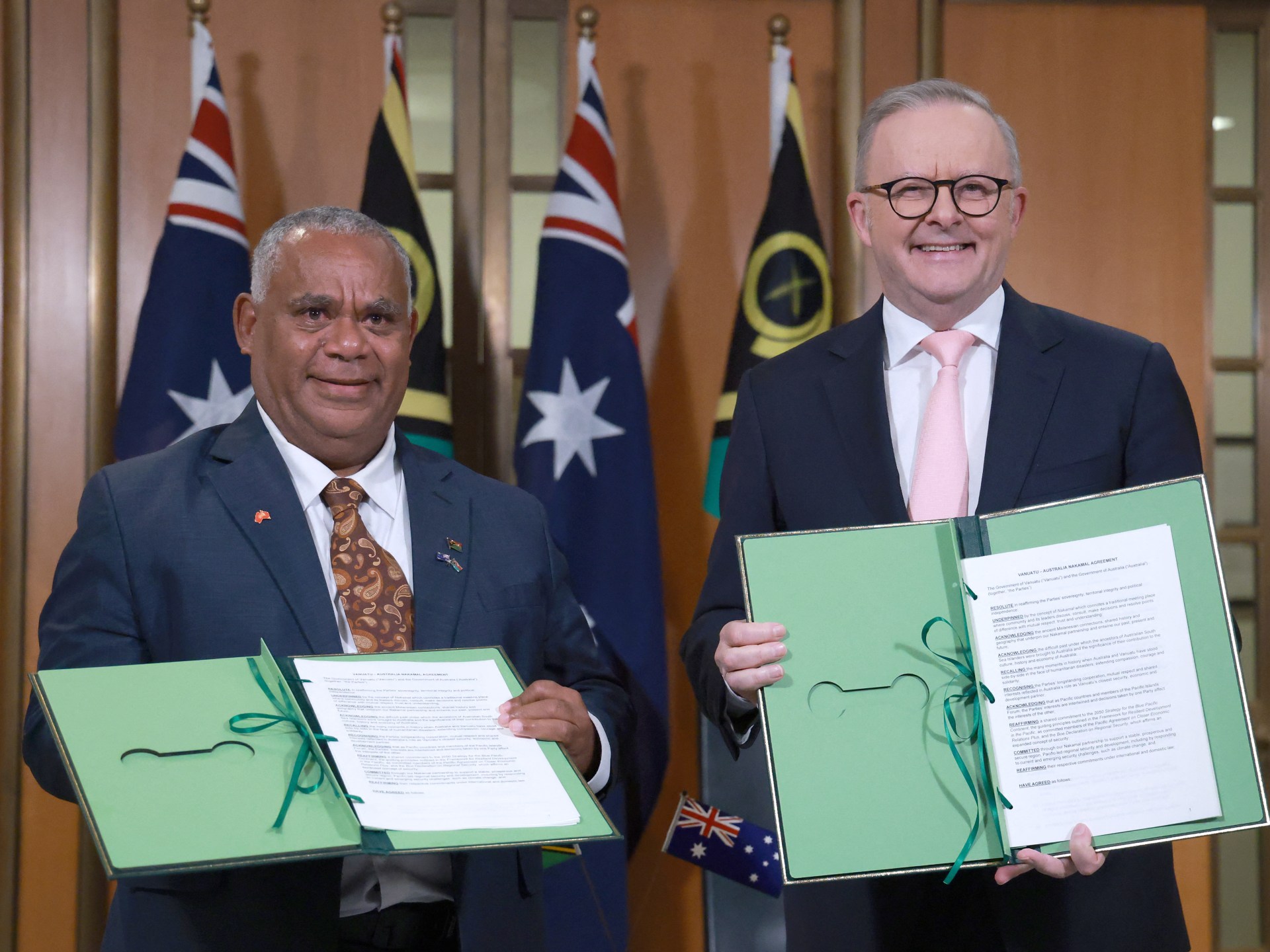
Australia and Vanuatu signed an economic and security agreement on Monday that prevents foreign military bases from being established in the Pacific island nation, according to AFP and AP. The deal gives Canberra a firmer security role in Vanuatu as Australia works to limit China’s growing presence in the South Pacific.
Australian Prime Minister Anthony Albanese and Vanuatu Prime Minister Jotham Napat signed the Nakamal Agreement at Parliament House in Canberra, Al Jazeera reported. The agreement includes increased Australian economic support and requires Vanuatu to consult Australia on third-party investment in critical infrastructure, according to the report.
Albanese told reporters the pact gives Australia certainty that “there will be no foreign military base.” He said the agreement would “protect our collective and individual security and our sovereignty.”
Napat said Vanuatu had already acted domestically to restrict the use of critical infrastructure for military purposes. “As a country, we have in fact passed an act in parliament not to allow any militarisation to actually be used for our critical infrastructure,” he said.
Earlier version was rejected
Vanuatu rejected an earlier form of the agreement in September because of concerns it could restrict the country’s ability to attract infrastructure funding, according to Al Jazeera. Under the signed version, Vanuatu will consult Australia on third-party involvement in critical infrastructure, but Australia does not have a veto power that had been discussed in the earlier proposal.
AFP and AP reported that the earlier draft included a proposed Australian commitment of 500 million Australian dollars, or $345 million, over 10 years. Albanese said the amount attached to the final agreement would be disclosed in a budget update at the end of the year.
Napat said the pact reaffirmed both countries’ commitment to strengthening their partnership, based on mutual respect, trust and a shared aim of a peaceful, stable and prosperous Pacific.
China raises concern
China signalled unease over the agreement. Guo Jiakun, a spokesperson for China’s Ministry of Foreign Affairs, said Beijing hoped cooperation between Pacific island countries and other governments would support development and stability rather than target a third party or serve geopolitical rivalry.
Vanuatu is expected to sign a separate economic agreement with China, according to Al Jazeera. China has provided loans that financed Chinese contractors building infrastructure and other facilities in Vanuatu, and it has built roads and buildings across the South Pacific over the past decade through its Belt and Road initiative.
China’s navy has made port visits to Vanuatu, and Beijing funded the expansion of a wharf in Luganville, the country’s second-largest city, according to the report. China and Vanuatu also established policing ties in 2023, with Beijing donating drones, patrol boats and vehicles to Vanuatu’s police force.
The new agreement describes Australia as Vanuatu’s “longstanding primary policing partner,” AFP reported. The two countries will expand cooperation on police training, maritime security, cybersecurity, intelligence sharing and infrastructure.
Vanuatu also agreed to seek help first from Australia, New Zealand or France in the event of a major natural disaster, according to AFP and AP. Australia has reached, or is working to reach, several agreements with Pacific island states as it seeks to counter China’s influence in the region.
This story draws on original reporting from Al Jazeera.