
Analyst says Lebanon-Israel framework risks setting terms for new war
Sami Halabi argues the Washington-signed framework is hard to enforce and could let Israel blame Lebanon if fighting resumes.
By James Whitfield · Staff Writer
3 min read
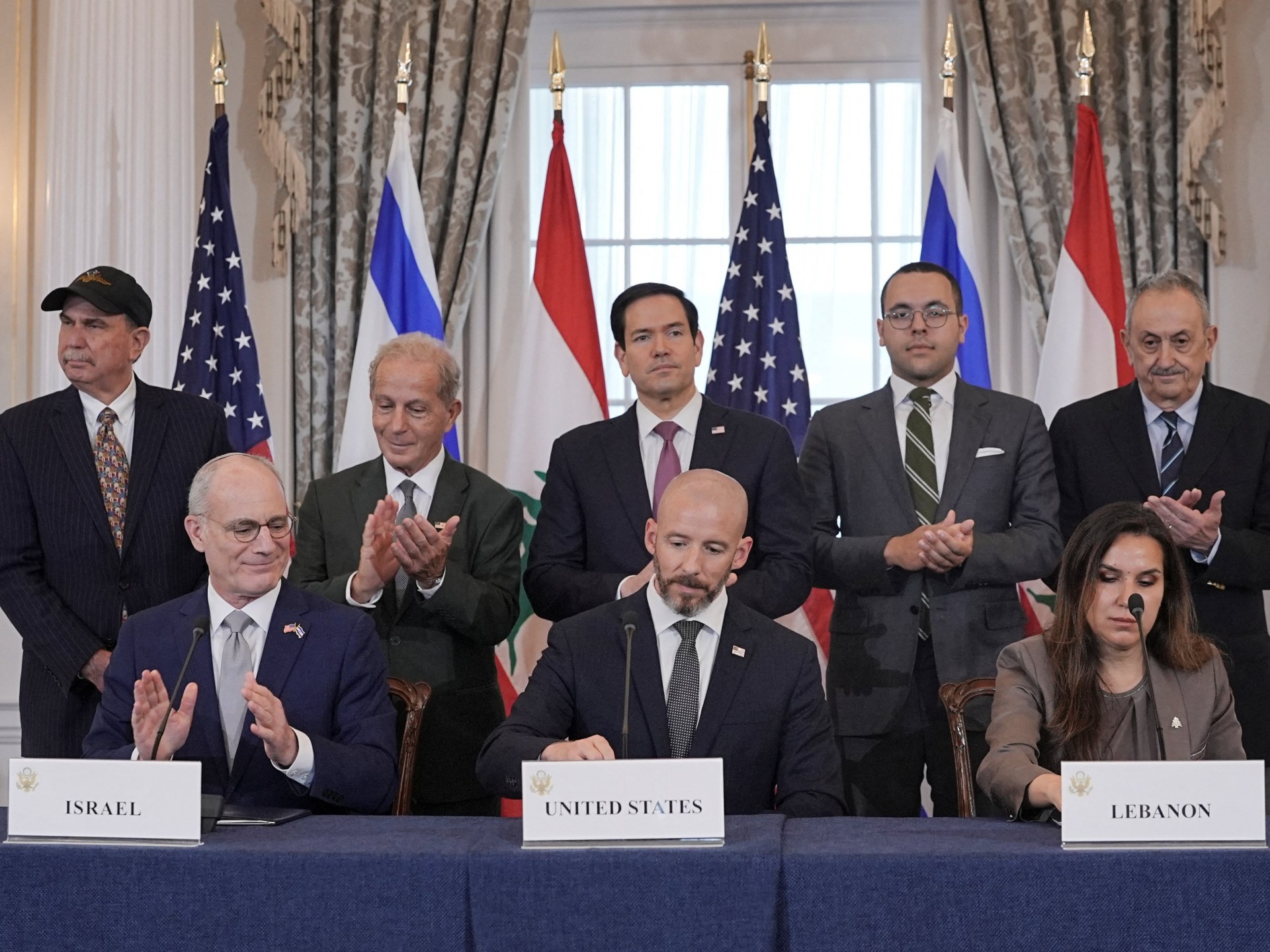
A Lebanon-Israel framework agreement signed in Washington has triggered political backlash in Lebanon and warnings that it could sharpen, rather than reduce, the risk of another conflict. Sami Halabi, director of policy at Badil, argued in an Al Jazeera opinion piece that the document gives Israel language it could later use to accuse Lebanon of failing to meet its commitments.
Al Jazeera reported that Israel’s ambassador to the United States, Yechiel Leiter, and Lebanon’s ambassador to the US, Nada Hamadeh, signed the framework at the State Department on June 26, 2026. A Reuters photo caption said US Secretary of State Marco Rubio was present at the signing.
Halabi described the accord as a declaration of intent reached after months of war, pressure and diplomacy. He wrote that Hezbollah, its allies and other Lebanese political actors condemned the move, while protests and media criticism followed inside Lebanon.
Questions over enforceability
Halabi argued that the agreement is difficult to carry out because the Lebanese state cannot order Hezbollah to disappear as an armed force. He said Hezbollah’s weapons are tied to claims about deterrence, community protection and the Lebanese state’s failure to defend national territory.
He also said the Lebanese army cannot quickly become the main deterrent force while it remains underfunded, burdened by multiple demands, constrained by Lebanese politics and reliant on outside military support. In his view, Lebanon is being asked to meet sovereign obligations in areas where its state capacity is weakest.
Halabi compared the diplomatic structure to interim arrangements used in the Israeli-Palestinian process, citing the Oslo framework as an example of broad language that left core disputes for later talks. He stressed that Lebanon and Palestine are different cases, but said the use of open-ended commitments and deferred questions should alarm Lebanese officials.
Legal and constitutional concerns
The Al Jazeera commentary focused heavily on clauses Halabi said could affect political and legal action beyond the battlefield. He warned that any language requiring the parties to stop “hostile” or “adverse” action in international forums could limit Lebanon’s ability to pursue Israel diplomatically or legally.
Halabi pointed to Lebanon’s possible accession to the International Criminal Court as one example of leverage that could be weakened if the framework restricts legal action in the name of de-escalation. He said Lebanon cannot match Israel militarily and therefore relies on political, diplomatic and legal tools.
He also raised constitutional objections. Halabi wrote that if the framework touches on war and peace, territorial arrangements, security deployments, recognition, withdrawal or restrictions on Lebanon’s legal conduct, it cannot be treated as a casual political understanding.
According to Halabi, Lebanon’s constitutional order requires institutional approval for treaties and international accords, while major questions of war, peace and national security fall within the authority of the Council of Ministers. He argued that Hezbollah, the Amal Movement and other opponents can use those points to delay or challenge the agreement.
Regional track may decide outcome
Halabi said the framework’s fate may depend less on Beirut than on wider regional talks involving the United States, Iran and mediators. He argued that Hezbollah’s conduct will depend on Iran, while the durability of any broader US-Iran understanding could shape whether the battlefield remains quiet.
If Hezbollah does not comply, if Lebanon’s army cannot deploy at the expected scale, or if Beirut keeps pursuing Israel in legal forums, Halabi wrote, Israel could argue that Lebanon failed to honor the framework. He concluded that the document may create the political and legal basis for justifying a future war rather than preventing one.
This story draws on original reporting from Al Jazeera.