
Al-Sharaa reorganizes Syria’s security leadership
Syria’s president gave Interior Minister Anas Khattab wider authority and named Abdul Qader Tahan to lead the intelligence service.
By Sofia Marchetti · World Affairs Correspondent
3 min read
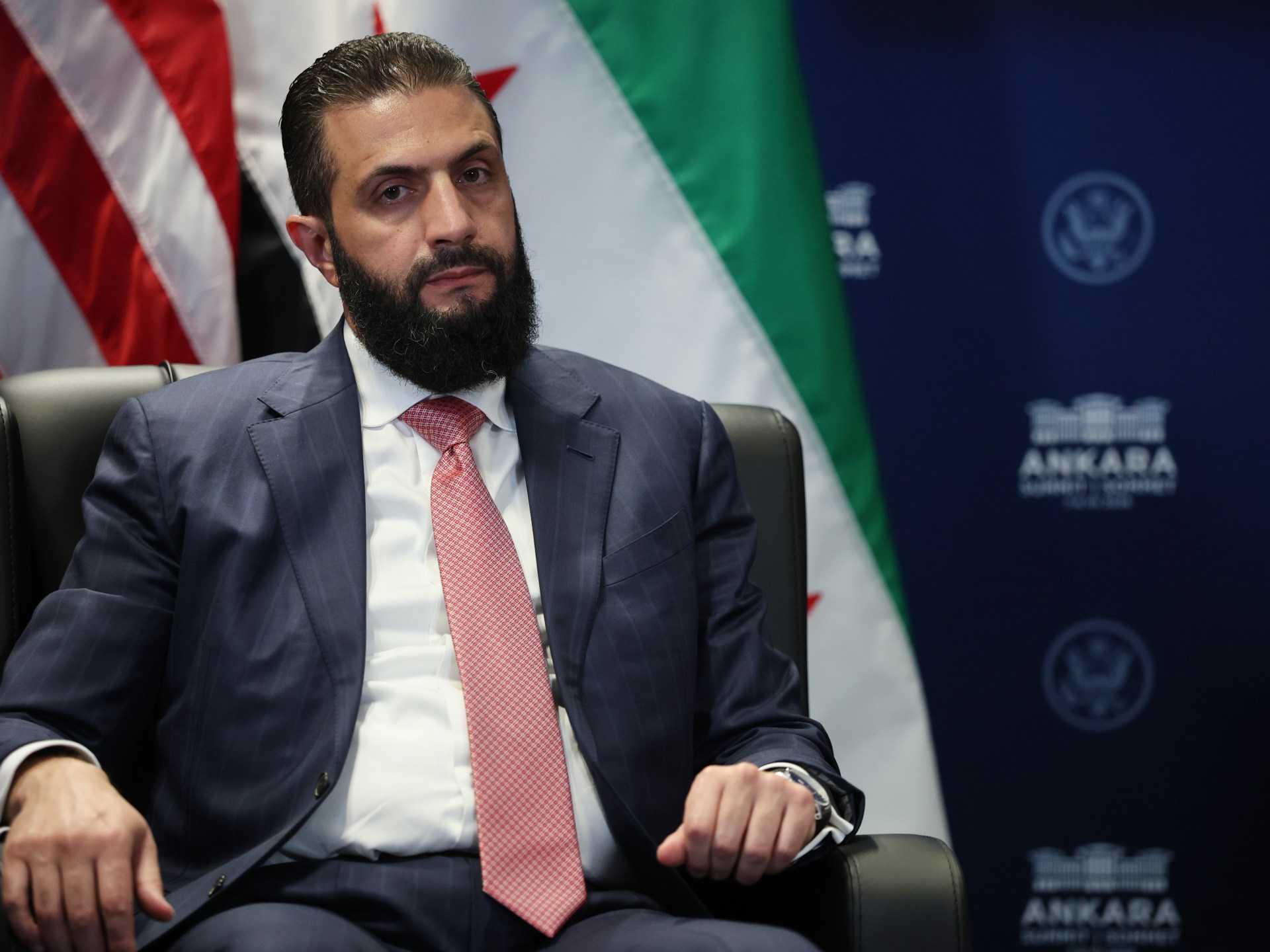
Syrian President Ahmed al-Sharaa has reorganized the country’s security command, giving Interior Minister Anas Khattab a second senior post and appointing a new intelligence chief. The move matters because it places more of Syria’s security apparatus under a central authority as the government tries to tighten control after recent attacks in Damascus.
The state news agency SANA reported Sunday that Khattab will also lead the National Security Bureau, the body that supervises Syria’s security agencies, while remaining interior minister. SANA also reported that Hussein al-Salamah was appointed deputy head of the bureau.
Under the same changes, SANA said Mulham al-Shantout was named assistant interior minister for security affairs. Abdul Qader Tahan was appointed head of the General Intelligence Service.
Syrian authorities said the changes are intended to strengthen national security, support stability and clear barriers to reconstruction. The General Intelligence Service gathers intelligence, prepares assessments of domestic and foreign threats, and works against espionage and terrorism, according to the authorities cited by Al Jazeera.
With Tahan’s appointment, the intelligence chief falls under Khattab’s legal authority, Al Jazeera reported. That gives Khattab, already one of the strongest figures in al-Sharaa’s government, broader supervision over the security services.
Idlib-era power structures formalized
Omer Ozkizilcik, a nonresident senior fellow with the Atlantic Council’s Syria Project, told Al Jazeera that the reshuffle appears to formalize arrangements that developed during al-Sharaa’s time governing Idlib. Ozkizilcik said Khattab had overseen both intelligence and policing duties there, roles that later overlapped with Salamah’s responsibilities.
Al-Sharaa’s transitional government was formed one month after former President Bashar al-Assad fled to Russia in December 2024, according to Al Jazeera. Assad’s departure ended decades of rule by his family.
Al Jazeera reported that al-Sharaa’s government has tried to present itself as a reform-minded administration able to unify the country. It has also worked to bring Syria’s fragmented security bodies under central command.
Security pressure after Damascus bombings
The personnel changes follow several difficult weeks for Syrian security agencies. Al Jazeera reported that an explosion on July 2 killed at least 10 people at a cafe near the main judicial complex in Damascus.
Five days later, one person was killed and 36 others were wounded when explosives hidden in a rubbish bin and a parked car detonated in the capital, according to Al Jazeera. The blasts occurred as French President Emmanuel Macron was meeting al-Sharaa at the presidential palace.
Syrian authorities said they arrested members of an ISIL-linked cell blamed for both attacks, Al Jazeera reported. The authorities said suspects were identified through security camera footage.
Earlier this month, customs officers at Syria’s border with Iraq intercepted missiles, rockets and drones hidden in an oil tanker, according to Syrian authorities cited by Al Jazeera. The authorities said the weapons were headed to Hezbollah in Lebanon; Hezbollah denied the accusation.
The reshuffle also comes as al-Sharaa’s government seeks stronger foreign ties. Al Jazeera reported that Macron restored full diplomatic relations during his visit, becoming the first major Western leader to visit since al-Sharaa established himself in Damascus.
Days later, US President Donald Trump met al-Sharaa at a NATO summit in Turkiye, according to Al Jazeera. Washington then announced it would remove Syria from its list of state sponsors of terrorism.
This story draws on original reporting from Al Jazeera.