
AI military companies list spans primes, startups and Big Tech
SIPRI groups the military AI industry into four blocs as NATO, the UK and the Pentagon sign new contracts for AI-enabled warfare.
By Lucas Ferreira · Science & Environment Writer
3 min read
The ai military companies list is expanding as governments put more money into software that can support targeting, command systems and battlefield decisions. Contracts announced by the UK, NATO and the Pentagon show how artificial intelligence is becoming a core part of defence procurement, alongside aircraft, missiles and other hardware.
Military AI refers to systems that use machine learning, computer vision or related tools for tasks such as analysing sensor data, identifying objects, linking battlefield information and supporting decisions. The Stockholm International Peace Research Institute, or SIPRI, says the industry can be grouped into four main types of firms: defence primes, defence startups, Big Tech companies and foundational model providers.
What are the main AI military companies?
SIPRI’s categories place established arms makers in the first group. These include Lockheed Martin, RTX, Northrop Grumman, BAE Systems and General Dynamics, companies that have long supplied militaries and are now adding AI to existing weapons and platforms.
Lockheed Martin said in February that it was testing an AI tool for F-35 fighter jets intended to help pilots identify hostile aircraft more quickly. L3Harris, another US defence firm, has put AI into camera systems used for real-time targeting and has worked with platforms such as Shield AI’s Tracker, which is designed to help detect hostile drones.
The second group is made up of newer defence technology firms, sometimes called neoprimes. SIPRI describes these as software-first companies selling specialist data tools to militaries, police and border agencies.
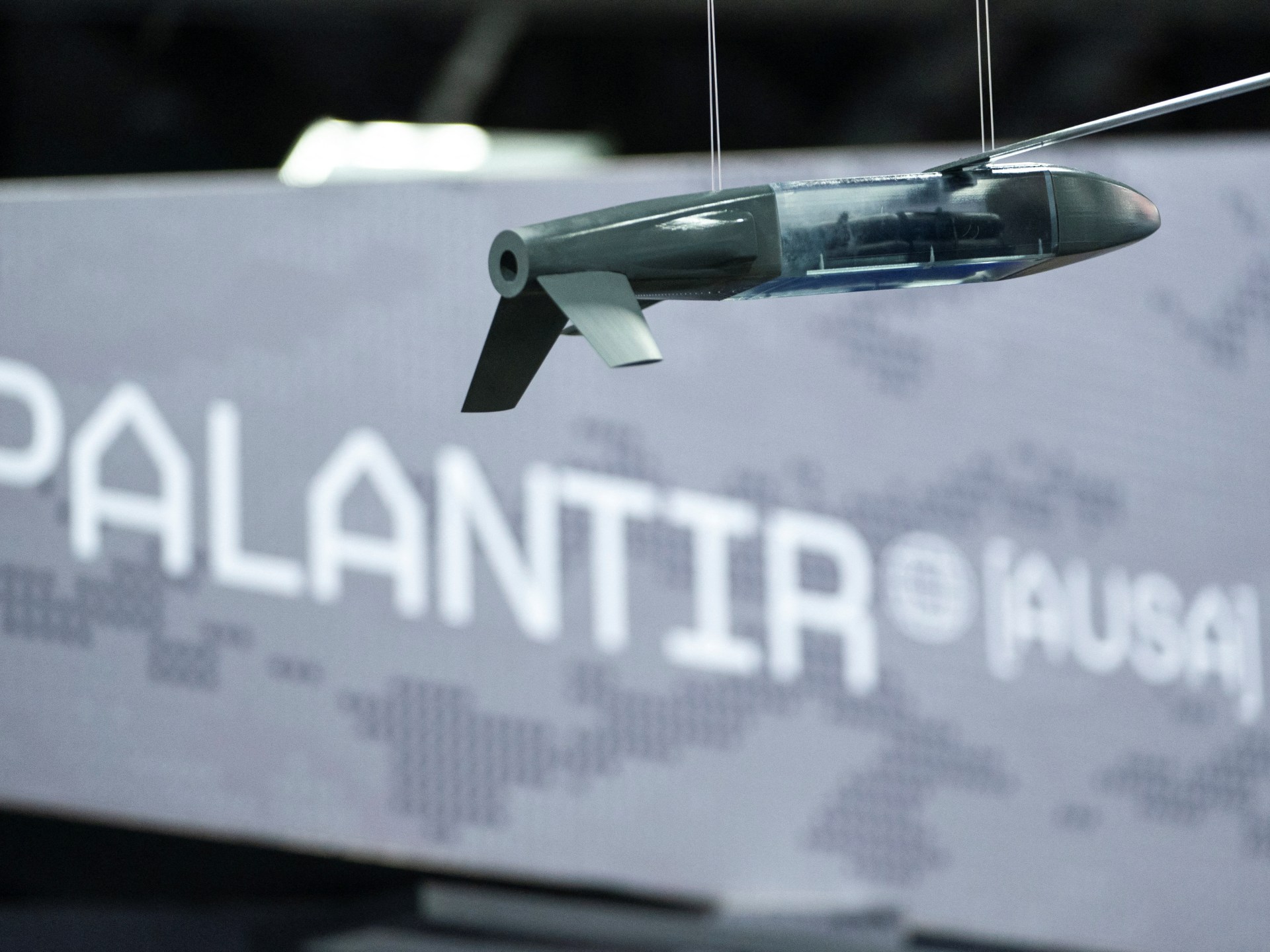
Palantir is one of the best-known names in that group because of its role in Project Maven, the Pentagon’s major military AI programme. The system uses AI and machine learning to process satellite imagery, drone video and signals intelligence to help identify and rank targets; the Center for Strategic and International Studies said Maven identified 1,000 targets in the first 24 hours of the US-Israel war on Iran.
Anduril is another major defence startup. NATO recently awarded contracts for its Enhanced Air Command and Control Data Platform to Anduril for its Lattice AI software, alongside Palantir and the French military-tech joint venture Athea SAS. Anduril says Lattice uses AI and computer vision to combine information from several sources into a live operating picture.
How Big Tech is tied to military AI
SIPRI also separates out Big Tech companies because military AI depends heavily on cloud computing and advanced chips. In May, the US Department of Defense announced agreements with SpaceX, OpenAI, Google, NVIDIA, Reflection, Microsoft, Oracle and Amazon Web Services for classified networks.
The Pentagon said the agreements were intended to speed its shift toward an “AI-first” military. The companies were cleared for IL6 and IL7 networks, the most sensitive classified computing environments operated by the Defense Department.
The final category covers foundational model providers, the AI labs that build models other companies may use inside military tools. SIPRI and Reuters identify firms such as OpenAI, Anthropic and Mistral AI in this area, while Reuters reported that Chinese researchers used Meta’s Llama model as the base for a People’s Liberation Army tool called ChatBIT, designed to support intelligence gathering and field decisions.
The Pentagon has estimated Chinese military AI spending at about $1.5bn to $2bn a year, comparable to US levels, according to the Centre for International Governance Innovation. Reuters reported that the Pentagon this year added Alibaba, Baidu, BYD, NIO, RoboSense and Unitree to its Chinese military companies list, saying the firms are believed to assist China’s military.
Recent deals show the pace of adoption. On July 10, the UK Ministry of Defence signed a 2bn-pound, 15-year contract with Omnia Training, led by Raytheon UK, to train 60,000 soldiers a year in the use of AI. Global military spending reached $2.88 trillion in 2025, according to figures cited by Al Jazeera, giving both old arms makers and newer software firms a growing market for military AI systems.
This story draws on original reporting from Al Jazeera.