
African states push mineral processing as demand for battery metals rises
Kenya, Namibia, Mali and Ghana are moving to keep more resource value at home as global demand for critical minerals grows.
By James Whitfield · Staff Writer
3 min read
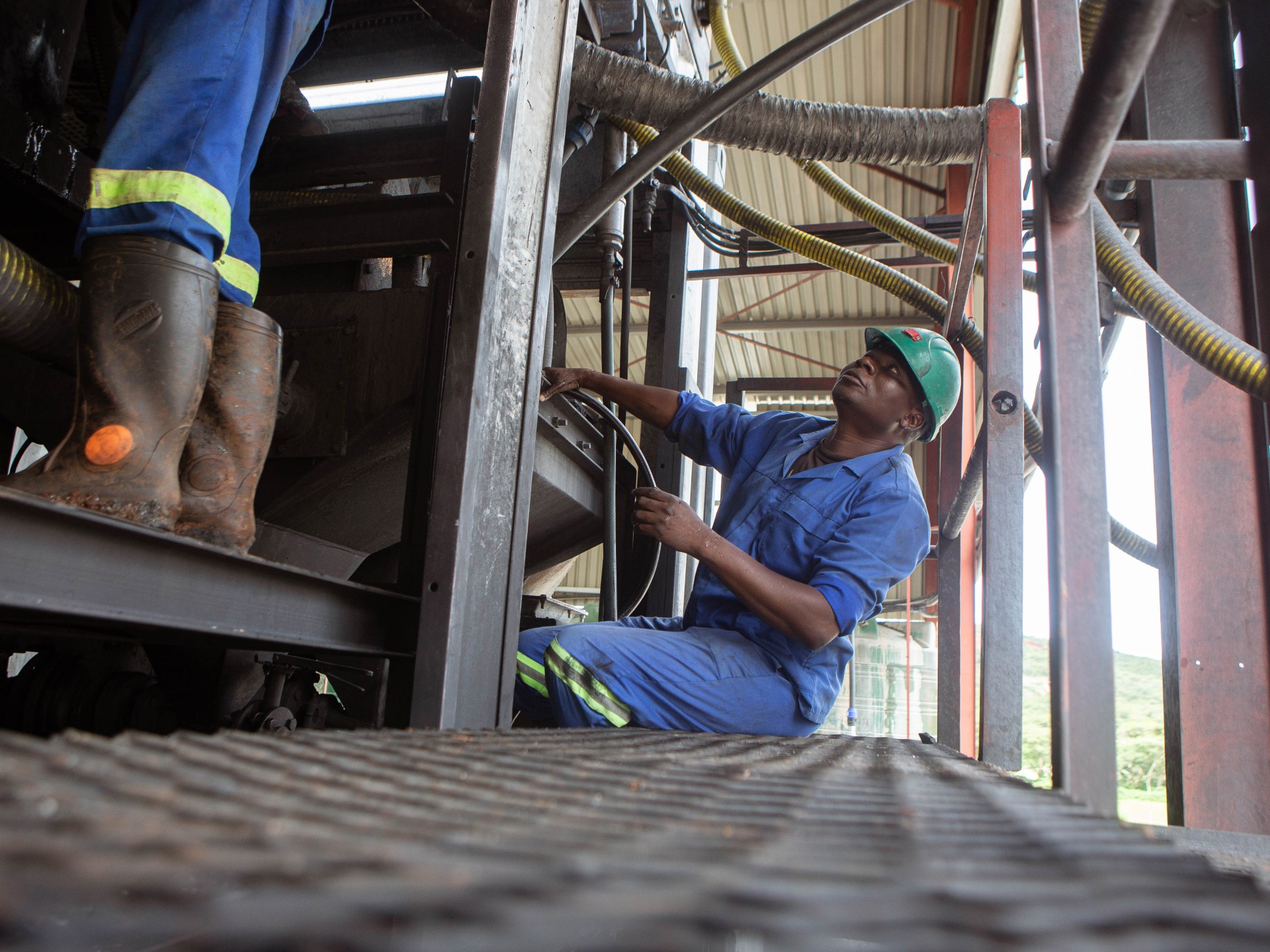
African governments are pressing for more minerals to be processed at home as global competition for battery and clean-energy inputs intensifies. The shift matters because countries with lithium, graphite, copper, nickel, cobalt and rare earths are seeking a larger share of the industries built from those resources, rather than exporting ore and importing finished goods.
Kenyan President William Ruto said at the G7 summit in Evian-les-Bains, France, on June 17 that Kenya was close to a critical minerals agreement with the United States, according to Al Jazeera columnist Tafi Mhaka. Mhaka reported that Kenya is insisting that rare earths, lithium, graphite, copper, nickel and niobium be refined and processed inside the country.
Other African states are taking similar steps, according to Mhaka. Namibia has banned exports of unprocessed lithium, cobalt, manganese, graphite and rare earths. Mali is building a gold refinery with capacity of 200 tonnes a year while requiring more domestic refining, and Ghana plans from July 2026 to buy 30 percent of large-scale gold output to support local refining and reserves.
Demand strengthens African bargaining power
The International Energy Agency says lithium consumption rose by almost 30 percent in 2024 as investment increased in electric vehicles, battery storage, renewable energy and advanced manufacturing. The agency projects lithium use will rise fivefold by 2040, while graphite and nickel needs are expected to roughly double.
Supply is harder to increase quickly. Mhaka cited IEA estimates that announced mining projects under its Stated Policies Scenario would leave lithium supply 40 percent below projected demand by 2035. New mines can take more than a decade to move from discovery to production, giving mineral-rich countries more room to seek local processing, technology transfer and industrial investment.
The value gap between raw exports and finished products is large. United Nations data cited by Mhaka showed global exports of lithium ore and brine were worth about $20 billion in 2022, while battery materials generated $51 billion, cell components and battery packs $106 billion, and electric vehicles $135 billion.
Mhaka wrote that refining is only an early stage in building manufacturing capacity. Around refineries, related businesses can form, including engineering firms, chemical producers, laboratories, equipment suppliers and specialist services.
Export controls and industrial policy
The push comes amid concern over concentrated refining capacity. According to the IEA figures cited by Mhaka, China is the leading refiner for 19 of 20 strategic minerals tracked by the agency. For copper, lithium, nickel, cobalt, graphite and rare earths, the top three refining countries account for 86 percent of processed output.
Publish What You Pay has estimated that expanding higher-value mineral processing in Africa could add $32 billion in annual exports, contribute up to $24 billion to gross domestic product and create about 2.3 million jobs, according to Mhaka.
Mhaka pointed to Nigeria’s Dangote refinery as an example of the broader beneficiation model. The refinery, in the Lekki Free Zone outside Lagos, cost about $20 billion and has capacity of 650,000 barrels a day. Since starting production in early 2024, it has supplied much of Nigeria’s domestic fuel market and exported petrol, diesel and jet fuel to Ghana, Cameroon, Togo, Burkina Faso and Ivory Coast, according to Mhaka.
He also cited Indonesia’s nickel policy. After banning exports of unprocessed nickel ore on January 1, 2020, Indonesia became a major producer and exporter of processed nickel products. Its nickel product exports rose from less than $1 billion in 2015 to nearly $20 billion in 2022, while the country sought $21.3 billion in foreign investment for mining and processing projects, according to Mhaka.
Mhaka argued that African countries will need regional coordination because key battery minerals are spread across different economies. He said the African Continental Free Trade Area could help link deposits, power systems, transport corridors, standards and markets into regional manufacturing chains.
This story draws on original reporting from Al Jazeera.