
Xgimi launches camera-free MemoMind One smart glasses
The Kickstarter wearable puts a private green display in eyeglass lenses, but an early Verge test found limited AI tools and privacy concerns.
By Maya Lindqvist · Senior Technology Correspondent
3 min read
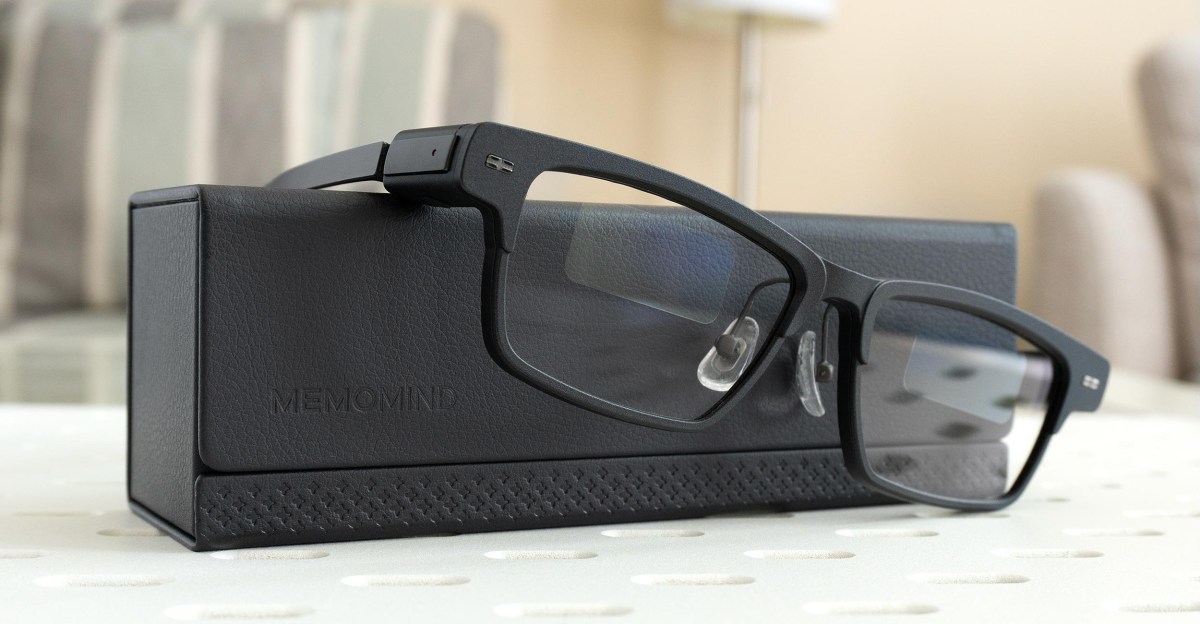
Xgimi opened a Kickstarter campaign Monday for MemoMind One, a new pair of smart glasses that place a private display in front of the wearer without using cameras. The pitch is notable in a market where camera-equipped eyewear has raised privacy concerns, but an early test by The Verge found the software and AI tools still have clear limits.
The Chinese company, best known for smart projectors, says the glasses are scheduled to ship in late July. Xgimi is offering three styles, with standard retail pricing set at $599 or $879 with prescription lenses. Kickstarter backers can get them for $399 or $499, while color customization raises the retail price to $699 or $879, with discounted campaign pricing of $449 or $499.
How the display works
According to The Verge’s Andrew Liszewski, the MemoMind One use micro-LED projectors and transparent waveguide prisms in both lenses to create a display visible only to the wearer. Unlike Meta’s Ray-Ban Display glasses, which use a color display, Xgimi’s screen appears in bright green.
Liszewski reported that the display’s distance, placement and brightness can be adjusted, and that it remained easy to see indoors. In bright sunlight, he said it became difficult to read unless the wearer looked toward a darker background.
The glasses weigh about 47 grams, according to The Verge’s test. Liszewski said they felt comfortable despite thicker arm ends that hold batteries, charging contacts, speakers and other electronics. Xgimi claims up to 16 hours of battery life.
The Verge said the glasses looked discreet enough that people nearby generally did not notice their smart functions. Audio was a different issue: Liszewski reported that the Harman Kardon speakers, positioned behind the ears, were easy for others to hear even at the lowest volume, including during phone calls.
AI features and limits
The MemoMind One home screen can show the time, battery level, date, weather and up to four configurable information sections, according to The Verge. Options include stocks, news headlines from preset sources, calendar items, a to-do list and notifications.
Liszewski said phone notifications appeared on the glasses as shortened previews, but the system did not allow him to expand messages or reply to texts and emails. That made the glasses less capable than a smartwatch for quick communication.
The glasses include a voice AI assistant that can be triggered with a button press or the phrase “hi, Memo,” according to The Verge. Liszewski said answers usually took about four or five seconds and could appear as text, with an option for audio playback.
A Quick Launch menu can provide access to three chosen tools, The Verge reported. Available functions include a teleprompter that scrolls with the wearer’s speaking pace, live captions for media, and a voice recorder with near real-time transcription and AI-generated summaries in the mobile app.
Privacy concerns remain
The Verge’s test found that several features still depend heavily on the phone app. Liszewski said translation required manual language selection in the app and struggled when speech was quiet or background music interfered. Mapping also required destination entry in the app and was limited to walking and cycling directions.
Xgimi is promoting the absence of cameras as a privacy advantage, but The Verge raised concerns about an optional feature called Moments. Liszewski reported that Moments continuously records surrounding audio to generate a summary of the wearer’s day, and he said the summaries were often inaccurate because the feature relies only on sound. Xgimi plans to charge $19.99 a month for the premium feature, according to The Verge.
Liszewski tested beta hardware with beta software and a mobile app that still lacked some features. His assessment was that the glasses show promise as discreet display eyewear, but the current feature set may not yet justify the price for buyers who would often need to pull out a phone anyway.
This story draws on original reporting from The Verge.