
War game finds ambiguity could slow US response to space attacks
The Mitchell Institute says U.S. officials need clearer thresholds for hostile acts as jamming, cyberattacks and close satellite maneuvers increase.
By Maya Lindqvist · Senior Technology Correspondent
3 min read
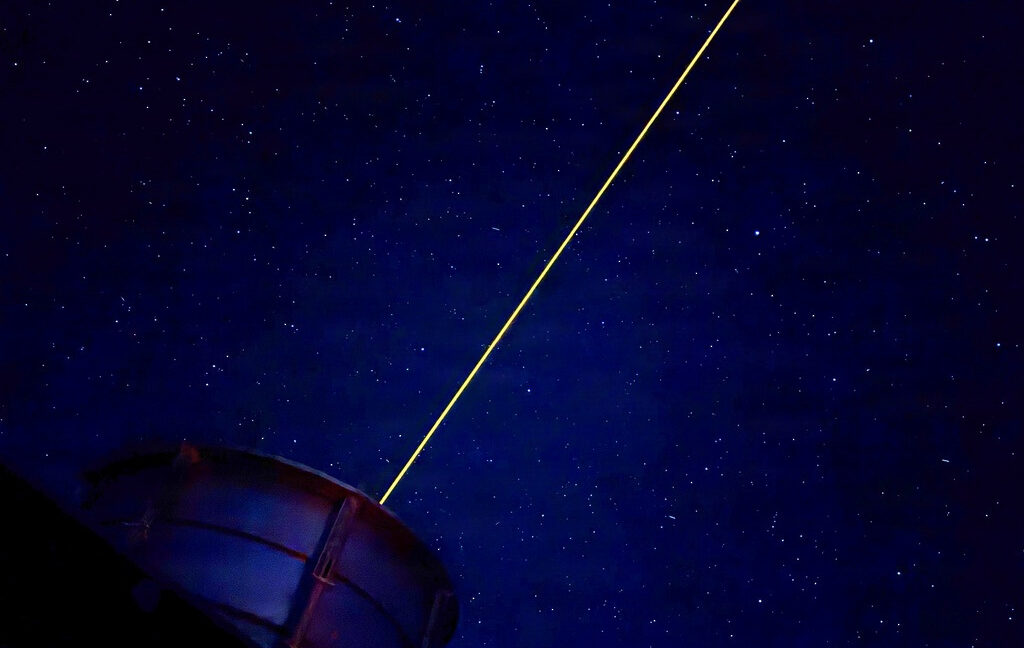
A Mitchell Institute for Aerospace Studies war game found that uncertainty over who attacked a satellite, and whether an incident was deliberate, could slow U.S. decisions during a crisis in orbit. The think tank’s report says clearer rules and faster attribution are needed because space systems support missile warning, communications, navigation and military operations on Earth.
The two-day workshop, held earlier this year and described in a report released last week, brought together 50 specialists from the military, government, industry and academia, according to Charles Galbreath, a retired Space Force colonel and the institute’s senior resident fellow for space studies.
Participants were asked to respond to hypothetical incidents involving hostile activity in space and on the ground. One scenario centered on a spacecraft operating near a U.S. Space Force missile-warning satellite more than 22,000 miles above the equator before the U.S. satellite stopped responding.
The institute said such a case would force commanders to sort through hard questions under pressure: whether the satellite failed on its own, whether another spacecraft disabled it, whether any damage was intentional, and who was responsible.
Scenarios tested escalation risks
The workshop’s first scenario began with what organizers called a Chinese show of force: a Chinese satellite docking with an inactive European commercial satellite and moving it in orbit without advance coordination, according to the Mitchell Institute report. Later events in the exercise included hostile actions attributed to China, Russia, Iran and an unidentified actor.
The report said the scenarios were designed to test how U.S. and allied leaders might respond through diplomacy, military action in space, or operations in other areas such as land, sea, air and cyber. Galbreath said the exercise showed that conflict in space is complicated because terrestrial infrastructure supports space operations while satellites support activity on Earth.
Retired Air Force Col. Jennifer Reeves, a coauthor of the report, said the lack of widely accepted definitions for conflict in space can make decisions slower and more reactive. She said leaders need confidence about what happened, who caused it, how broad the effects were and whether the effects were intended before choosing a response.
The report also warned that repeated non-kinetic actions such as jamming, lasers aimed at satellites and cyberattacks can make hostile conduct seem routine if governments do not identify and address it. Reeves said participants described this as a “boiling the frog” problem, with the threshold for a response shifting as pressure builds slowly.
Report urges clearer thresholds
The institute said participants saw coordinated action by several states as more escalatory than isolated incidents by one actor, especially if space pressure occurred alongside regional or global crises. One example in the exercise moved from GPS jamming to a missile strike in the Middle East and then to an attack on bridges at Cape Canaveral, Florida, halting launch activity at the busy spaceport.
Galbreath, Reeves and coauthor Kyle Pumroy recommended that the U.S. government work with commercial and international partners to set benchmarks for interpreting hostile behavior in space. Galbreath said those benchmarks could reduce ambiguity and delays when officials weigh possible responses.
The report also called for stronger public messaging about acceptable behavior in orbit and about which space systems the United States views as critical infrastructure. Galbreath said officials should make clearer how closely satellites are tied to national security and daily life.
The authors recommended that the Space Force keep running war games and improve protection for U.S. space infrastructure both in orbit and on the ground. Galbreath said the service could consider better radiation shielding for low-Earth orbit satellites against a potential nuclear detonation.
Reeves said many workshop participants believe major space powers are already operating in a gray zone marked by jamming, lasing, cyberattacks and coercive maneuvers near other satellites. She said those actions may not meet traditional thresholds for war individually, but their growing acceptance deserves more policy debate.
This story draws on original reporting from Ars Technica.