
The Verge says Xbox Ally X is the handheld PC to beat as prices rise
Sean Hollister points buyers to Asus’ $999 Xbox Ally X while warning that memory shortages and other pressures have lifted handheld PC costs.
By Maya Lindqvist · Senior Technology Correspondent
3 min read
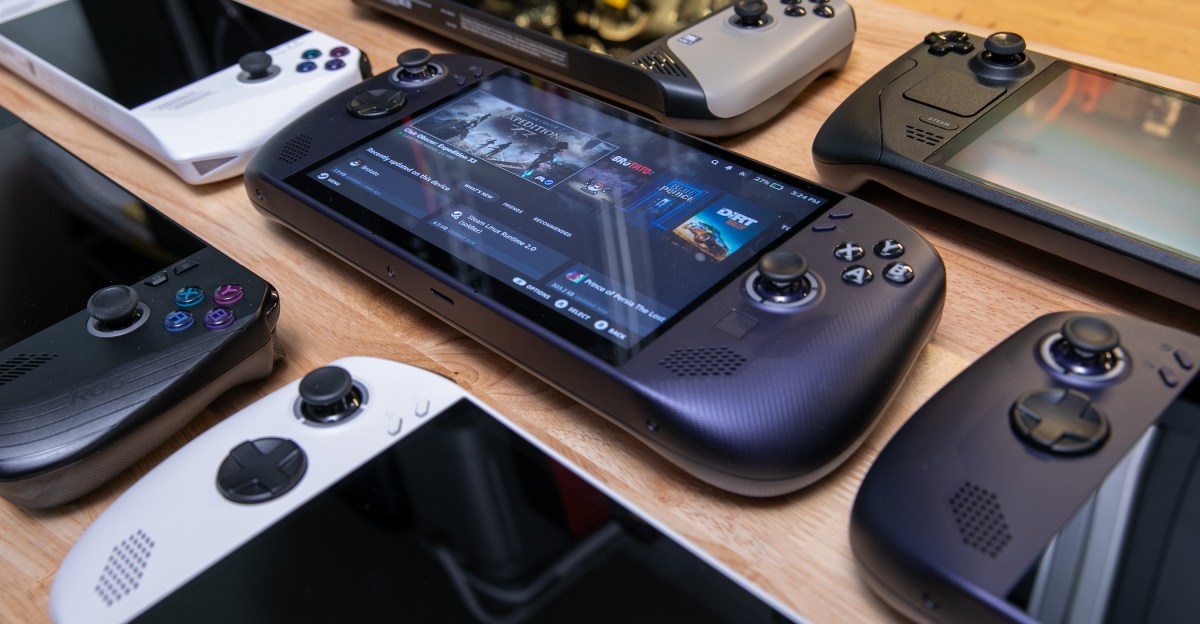
The Verge’s Sean Hollister says handheld gaming PCs have become harder to buy on price, with memory-chip shortages tied to AI demand among the forces pushing costs higher. In a new buying guide, he names the $999 Xbox Ally X as the handheld he would choose today because it has avoided the latest price increases while offering strong performance, comfort and battery life.
Hollister says the market has been hit by what he calls “RAMageddon,” along with an oil crisis, inflation, tariffs and other pressures. He says he does not know when prices might fall, so his guide focuses on what buyers can still reasonably choose now.
Refurbs and open-box models lead the bargain list
For buyers trying to spend less, Hollister says Valve’s refurbished Steam Deck LCD is the standout if it can be found in stock, usually at $279 to $359. Valve discontinued the original LCD model in December 2025, according to The Verge, but Hollister says certified refurbished units remain one of the best values.
He says the Steam Deck LCD still has enough power for demanding games such as Elden Ring, though newer high-end titles may require low settings and upscaling and may last under two hours on battery. He also points to Valve’s support record and the Steam Deck’s built-in SteamOS as reasons it remains easy to use.
Other lower-cost options cited by Hollister include open-box Asus ROG Ally Z1 Extreme units, usually around $500 to $550, and open-box Lenovo Legion Go systems that can drop to about $600. He says both make more sense for buyers willing to install Bazzite, a Linux-based operating system that can improve sleep, resume and performance on many handheld PCs.
Windows and Linux shape the buying decision
Hollister says Windows is less of a deal-breaker than it once was because many handhelds can run Bazzite or SteamOS. He says Linux can make the same hardware more stable and can improve the pick-up-and-play experience, though some competitive online games still do not work because of anti-cheat concerns.
He also says Windows sleep and resume have improved on some models, including the Xbox Ally X. Still, he argues it is wrong to assume Linux plays fewer games, citing Proton patches and community controller profiles that help older Windows games run well on handhelds.
New models split by priority
Among new handhelds, Hollister calls the $600 Asus Xbox Ally the most affordable model buyers are likely to find, noting that it sometimes sells for $500. He says it has comfortable grips, a chip similar to the Steam Deck’s, a 120Hz variable refresh rate screen and a slightly larger battery than Valve’s handheld, though he says Bazzite is needed to fix sleep and performance problems he saw with Windows.
For ease of use, Hollister still favors the Steam Deck OLED, now listed at $789 for 512GB and $949 for 1TB, with refurbished units at $629 or $759. He says its screen, battery life, controls, community controller profiles and Valve’s frequent updates keep it attractive despite the higher price.
The Xbox Ally X remains Hollister’s overall pick at $999. He says its Z2 Extreme chip, 80 watt-hour battery, comfortable grips and improving support from Asus and Microsoft make it the strongest option under $1,000, even though its 7-inch IPS display feels cramped beside larger rivals and its controls have some drawbacks.
For battery life, Hollister highlights MSI’s Claw 8 AI Plus, priced at $1,300 and often $1,120 on sale, saying it lasts slightly longer than the Xbox Ally X on an 80 watt-hour battery. For the best screen, he points to Lenovo’s $1,500 Legion Go 2 Z2, citing its 8.8-inch OLED HDR display, 500-nit brightness, 1,000-nit peaks and 30Hz-to-144Hz variable refresh rate.
This story draws on original reporting from The Verge.