
US lifts export limits on Anthropic’s latest Claude models
Anthropic says Fable 5 is available globally after new safeguards, while Mythos 5 access is being expanded through a cybersecurity program.
By James Whitfield · Staff Writer
4 min read
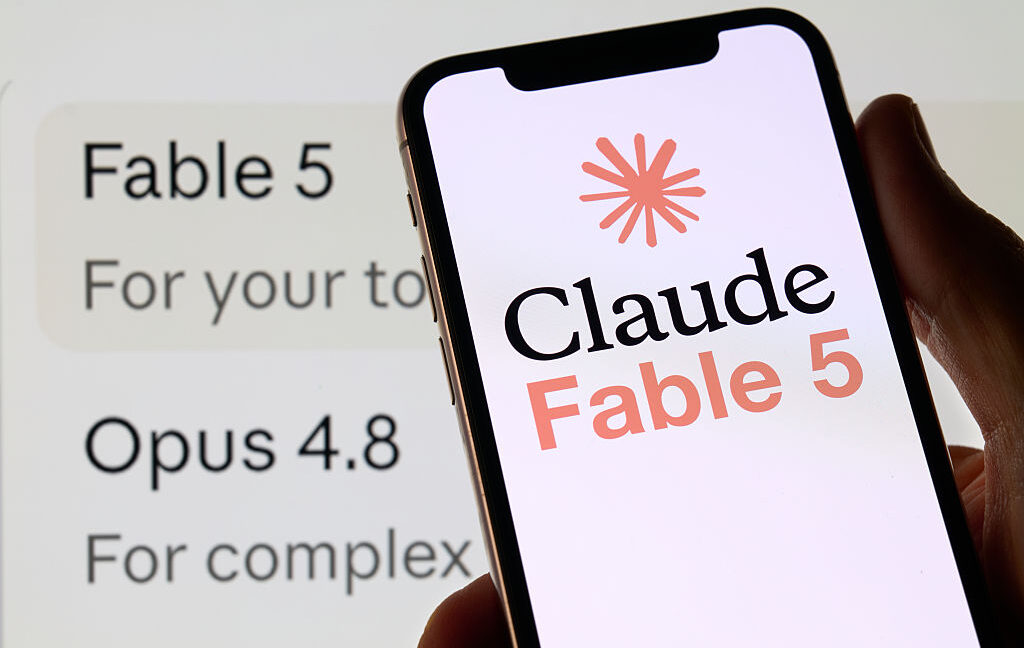
The United States has removed export restrictions on Anthropic’s newest Claude models, clearing the way for a wider release after federal officials raised national security concerns. The decision gives Anthropic a path to put Fable 5 back into global use while limiting Mythos 5 to a more controlled rollout.
Anthropic said Fable 5 is now available worldwide. The company said US organizations regained access to Mythos 5 on June 26, and it is working with the government to extend access to more domestic and international partners through Glasswing, a program for trusted cybersecurity researchers using Mythos for defensive work.
Commerce Secretary Howard Lutnick told Anthropic in a letter reviewed by Reuters and The New York Times that the company would no longer need a license to export or transfer Claude Mythos and Claude Fable models within countries. The letter said Anthropic had worked with the US government to address the models’ risks.
The Commerce Department had ordered Anthropic on June 12 to cut off access to its most advanced models for users outside the United States. The order followed concerns that China, Russia or other countries of concern could use the systems to attack US infrastructure, including banking or electricity systems, according to Ars Technica’s earlier reporting.
Anthropic said it shut down all access because it did not have a way to separate users by country at the time. In its own account, Anthropic described Mythos as unusually useful for attackers because it can find and exploit software flaws more effectively than other models and nearly all human security experts.
Fable 5 uses the same underlying model, Anthropic said, but the company said it does not provide the same distinctive offensive cyber abilities as Mythos. Anthropic said Fable 5 was built for general users and already had its strongest safeguards, which it has since tightened.
Safeguards may block ordinary coding work
Anthropic said weeks of testing addressed a bypass method found by Amazon researchers. According to Anthropic, that method identified several software flaws and in one case led the model to produce code showing how a vulnerability could be exploited.
The company said other less advanced models, including GPT-5.5 and Kimi K2.7, could find the same vulnerabilities cited in the report. Anthropic said that finding showed the incident did not reveal Mythos-level capabilities and involved routine defensive cybersecurity work.
Anthropic said a new safety classifier blocks the reported bypass in more than 99 percent of cases. The company also acknowledged a cost: some harmless requests may be blocked during normal coding and debugging, and blocked Fable 5 requests will be sent instead to Opus 4.8.
Lutnick’s letter said the US can revisit the decision and restore export restrictions. In a post on X, Lutnick said the government had worked with Anthropic over two weeks to review and approve Fable 5 while supporting US leadership in AI.
Broader government partnership
Anthropic said it is expanding work with government agencies on testing before model releases, early government access to frontier models, information sharing about jailbreaks and joint AI evaluation research. The company also said it created an internal team to monitor jailbreak reports around the clock.
Anthropic said it is working with Amazon, Microsoft, Google and other Glasswing partners on a framework to rate jailbreak severity. The proposed criteria include the capability unlocked, the number of offensive tasks enabled, how easily a person can weaponize it and whether specialist knowledge is needed to find it.
The company also announced a HackerOne program for researchers to submit possible cyber jailbreaks in Fable 5. Anthropic said it wants safety partners to find major jailbreaks before malicious users do, while noting that fully preventing jailbreaks is probably impossible.
The episode comes after Anthropic sued the US over a national security designation it said had blacklisted the company. Anthropic claimed the designation followed its refusal to give the government model access for autonomous weapons or domestic mass surveillance purposes.
The New York Times reported that President Donald Trump’s administration is still developing a process for companies to submit new AI models for review. Isaac Harris, executive director of the Frontier Security Institute, told Reuters the remaining question is how the US will handle comparable capabilities from China that may come with fewer safeguards.
This story draws on original reporting from Ars Technica.