
Volvo EX30 Cross Country nears U.S. exit after tariff hit
Tariffs pushed up the compact EV’s price, and Volvo’s U.S. order books are closed with limited inventory left, according to reports.
By James Whitfield · Staff Writer
3 min read
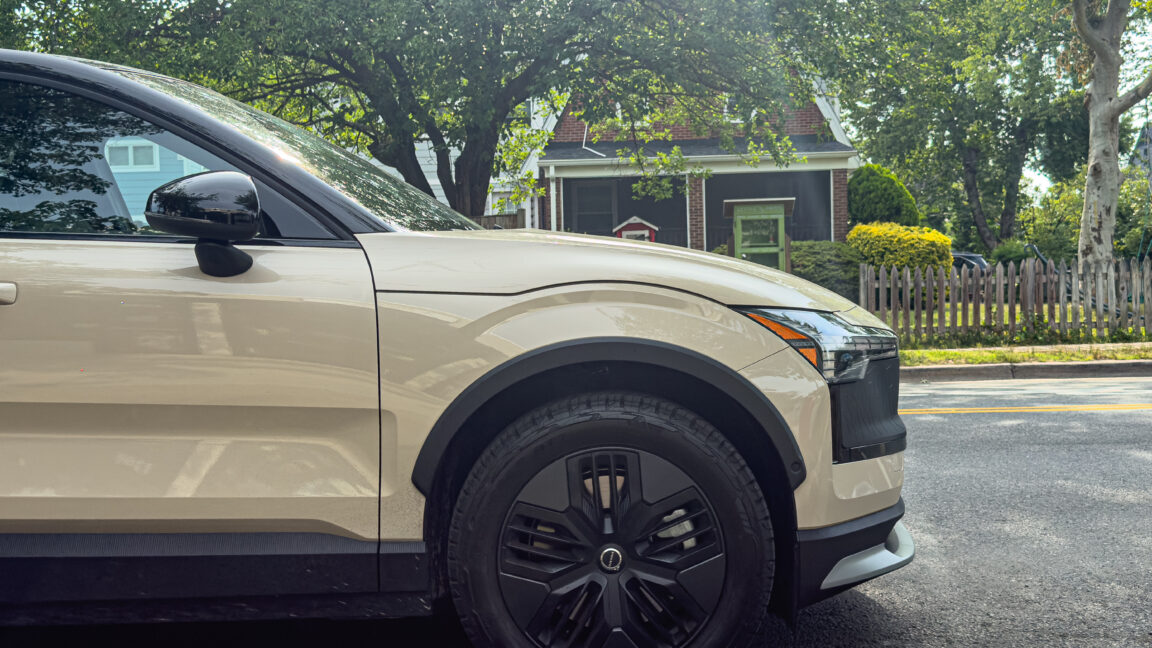
Volvo’s EX30, a small electric crossover pitched as a lower-cost premium EV, is nearing the end of its U.S. run just as the Cross Country version reaches buyers. The Drive reported that Volvo has stopped taking U.S. orders, and Ars Technica reported that fewer than 1,200 EX30s remain in inventory.
The shift matters because the EX30 was introduced as one of the more affordable battery-electric vehicles planned for the U.S. market. Ars Technica reported that Volvo showed the EX30 in 2023 with a starting price of $34,950 for the rear-wheel-drive model before any tax credit.
That pricing depended on production in Zhangjiakou, China, according to Ars Technica. The publication reported that tariffs imposed on Chinese-built cars by the Biden administration in 2024, followed by Trump administration tariffs the next year, led Volvo to delay U.S. imports and move production for U.S.-bound cars to Ghent, Belgium.
The move did not restore the original price. Ars Technica reported that European-built cars still face a 25% tariff, leaving the rear-wheel-drive EX30 at $40,345 including destination and the twin-motor all-wheel-drive version at $46,345.
The EX30 Cross Country sits above those models. Ars Technica reported that it uses the all-wheel-drive EX30 as its base and adds extra ground clearance, exterior cladding and underbody protection. Its starting price is close to $50,000, according to Ars Technica.
The Cross Country’s powertrain is quick for a compact EV. Ars Technica reported that its two motors make a combined 422 horsepower and 400 pound-feet of torque, enough for a 0-to-62 mph time of 3.7 seconds. A test vehicle fitted with an optional 18-inch all-terrain wheel package may have been slightly slower, according to the publication.
Range is a more limiting number. Ars Technica reported that the EX30 Cross Country is rated at 227 miles and uses a 65 kWh net, 69 kWh gross lithium-ion battery pack. The pack can DC fast-charge at up to 153 kW, with Volvo estimating a 10% to 80% charge in a little under 27 minutes, according to the publication.
Although Volvo said in 2023 that it would adopt the North American Charging Standard plug for U.S. EVs by 2025, Ars Technica reported that the EX30 retained a CCS1 port. In testing cited by the publication, charging from 49% to 82% took 21 minutes and added 25.6 kWh.
The EX30 also reflects Volvo’s attempt to cut cost and complexity inside. Ars Technica reported that the cabin has few physical controls and no separate driver instrument screen, with speed and drive information shown on the central display. The infotainment system uses Android Automotive OS, while Android Auto and Apple CarPlay are available.
The car’s compact size shapes its usefulness. Ars Technica listed the EX30 at 166.7 inches long, 72.3 inches wide and 62 inches tall, with a 104.3-inch wheelbase. The publication reported rear legroom of 32.3 inches and cargo space of 11.2 cubic feet with the rear seats in use.
Longer-term ownership reports have not been uniformly positive. Edmunds described its year with the EX30 as “a very frustrating car to live with,” according to Ars Technica.
Ars Technica reported that only about 250 of the remaining U.S. EX30s are Cross Country models, while fewer than 50 are rear-wheel-drive versions. Once that stock is sold, the compact Volvo EV’s U.S. availability will effectively be over, according to the reports.
This story draws on original reporting from Ars Technica.