
Trump ads kept airing after judge’s order, Justice Department says
Taxpayer-funded Trump ads ran after a federal judge ordered them canceled, prompting a Justice Department apology and a compliance hearing.
By James Whitfield · Staff Writer
3 min read
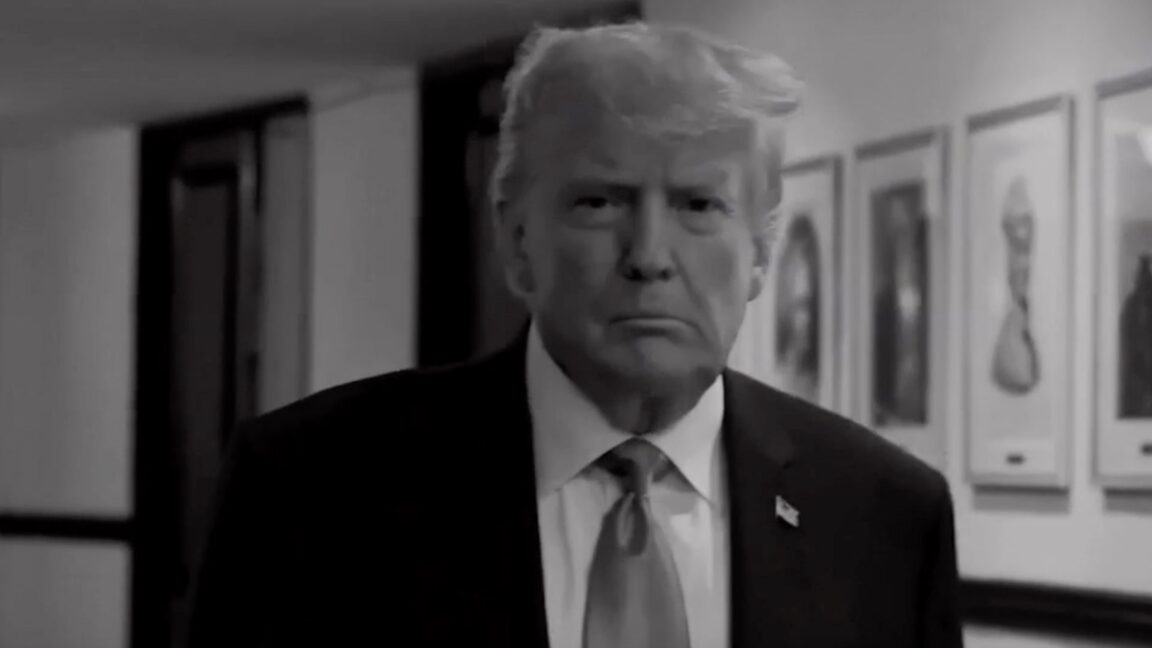
Taxpayer-funded Trump ads aired after a federal judge ordered them canceled on Oct. 11, according to court filings reported by Ars Technica. The Justice Department later apologized, said it was complying with the order and attributed the lapse to agency counsel not seeing an email about the ruling until the following morning.
U.S. District Judge Jennifer L. Rochon issued a temporary restraining order that took effect at 6:45 p.m. on Oct. 11. It required the government to cancel remaining placements, including those set for that evening, and barred new, renewed or expanded agreements for the challenged ads during the order’s two-week term, according to Ars Technica and Associated Press reporting published by PBS.
Why did Trump ads air after the court order?
In a status report, government lawyer Jamie McDonald said government counsel sent the order to agency counsel at 7:58 p.m. on Oct. 11, but agency counsel did not learn of the email until the next morning, Ars Technica reported. The filing apologized to Rochon and the plaintiffs.
The ads ran on the night the order took effect and into part of Oct. 12. Plaintiffs cited AdImpact data in a court filing saying the spots aired nearly 400 times after the order began, including 32 times on Monday; that figure was the plaintiffs’ reported tracking data, not a court finding.
The administration had told the court the day before the order that its Department of Homeland Security media purchases would end on Oct. 11 and would not be extended, according to Ars Technica. Trump had said on Oct. 5 that he would pay for future ads himself and with money raised for MAGA Inc.
What did the judge decide about the ads?
Rochon made a preliminary finding, rather than a final ruling, that the challengers were likely to prevail on their claim under a federal appropriations restriction on domestic government-funded publicity or propaganda. She also found a substantial likelihood that the spending violated the Administrative Procedure Act because Congress had not appropriated money for DHS to distribute the challenged ads, Ars Technica reported.
One ad closely resembled a Trump campaign commercial from 2024, except its funding notice named the U.S. government, Rochon wrote. It attacked political opponents and included promises to “demolish the deep state” and “rout the fake news media”; the judge said it provided no information about DHS functions.
Customs and Border Protection issued a $20 million purchase order to LMD Agency for the media campaign, and DHS said placements through Oct. 11 cost $19 million, according to Ars Technica. Rochon cited estimates that the principal ad had aired about 9,679 times and generated roughly 972 million impressions by Oct. 8, at a cost exceeding $9.09 million.
Common Cause, an Alabama state legislative candidate, SEIU Local 32BJ and its affiliated political action committee brought the case against DHS, the Office of Management and Budget, and the Executive Office of the President. The plaintiffs requested a status conference but said they were not then seeking contempt sanctions. Rochon set a Wednesday hearing to address compliance and the next steps.
This story draws on original reporting from Ars Technica.