
SpaceX IPO puts AI ambitions in front of NASA moon work
SpaceX’s Nasdaq debut valued the company near $1.8 trillion, with investors focused on its plans for orbital AI computing.
By Maya Lindqvist · Senior Technology Correspondent
3 min read
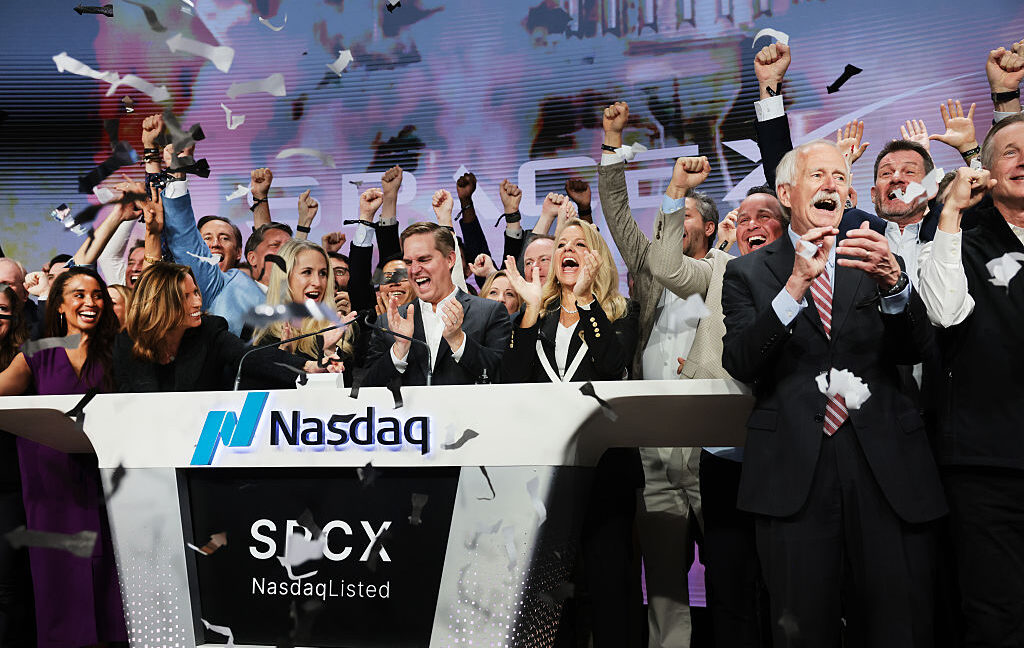
SpaceX began trading publicly on Nasdaq on Friday, nearly 25 years after Elon Musk founded the rocket and satellite company, Ars Technica reported. The debut matters for NASA because public investors are valuing SpaceX largely on its planned AI services rather than its government spaceflight work.
Shares opened at $135, giving SpaceX a valuation of nearly $1.8 trillion, according to Ars Technica. By the close, the stock had risen to $160.95, a gain of more than 19% on its first trading day.
Ars Technica reported that Musk’s stake was valued at more than $700 billion on paper, making him the world’s first trillionaire. The New York Times reported that SpaceX’s stock options plan also turned thousands of current and former employees into millionaires.
Investors are buying an AI story
The listing makes SpaceX one of the world’s most valuable companies, according to Ars Technica. It also gives public shareholders a direct financial interest in how the company spends its time, engineering talent and launch capacity.
Musk retains full control through ownership and voting rights, Ars Technica reported. Even so, the public market will now judge SpaceX through its stock price, adding a new pressure point for a company long driven by private goals such as Mars settlement, Starlink deployment and NASA missions.
In an S-1 filing submitted in May, SpaceX described “space-enabled solutions” and Starlink internet service as less than 7% of its total addressable market, according to Ars Technica. The company instead pointed to AI services, mostly delivered from space and aimed mainly at business customers, as the largest part of its opportunity.
That framing changes the stakes for SpaceX’s next phase. If investors believe the company’s profit will come from orbital data centers and AI compute services, they are likely to expect SpaceX to give those projects priority.
NASA faces a changed partner
NASA was a key early backer of SpaceX, including during periods when the company faced severe financial pressure, Ars Technica reported. A decade ago, SpaceX still drew much of its contract value from NASA and other U.S. government customers.
Starlink revenue has since grown beyond NASA contract revenue, and Ars Technica reported that the gap is expected to widen. The company’s AI compute deals with customers including Anthropic and Google are now worth tens of billions of dollars, according to Ars Technica, far above the $2.9 billion Human Landing System contract NASA awarded SpaceX in 2021.
NASA still depends heavily on SpaceX. Ars Technica cited astronaut flights, major science payload launches and the Artemis moon program as areas where the agency relies on the company.
The central issue is Starship, SpaceX’s large launch vehicle. Ars Technica reported that Starship appears close to operational use, with a target capability of placing about 100 metric tons into low-Earth orbit.
NASA needs SpaceX to demonstrate key Artemis steps, including in-orbit refueling and progress toward a lunar lander. Ars Technica reported that a refueling test would require consecutive Starship launches, while an uncrewed lunar landing test could require a dozen or more tanker flights to fill a lander prototype.
SpaceX could also use early Starship capacity for revenue-generating Starlink launches and tests tied to data center satellites, Ars Technica reported. After the IPO, that choice will be watched not only by NASA and space observers, but by shareholders looking for returns from the company’s AI plans.
This story draws on original reporting from Ars Technica.