
Small-satellite launchers face rideshare squeeze as Isar plans Canada pad
SpaceX Transporter availability is drawing concern, while Germany’s Isar Aerospace plans a Nova Scotia launch site for its Spectrum rocket.
By Maya Lindqvist · Senior Technology Correspondent
3 min read
Small-satellite operators are increasingly worried that SpaceX may limit future Transporter rideshare missions on Falcon 9, SpaceNews reported. The concern matters because those missions have become a key route to orbit for small spacecraft companies buying shared launches.
Several Transporter customers have said SpaceX is not taking reservations past late 2028 or early 2029, according to SpaceNews. Rocket Lab Chief Financial Officer Adam Spice said this week that his company has heard the same concern from customers and described recent conversations about Falcon 9 access as marked by anxiety.
Spice said he expects SpaceX to devote more Falcon 9 capacity to its own programs, including Starlink and a planned orbital data center system, SpaceNews reported. SpaceX launched Transporter-17 as those questions circulated in the industry.
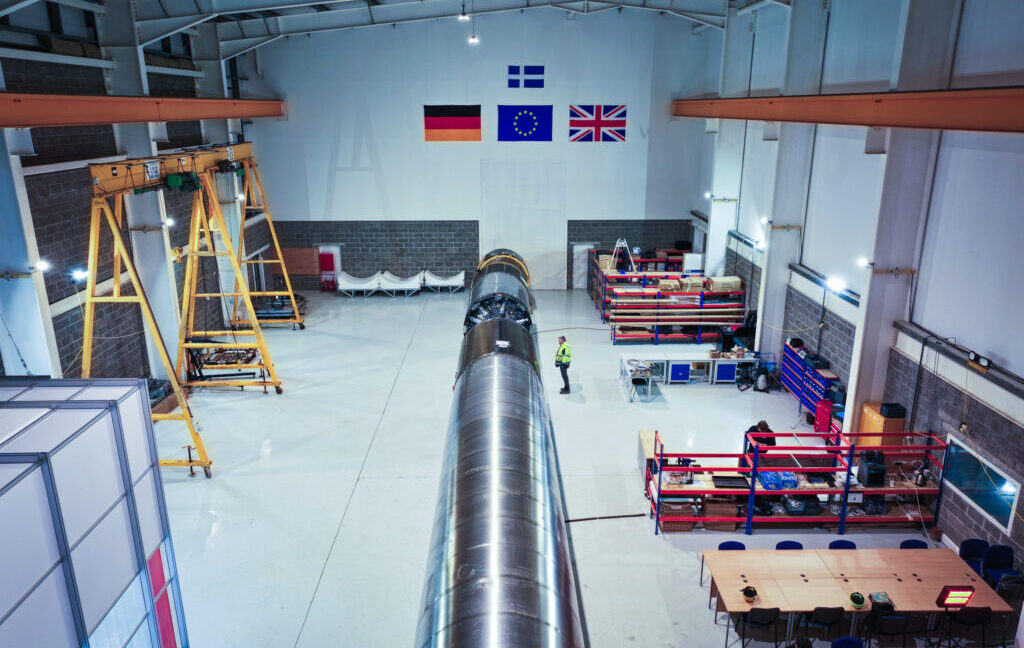
Another small-launch development is taking shape in Canada. CBC reported that Germany’s Isar Aerospace has signed a 10-year arrangement with Halifax-based Maritime Launch Services to build a dedicated Spectrum launch complex near Canso, Nova Scotia.
Maritime Launch said Isar has formed a Canadian subsidiary, Isar Aerospace Canada Inc., according to CBC. The company’s Spectrum rocket is a two-stage vehicle designed to carry small and medium satellites, and Isar already has a launch site in Norway.
Maritime Launch CEO Stephen Matier said Isar plans to spend about $100 million as a tenant to prepare the pad, CBC reported. Construction is expected to begin this year, with launches targeted for 2028. CBC also noted that Canada currently depends on the United States to put its satellites in orbit and that Ottawa has identified launch capability as part of its defense industrial strategy.
European launch companies also reported progress. European Spaceflight reported that Rocket Factory Augsburg is preparing another attempt at the first flight of its RFA One rocket from SaxaVord Spaceport in Scotland, with a launch window opening Aug. 10. The effort follows a static-fire accident nearly two years ago in which an RFA One first stage caught fire.
United Launch Alliance’s Atlas V is nearing the end of its service life, Ars Technica reported, after launching 29 Amazon Leo broadband satellites from Cape Canaveral Space Force Station. Ars said that mission was the ninth Atlas V launch for Amazon Leo and the rocket’s 110th flight since its 2002 debut. Six Atlas V vehicles remain assigned to Boeing Starliner crew missions for NASA, though Ars reported Boeing may not use all of them.
ArianeGroup and Beyond Gravity said they signed a contract covering 27 payload fairings for Ariane 6 flights 16 through 42. Beyond Gravity said it will produce 20 long fairings and seven short fairings, with the operational-phase contract starting at the end of 2026.
SpaceX also set another booster-reuse mark, Spaceflight Now reported. A Falcon 9 first stage identified as B1067 flew for the 36th time on a Starlink 10-42 mission, deployed 29 satellites, and landed on the drone ship A Shortfall of Gravitas. Spaceflight Now said SpaceX now has more than 10,700 Starlink satellites in orbit.
This story draws on original reporting from Ars Technica.