
Skyroot targets first Vikram-1 launch as SpaceX reaches Merlin milestone
India's Skyroot set a July-August window for Vikram-1, while SpaceX said it built its 1,000th Merlin 1D first-stage engine.
By Hana Yoshida · Markets Reporter
3 min read
Skyroot Aerospace plans to attempt India’s first private orbital launch as soon as July 12, a step that would test the country’s commercial launch ambitions beyond its government space program. The Economic Times reported that the company has set a July 12-August 4 window for the debut flight of its Vikram-1 rocket from the Satish Dhawan Space Center.
The test mission is intended to collect flight data on propulsion, stage separation, guidance, navigation and control, and overall vehicle performance, according to the Economic Times. The report said the rocket will fly from a pad originally built for India’s state-run space program.
Skyroot has raised about $160 million, including a $60 million round announced in May, and its valuation has moved above $1 billion, the Economic Times reported. Ars Technica reported that Vikram-1 uses three solid-fueled stages and a fourth liquid-fueled stage for final orbital maneuvers, with a design capacity of nearly half a ton to low-Earth orbit.
SpaceX marks engine production milestone
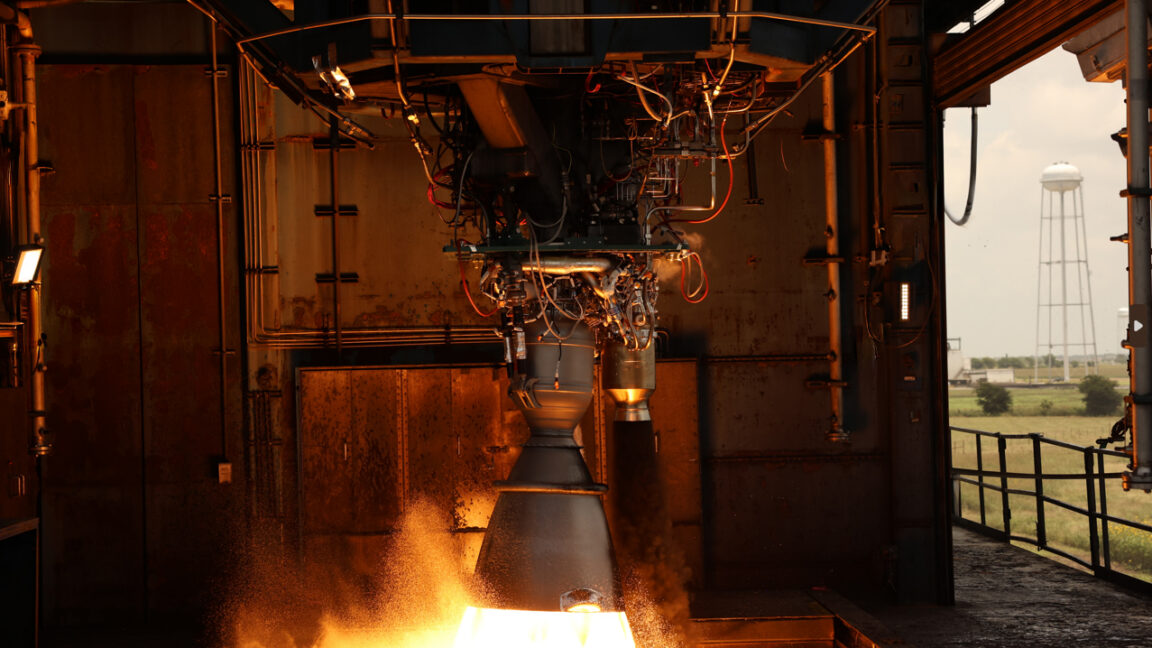
SpaceX said on X that it has produced the 1,000th Merlin 1D engine for the first stage of its Falcon rockets. Ars Technica reported that Falcon 9 and Falcon Heavy rockets have flown 671 times, with many missions using recovered boosters and engines.
Each Falcon 9 first stage uses nine kerosene-fueled Merlin engines, while Falcon Heavy uses 27 on its three first-stage cores, Ars Technica reported. SpaceX said on X that reuse has allowed it to recover engines and make reliability improvements; Ars Technica reported that the Merlin 1D has accumulated more than 6,000 engine flights across 1,000 units.
SpaceX also flew a less common geostationary mission this week, according to Spaceflight Now. A Falcon 9 launched the roughly 7-metric-ton SXM-11 satellite for SiriusXM, sending it toward an orbital position more than 22,000 miles above the equator to support continuous radio coverage over the United States.
Other launch developments
Ars Technica reported that Katalyst Space Technologies’ Link servicing satellite reached orbit on a Northrop Grumman Pegasus XL rocket launched from a modified L-1011 aircraft over the Pacific Ocean. The mission, delayed earlier by weather and a launch vehicle issue, is designed to approach NASA’s Swift astronomy satellite and try to raise its orbit before atmospheric drag brings it down.
The Pegasus launch was the rocket’s last scheduled flight, Ars Technica reported. The air-launched vehicle had been used heavily in earlier decades for small NASA and U.S. military payloads, but demand declined as lower-cost commercial launch services expanded.
NASA selected Rocket Lab for three Electron launches in 2027, Space News reported. Two flights will carry the PolSIR mission’s small satellites from New Zealand no earlier than June 2027, while a separate Electron launch in early 2027 will carry NASA’s TSIS-2 solar irradiance mission.
United Launch Alliance flew its final Atlas V mission for Amazon’s Leo broadband constellation, placing 29 satellites in orbit from Cape Canaveral Space Force Station, Ars Technica reported. The flight was also the last Atlas V mission with a payload fairing and the rocket’s five-booster configuration; six remaining Atlas V rockets are assigned to Boeing Starliner crew missions, which do not use fairings.
NASA Administrator Jared Isaacman said Blue Origin has put significant resources into cleaning up its New Glenn launch pad after a May 28 explosion, Ars Technica reported. Blue Origin CEO Dave Limp said early analysis points to the aft section of the first stage, and Ars Technica reported that the company plans to use a crane rather than rebuild the lost transporter-erector for its planned return to flight before year-end.
This story draws on original reporting from Ars Technica.