
Robotic rescue craft launches to save NASA’s Swift telescope
Katalyst’s Link satellite is in orbit for a risky attempt to grab and lift NASA’s aging Swift observatory before drag pulls it lower.
By Hana Yoshida · Markets Reporter
3 min read
Katalyst Space Technologies has launched a robotic spacecraft designed to catch and raise NASA’s Swift astronomy satellite, which NASA says is at risk of dropping too low for rescue within months. The mission could preserve a still-useful observatory and test whether commercial spacecraft can service satellites that were not built for docking.
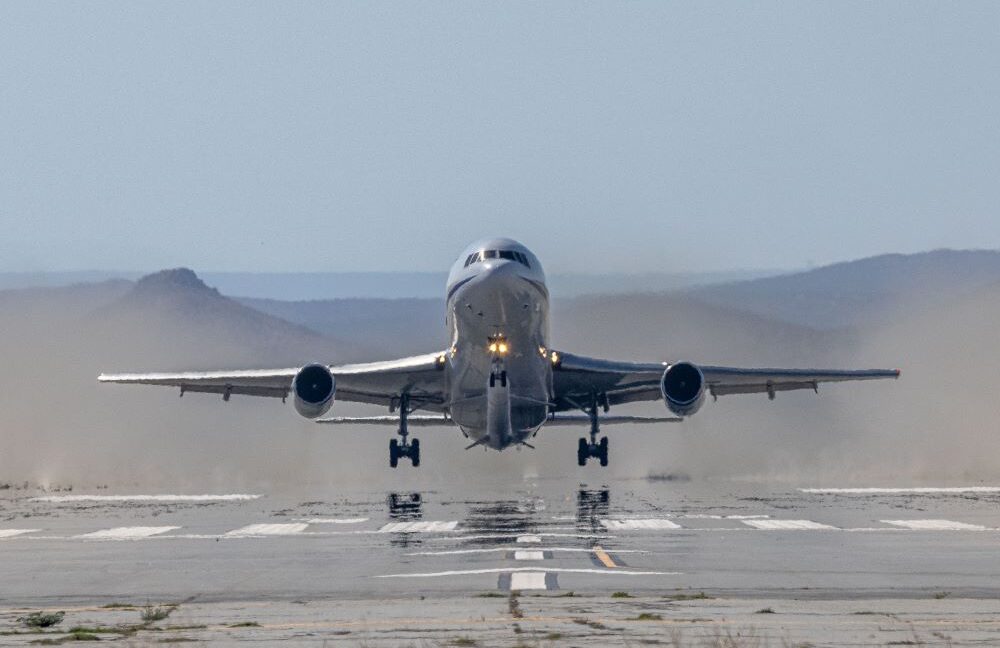
According to NASA and Ars Technica, Katalyst’s Link satellite reached orbit after launching Friday from a Northrop Grumman Pegasus XL rocket released by an L-1011 aircraft over the Pacific Ocean south of Kwajalein Atoll. NASA said Katalyst established contact with Link after deployment, confirming the spacecraft survived the launch.
NASA selected Katalyst last September after asking companies to propose a fast mission to stop Swift from falling out of orbit, Ars Technica reported. The company built, tested and launched the nearly half-ton Link spacecraft in a little more than nine months.
A low-orbit chase
The Pegasus XL was carried from NASA’s Wallops Flight Facility in Virginia to the U.S. Army’s Ronald Reagan Space and Missile Test Range on Kwajalein Atoll, according to Ars Technica. After a weather wait, the carrier aircraft released the 58-foot rocket at 41,000 feet at 4:36 a.m. EDT Friday, and the rocket ignited five seconds later.
Ars Technica reported that Pegasus reached orbital speed in just under eight minutes and deployed Link almost 13 minutes after launch. Katalyst chose the air-launched rocket because Swift flies in an orbit inclined 20.6 degrees to the equator, a geometry that would have required a larger and costlier rocket from Cape Canaveral, according to the report.
NASA said Katalyst will spend the next several weeks checking Link’s propulsion, sensor and navigation systems. Link is then expected to approach Swift, inspect the 21-year-old spacecraft, capture it and raise its orbit over several months.
The attempt carries technical risk because Swift was not designed to be grabbed by another spacecraft. Katalyst’s Link vehicle carries cameras, sensors, three robotic arms and three plasma thrusters, according to Ars Technica, but engineers must assess Swift’s condition before choosing capture points.
Kieran Wilson, Katalyst’s principal investigator for Link, told Ars Technica that the effort is “challenging and risky,” noting that spacecraft with longer development schedules and larger budgets have failed for ordinary reasons. Wilson also said Katalyst is relying on Swift’s ability to control its pointing while Link inspects possible capture locations.
Why NASA wants Swift saved
NASA has a timing problem. Ars Technica reported that, based on current trends, Swift could fall below 300 kilometers, or 186 miles, in October, where atmospheric drag would make a rendezvous much harder.
Swift, a $500 million observatory, is used to detect gamma-ray bursts, the powerful cosmic explosions that scientists track with multiple telescopes, according to Ars Technica. The report said astrophysicists still use Swift’s instruments to locate bursts for follow-up observations despite the spacecraft’s age.
Katalyst also sees the mission as a commercial test of robotic satellite servicing. Robert Lamontagne, Katalyst’s vice president of strategic partnerships, told Ars Technica the goal is to offer a service that can capture and work with satellites that were not prepared for servicing, including missions to refuel, reposition, repair or upgrade spacecraft.
This story draws on original reporting from Ars Technica.