
First Amendment warnings mark America’s 250th birthday
A Verge commentary tied July Fourth celebrations to concerns over government pressure on speech, journalism, protest and online platforms.
By James Whitfield · Staff Writer
3 min read
The United States’ 250th anniversary brought celebrations at home and abroad, while a new commentary in The Verge used the milestone to warn that First Amendment protections remain under pressure. TC Sottek, a senior editor at the publication, argued that the country’s core speech guarantees need active defense from government overreach and public confusion.
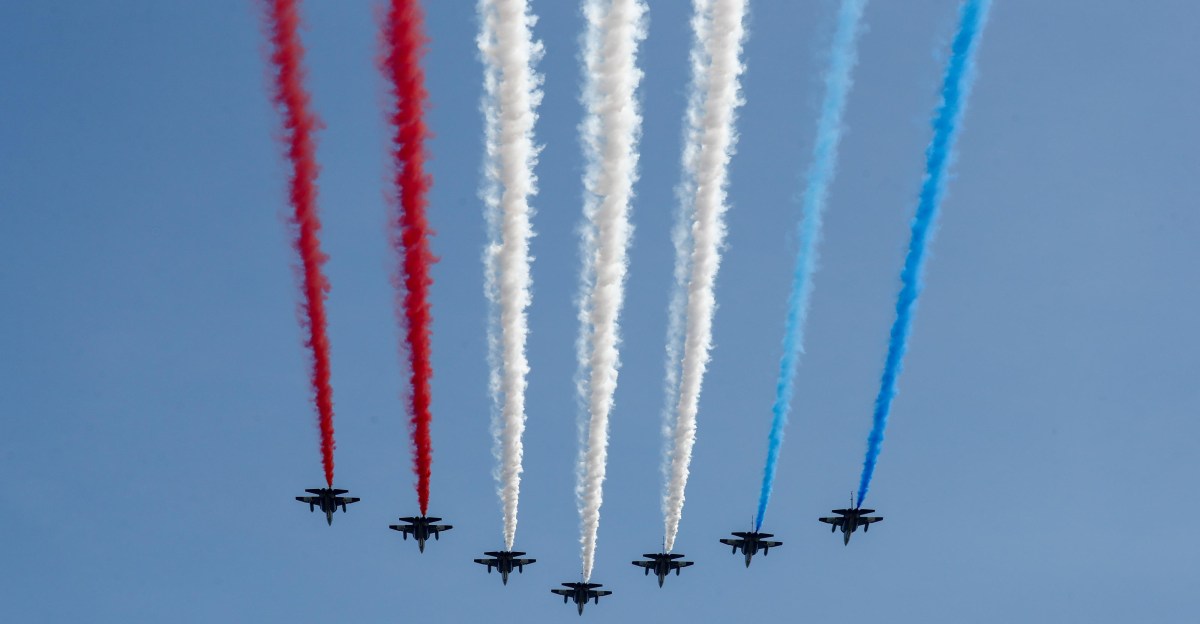
Sottek wrote that the anniversary was marked by fireworks across the U.S., lighting at the Eiffel Tower, fireworks in Japan and a French flyover above New York City during the Sail4th 250 Tall Ships Parade. He also noted a Guardian report that white nationalists marched in Washington, D.C., on July 4.
The commentary framed the Declaration of Independence as the starting point for the anniversary and the Constitution as the legal foundation for the rights Sottek said make his work possible. He highlighted the First Amendment’s protections for religion, speech, the press, peaceful assembly and petitioning the government.
Historical fights over speech
Sottek pointed to early U.S. history to argue that speech rights have faced attacks since the country’s founding. He cited the Alien and Sedition Acts of 1798 under President John Adams, saying they expanded federal power against foreigners and criminalized certain writings criticizing the government.
He also discussed the World War I-era Supreme Court decision associated with the phrase about shouting “fire” in a crowded theater. Citing Trevor Timm’s analysis in The Atlantic, Sottek said the phrase is often misused and came from a case involving a socialist prosecuted under the Espionage Act for opposing the draft.
Sottek wrote that the Espionage Act later surfaced again in a case involving a New York Times journalist, linking that history to modern disputes over reporting and government secrecy.
Police, protests and federal power
The Verge commentary said misunderstandings about the First Amendment often appear in encounters with police, especially when people record in public. Sottek described the rise of “First Amendment auditors,” streamers and influencers who test public recording rights and sometimes provoke confrontations with law enforcement.
According to Sottek, some encounters end when a higher-ranking officer corrects unconstitutional conduct, while others lead to detention or arrest for protected behavior. He argued that the stakes have grown in 2026 because, in his account, the Trump administration has sent poorly trained federal agents into cities and treated protected activity as a threat.
Sottek linked those deployments to deaths, assaults on journalists and burdens on people forced to deal with the justice system after exercising rights to speak or assemble. He emphasized that protest against the government is central to the First Amendment’s purpose.
Media, platforms and censorship
The commentary also accused federal officials of pressuring media and technology companies. Sottek wrote that the FCC should not regulate speech and criticized its conduct under Brendan Carr, citing earlier Verge coverage about civil rights and Trump administration policy.
Sottek argued that the Trump administration contributed to pressure on broadcast networks and late-night hosts, naming Stephen Colbert and Jimmy Kimmel. He also pointed to Trump’s record on science communication and social platforms, including a past threat to jail Meta CEO Mark Zuckerberg and earlier threats aimed at internet platforms.
On online moderation, Sottek drew a line between government censorship and private platform decisions. He wrote that a social network’s decision to moderate content is an exercise of its own speech rights, while government suppression of speech is censorship.
The commentary closed by urging readers to vote, contact members of Congress, take part in local elections such as school board races, and support newsrooms. Sottek cited writer Ken White’s warning that confusion about “free speech culture” can weaken enforcement of actual speech rights, and he linked book-banning disputes to an ACLU account of titles removed from Defense Department schools.
This story draws on original reporting from The Verge.