
Qualcomm unveils Snapdragon Reality Elite for upcoming XR glasses
The new XR chip is set to debut in Xreal’s Project Aura glasses, with Qualcomm claiming gains in graphics, AI processing and battery life.
By Maya Lindqvist · Senior Technology Correspondent
3 min read
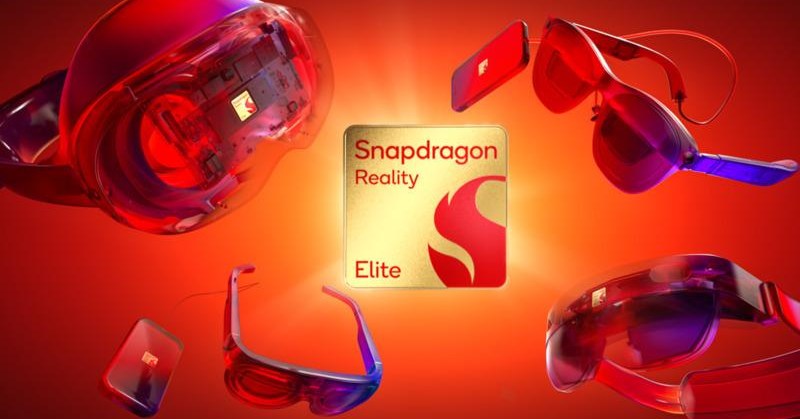
Qualcomm introduced a new XR processor, the Snapdragon Reality Elite, aimed at powering more capable smart glasses and mixed-reality devices. The chip is expected to appear first in Xreal’s Project Aura Android XR glasses this fall, according to The Verge.
Qualcomm announced the processor at Augmented World Expo, The Verge reported. The chip had already appeared publicly in prototype hardware at Google I/O last month, where The Verge said it tried Xreal’s forthcoming Aura glasses, though Xreal and Google did not identify the processor at the time.
Performance upgrades across the chip
Qualcomm is pitching the Snapdragon Reality Elite as a broad upgrade over its previous XR silicon. According to the company’s figures cited by The Verge, the chip’s GPU performance is up 60 percent, CPU performance is up 30 percent and NPU performance is up as much as 160 percent.
The NPU gain is notable because neural processing is central to on-device AI features. The Verge said the added headroom could help glasses handle larger language models and other AI tools without relying as heavily on outside hardware.
Qualcomm also says the Snapdragon Reality Elite supports 4.4K resolution at 90 frames per second for each eye, according to The Verge. That specification points to sharper and smoother visuals for immersive XR experiences, assuming device makers build displays and optics around the chip’s capabilities.
Battery life and cooling claims
Qualcomm says battery life improves by up to 20 percent with the new chip, The Verge reported. The company also says it improved cooling by making the processor more power efficient.
Under heavier workloads, Qualcomm claims the Snapdragon Reality Elite can run up to 12 degrees Celsius cooler than its previous-generation XR chips, according to The Verge. Heat and battery limits are major design constraints for smart glasses because the devices must fit displays, cameras, processors and batteries into a wearable frame.
The Verge reported that the chip could help enable lighter glasses that last longer between charges. Those benefits would depend on how hardware makers use the processor, including the size of the battery, the display system and the software running on the device.
First stop: Project Aura
Xreal’s Project Aura glasses are expected to be among the first products to show what the Snapdragon Reality Elite can do. The Verge reported that the glasses are being developed for Android XR and are due this fall.
The timing gives Qualcomm a visible launch partner as companies test whether smart glasses can move beyond early hardware experiments. For now, the Snapdragon Reality Elite is a silicon announcement, with real-world performance still tied to the first devices that ship with it.
This story draws on original reporting from The Verge.