
Trump administration drops appeal over wind energy freeze
The Justice Department ended its challenge to a ruling that struck down Trump’s wind permitting pause as clean energy projects expand nationwide.
By James Whitfield · Staff Writer
4 min read
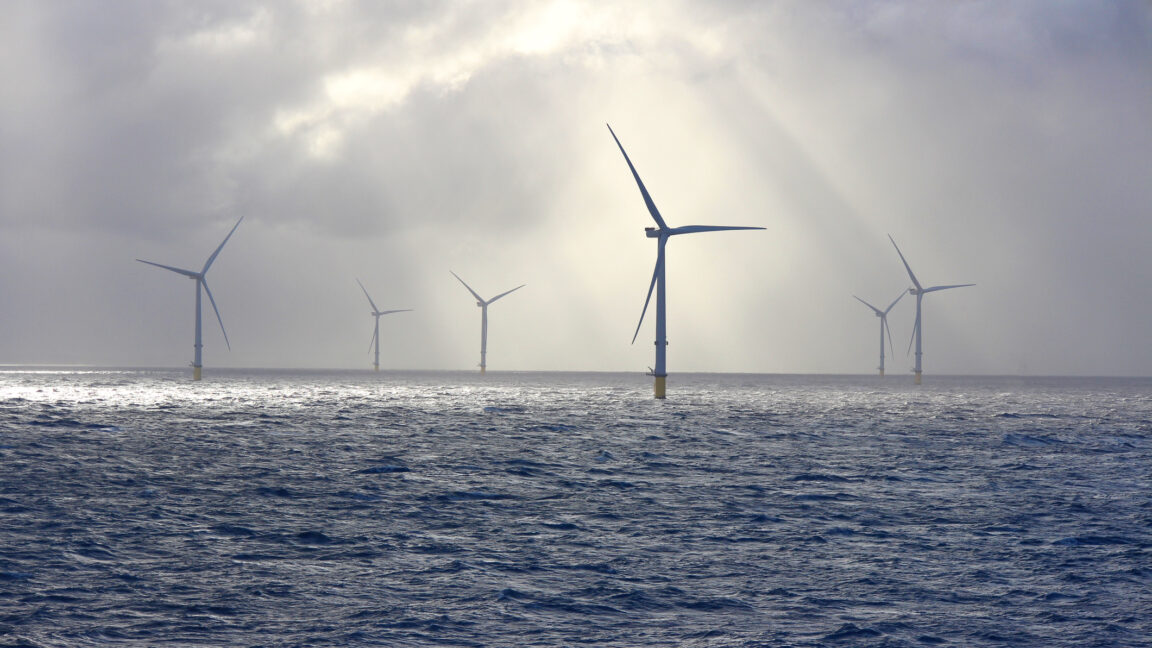
The Trump administration has ended its legal fight to revive a freeze on federal wind energy permitting and leasing. The move leaves in place a ruling that found President Donald Trump’s January 2025 order unlawful, while new data from the Environmental Defense Fund and Atlas Public Policy shows clean power additions continuing to grow.
The US Court of Appeals for the First Circuit dismissed the administration’s appeal Monday after the Justice Department asked to withdraw it on June 10, according to Massachusetts Attorney General Andrea Campbell’s office. The case was brought in May 2025 by attorneys general from 17 states and Washington, DC, led by New York Attorney General Letitia James.
US District Judge Patti Saris ruled on December 8 that the wind freeze was “arbitrary and capricious” and went beyond presidential authority, according to court records cited by the state officials. The order had paused federal approvals tied to wind projects across the country.
State officials who challenged the order described the dismissal as a major legal defeat for the White House’s effort to slow renewable energy development. Environmental groups also welcomed the decision.
Nancy Pyne, a senior adviser to the Sierra Club, said renewable energy was continuing to grow despite attacks from the Trump administration. She said clean power offered a way to reduce costs and protect health and the environment as households face higher bills and price volatility.
Clean energy pipeline expands
The court action comes as clean energy output is rising, according to a recent report by the Environmental Defense Fund and Atlas Public Policy. The groups projected that 79.7 gigawatts of clean power will come online in the United States in 2026, even after about 8 gigawatts of projects were canceled in the first quarter.
The report said 222 gigawatts of clean energy capacity is planned or under construction nationwide, within a broader 693-gigawatt set of power projects announced through the first quarter. Developers have announced an estimated $377 billion in new project investment through 2031, according to the report.
The United States already has 471 gigawatts of clean power operating, the report said. It added that a record 51.6 gigawatts came online in 2025, an amount the report compared to about 25 Hoover Dams. Solar and battery storage make up 85% of the planned clean energy pipeline, according to EDF and Atlas Public Policy.
A separate federal ruling earlier this month also favored renewable developers. On June 6, US District Judge Colleen Kollar-Kotelly rejected an August 2025 Treasury rule that had made it harder for wind and solar projects to qualify for federal tax credits, according to Inside Climate News.
The rule ended a long-used pathway that let developers lock in credits by showing they had spent at least 5% of a project’s total cost. Judge Kollar-Kotelly found that the administration had not given an adequate explanation for the change and sent the matter back to the IRS, Inside Climate News reported.
David Villagrana, lead counsel for clean energy tax solutions at EDF, told Inside Climate News that project cancellations are closely tied to the administration’s anti-renewable policies, including executive orders and efforts to roll back pollution protections. He said administrative actions have delayed projects and created uncertainty for developers.
Gas projects rise, too
The EDF-Atlas report also found a sharp increase in planned natural gas capacity. Planned and under-construction gas projects rose from 44.8 gigawatts at the end of 2025 to 65.5 gigawatts by the end of the first quarter of 2026, the report said.
Jon Gordon, senior policy director at Advanced Energy United, told Inside Climate News that the gas buildout was concerning from an environmental standpoint because new plants can operate for more than 30 years. He said the Trump administration’s barriers to renewables and support for fossil fuels helped drive the shift.
The report found that 80% of existing, planned and under-construction clean power capacity is in Republican-held congressional districts. Abe Silverman of Johns Hopkins University told Inside Climate News that cheap land, density and interconnection rules may explain much of that pattern more than partisan politics.
This story draws on original reporting from Ars Technica.