
Pokémon Go scans helped train AI now tied to drone positioning work
Niantic Spatial says player scans helped train location models later used in projects for delivery robots and GPS-denied positioning systems.
By Hana Yoshida · Markets Reporter
4 min read
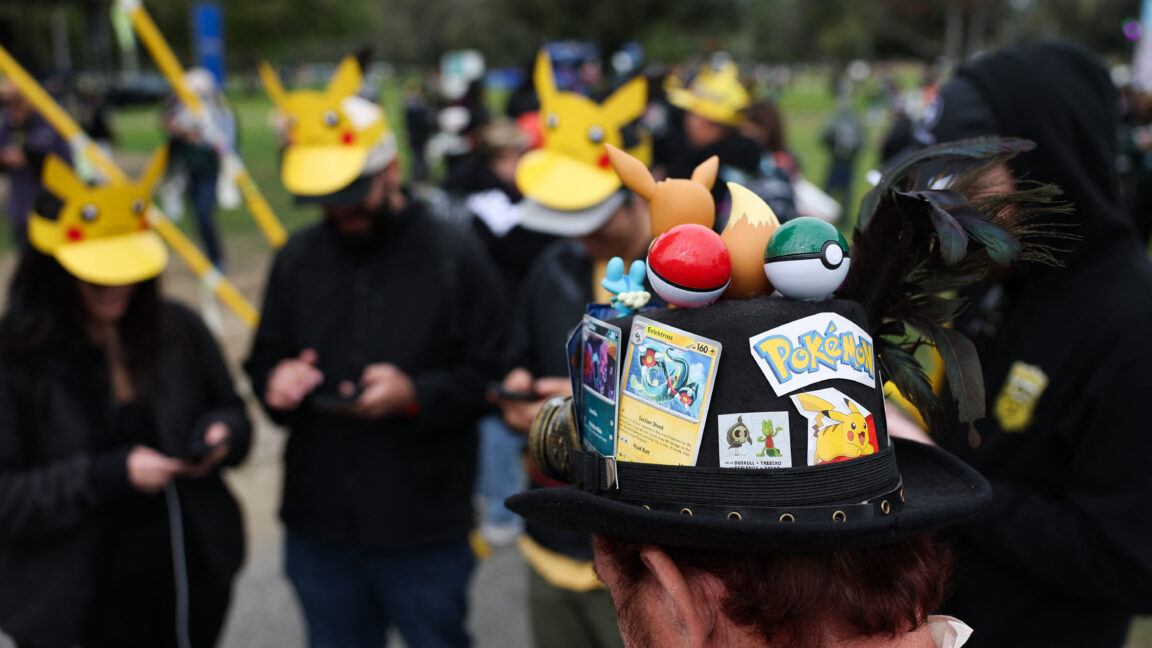
Images gathered from Pokémon Go players helped train Niantic Spatial’s real-world AI models, technology the company is now pairing with systems that could assist drones and ground vehicles where GPS does not work reliably. The link has renewed questions about whether players understood how scans made for a mobile game could later support robotics and defense-related uses.
Ars Technica reported that Niantic Spatial was spun out of Pokémon Go developer Niantic in May 2025, after Niantic sold licensed games including Pokémon Go to Scopely. Before that split, Niantic had said it would use scans from Pokémon Go players and users of its Scaniverse app to build what it called a large geospatial model, a 3D representation of real places trained on geolocated images.
A Niantic Spatial spokesperson told Ars Technica that ground scans were one part of the training data for the company’s “real-world foundation models,” which are designed to recognize and interpret physical spaces. The spokesperson said the models are “not a copy of or a means of accessing the underlying scans,” and said the scans covered public points of interest such as statues and fountains.
MIT Technology Review reported in March that Niantic Spatial trained its model on 30 billion images, many of them clustered around urban locations where game users had reason to go. According to that report, the images often showed the same places from different angles and in different lighting and weather, with metadata showing where a phone was and how it was oriented when the user recorded the scan.
Niantic Spatial told Ars Technica the scans were optional in its games and involved short videos of public locations. The company said it had disclosed since 2019, through its privacy policy and public statements, that the scans would improve its technology platform.
From game scans to positioning systems
The company has used that data to develop a visual positioning system, a technology that estimates a device’s location and orientation by matching camera input against 3D maps. Ars Technica reported that such systems can help indoors, in dense city areas and in places affected by GPS jamming.
Niantic Spatial announced in March 2026 that Coco Robotics planned to use its AI model and visual positioning system for four-wheeled delivery robots, according to MIT Technology Review and Niantic Spatial’s own announcement. In December 2025, Niantic Spatial also announced a partnership with Vantor to build a positioning system for flying drones and ground vehicles in GPS-denied environments.
Vantor, formerly Maxar Intelligence, has contracts with U.S. government and defense agencies, including the National Geospatial-Intelligence Agency, branches of the U.S. military and the Department of Homeland Security, according to company announcements cited by Ars Technica.
At the Defence Geospatial Intelligence conference in London in February 2026, Niantic Spatial product management director Tory Smith described early tests of the Vantor integration as cutting positioning error by 70% and reaching accuracy within 1.5 meters in many scenarios, according to a Niantic Spatial blog post.
Consent concerns
Dutch newspaper Trouw reported on the Vantor partnership and interviewed Jeroen van den Hoven, a Delft University of Technology professor of ethics and technology. Van den Hoven told Trouw that without scans from many players, the system’s development would not have advanced as quickly, and said players had indirectly contributed to military applications.
Van den Hoven also told Trouw that visual positioning systems can have defensible military uses, citing Ukraine’s use of drones and battlefield robots amid GPS jamming in its war against Russia. Trouw also interviewed longtime Pokémon Go player Floris De Hingh, who objected to the idea that his gameplay data could support U.S. military systems.
Vantor told Ars Technica it is “not using any Pokémon Go data” and does not have access to the Pokémon Go dataset. Niantic Spatial likewise told Ars Technica that its agreement with Vantor does not involve direct sharing of game data.
Vantor said it is exploring the adaptation of Niantic Spatial’s ground-based visual positioning system alongside Vantor’s existing GPS-denied positioning capabilities, which rely on satellite imagery, according to Ars Technica. Niantic Spatial also told Ars Technica it no longer has access to current Pokémon Go player data because Scopely has held the game license since May 2025.
This story draws on original reporting from Ars Technica.