
Pentagon space agency resumes launches as closure plan advances
The Space Development Agency launched more missile-warning network satellites while the Pentagon prepares to fold the office into the Space Force.
By James Whitfield · Staff Writer
4 min read
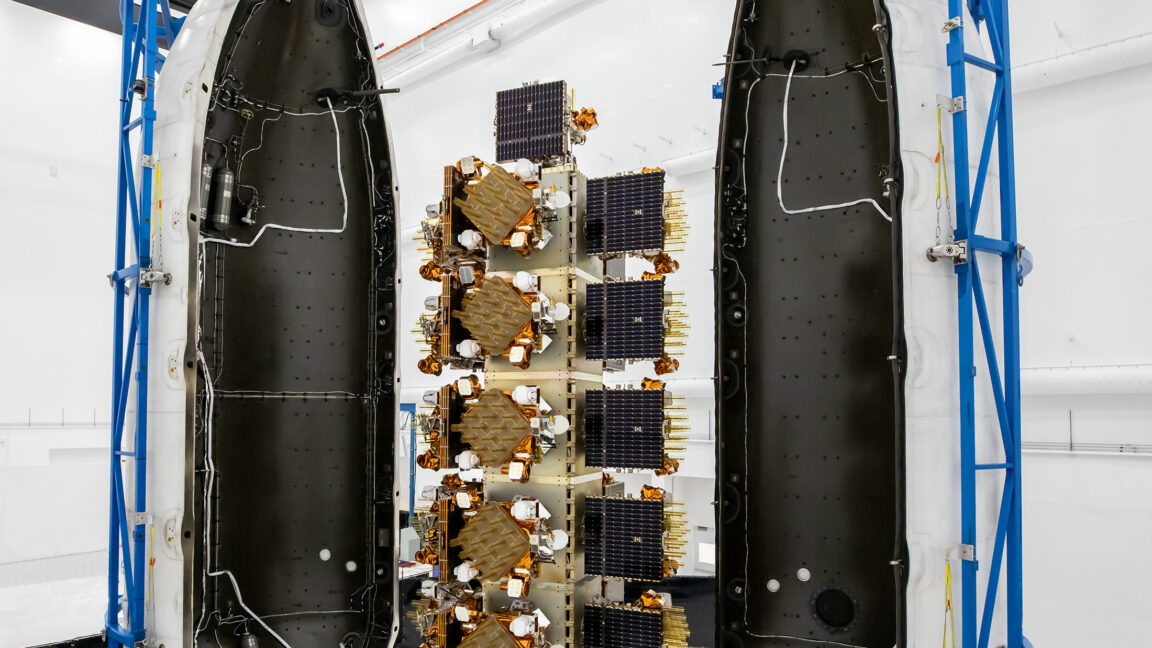
The Space Development Agency resumed operational satellite deployments Thursday after a nine-month standdown, sending another batch of data-relay spacecraft to orbit on a SpaceX Falcon 9 from Vandenberg Space Force Base in California. The launch matters because the Pentagon is trying to build a low-orbit missile-warning network even as it prepares to close the semi-autonomous office created to speed that work.
The agency, founded in 2019 to move faster than standard Pentagon weapons-buying channels, is now expected to be absorbed into the Space Force’s procurement system. Draft versions of this year’s National Defense Authorization Act in both the House and Senate support shutting the agency down.
Much of its mission is expected to continue inside the Space Force. Gurpartap “GP” Sandhoo, director of the Space Development Agency, also serves as the Space Force’s portfolio acquisition executive for missile warning and tracking, a role that would keep him responsible for key parts of the program after the agency is dissolved.
A delayed missile-warning network
The Space Development Agency has been building the Proliferated Warfighter Space Architecture, a planned low-Earth-orbit constellation of missile-tracking and data-transport satellites. According to the agency, the system is meant to help detect, follow and target ballistic and hypersonic missiles.
The Pentagon’s existing missile-warning satellites operate mostly from geosynchronous orbit, much farther from Earth. The Space Development Agency’s model uses many smaller satellites in lower orbits, with new groups of spacecraft, known as tranches, intended to arrive on a faster cycle.
Thursday’s launch was the third deployment of Tranche 1 transport satellites and raised the number of those spacecraft launched in that tranche to 63, according to the agency. The full Tranche 1 plan calls for 154 operational satellites: 126 for data relay and 28 for missile tracking.
Sandhoo said in an agency statement that the latest launch expands military satellite communications for warning and tracking advanced missile threats. He said the Tranche 1 system is intended to provide near-real-time data to forces around the world.
Technical problems slowed the rollout
The agency paused launches after two Tranche 1 missions last September and October. Those launches reached orbit, but Sandhoo told reporters ground teams had trouble activating and commissioning satellites built by York Space Systems and Lockheed Martin.
Sandhoo said controllers lacked enough ground-station coverage after launch. He also said some spacecraft ran into thermal-control and propulsion problems while raising their orbits to more than 600 miles, or about 1,000 kilometers, where radiation conditions are harsher.
The pause was used to address known problems, Sandhoo said. He said the agency expected Thursday’s mission to proceed more smoothly, while acknowledging that getting most of the earlier satellites declared operational has taken longer than planned.
Seven additional launches are still needed to complete Tranche 1, including 63 more data-transport satellites and all 28 tracking satellites. The tracking spacecraft are being supplied by Lockheed Martin, Northrop Grumman and L3Harris, according to the agency, and none of them has launched yet.
Sandhoo said future launches remain limited in part by the supply of optical communication terminals, the laser transmitters and receivers needed to link the satellites into a mesh network. The agency now says Tranche 1 will provide an initial military capability beginning in 2027.
Sandhoo said the agency is no longer prioritizing a once-a-month launch rhythm. He said the focus is launching satellites when they are ready and moving them into service quickly after they reach orbit.
Program shifts into Golden Dome plans
The Space Development Agency’s constellation is expected to support the Pentagon’s planned Golden Dome missile shield, a Space Force priority under the Trump administration. The satellite-tracking and data-relay concept predates that missile-defense plan.
Future tranches remain on the books. Tranche 2 is scheduled to begin launching next year with more than 250 transport and tracking satellites from six manufacturers, while Tranche 3 includes 108 tracking-layer satellites due to start launching in 2028.
The transport layer is expected to end after Tranche 3 and be replaced by the Space Force’s Space Data Network. The Space Force said in May that SpaceX will build the network’s backbone using technology developed for Starlink, and Sandhoo said the agency’s transport satellites will be folded into that system.
This story draws on original reporting from Ars Technica.