
NSF plan to remove ocean sensors raises alarms in Alaska
The Ocean Observatories Initiative includes Gulf of Alaska instruments used for fisheries, storm forecasting and climate research.
By Hana Yoshida · Markets Reporter
3 min read
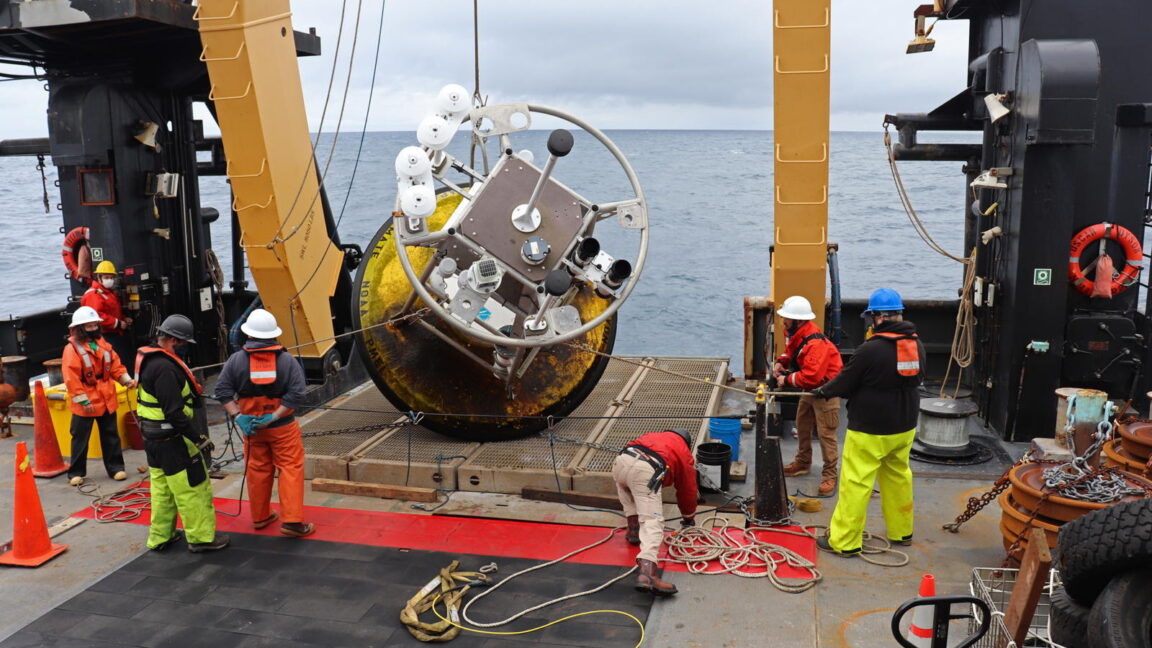
The National Science Foundation plans to decommission a major ocean monitoring network, a decision that Alaska scientists and fisheries advocates say will reduce real-time information about a fast-changing marine region. The loss is drawing concern in a state where seafood is a major industry and warming is occurring at twice the global average, according to federal climate information cited by Inside Climate News.
The NSF announced in May that it would remove the Ocean Observatories Initiative, a nearly $368 million system of instruments that measures ocean chemistry, waves, temperature, salinity and other conditions. The network includes about 900 instruments spread across the Pacific and Atlantic oceans, according to Inside Climate News.
One focal point is Ocean Station Papa, a deep-ocean observing system in the Gulf of Alaska at nearly 14,000 feet. Michelle Stratton, executive director of the Alaska Marine Community Coalition, told Inside Climate News that removing it would eliminate one of Alaska’s few tools for tracking ocean change as it happens.
Stratton said the decision comes while Alaska is facing salmon crashes, crab collapses and repeated marine heatwaves. She said managers rely on the data to understand those changes and make decisions about fisheries.
Alaska’s commercial seafood sector is worth $5.3 billion and employs nearly 42,000 people, according to a recent McKinley Research Group report prepared for the Alaska Seafood Marketing Institute. Fishery managers use ocean data to help judge harvest levels, while scientists and coastal planners use it to study marine heatwaves, waves and storm risk.
Jan Newton, an affiliate professor of biological oceanography at the University of Washington, told Inside Climate News that the system helps show what is approaching and how conditions are changing. Rick Thoman, a climate specialist at the University of Alaska Fairbanks and a former National Weather Service employee, said the network is valuable because it collects information throughout the water column, not only at the surface.
NSF spokesperson Cassandra Eichner said the decision fits the agency’s broader approach of supporting changing scientific priorities, new technologies and lifecycle management of research infrastructure. Eichner said previously gathered data will remain available and that the NSF remains committed to ocean science.
Critics cited by Inside Climate News said the move resembles priorities in Project 2025, the Heritage Foundation’s conservative governing plan. Project 2025 described federally supported oceanic and atmospheric research as a frequent source of “climate alarmism,” especially within the National Oceanic and Atmospheric Administration and related agencies.
The monitoring system also feeds weather and emergency planning, according to Alaska observers. Stratton said measurements of ocean temperature, salinity, currents, wave height and direction, and wind stress help NOAA and university models estimate storm intensification, coastal water levels and flood risk.
That information is especially important for remote, largely Indigenous coastal communities, Stratton said. Alaska has recently faced severe storms, including Typhoon Halong, which Inside Climate News reported largely destroyed the Western Alaska villages of Kipnuk and Kwigillingok last October and displaced many residents to Anchorage.
Carol Janzen, an oceanographer with the Alaska Ocean Observing System, compared losing Ocean Station Papa’s climate data to driving on a dark highway without lights. Tim Bristol, executive director of the nonprofit SalmonState, told Inside Climate News that removing instruments conflicts with frequent calls for better information and analysis.
Thoman said other countries could try to fill the gap because the observatories are in international waters and provide data useful beyond the United States. He said stopping U.S. monitoring would not stop global efforts to understand ocean change.
This story draws on original reporting from Ars Technica.