
NASA sends rescue craft to lift aging Swift space telescope
Katalyst Space Technologies’ Link spacecraft aims to raise Swift’s orbit after solar storms pushed the NASA observatory toward re-entry.
By James Whitfield · Staff Writer
3 min read
NASA has launched a fast-moving rescue mission to keep the Neil Gehrels Swift Observatory from falling out of orbit. The agency says the aging space telescope has been pushed lower by recent solar storms and could burn up in Earth’s atmosphere as soon as this year without help.
Katalyst Space Technologies’ Link spacecraft launched Friday on a mission to meet Swift in orbit and lift it to a safer altitude, according to NASA. Swift, launched in 2004, does not have its own propulsion system, so it cannot raise its orbit by itself.
NASA says Swift is now circling Earth at about 224 miles above the planet. Link is intended to raise the observatory’s orbit by roughly 150 miles, returning it close to the altitude where it originally operated.
The mission had to move quickly. The Verge reported that NASA gave Katalyst a compressed schedule because Swift would be too low to rescue by October. The project came together in nine months and cost $30 million, according to the report.
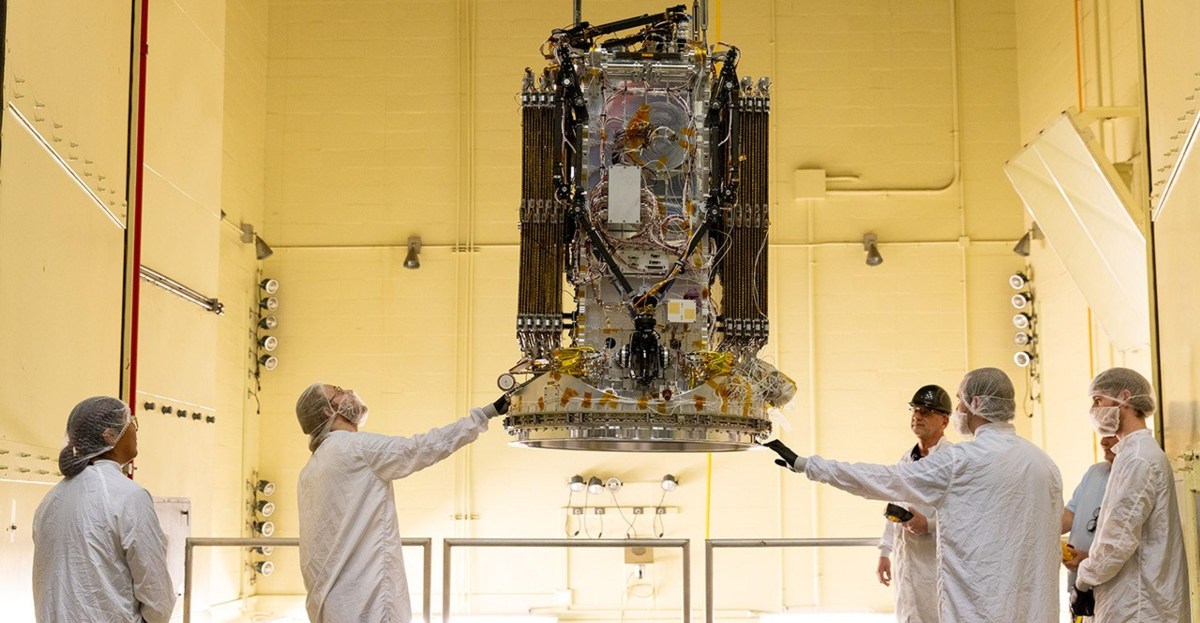
The spacecraft carrying out the job is called Link. NASA imagery shows engineers from Katalyst testing the spacecraft before launch, and The Verge described it as a three-armed vehicle designed to connect with Swift and push the observatory higher.
The target is a valuable NASA asset. The Verge reported that Swift cost $500 million, and NASA says the observatory’s main work is studying gamma-ray bursts. Those powerful flashes have helped scientists investigate conditions in the early universe, according to NASA.
A rare orbital rescue attempt
The mission is unusual because Swift was not built to be refueled or moved after launch. Its lack of propulsion leaves the observatory dependent on an outside spacecraft to avoid a destructive re-entry.
Solar activity has made the problem more urgent. The Verge reported that recent solar storms lowered Swift’s orbit, increasing drag from the outer edges of Earth’s atmosphere. At lower altitudes, satellites lose height more quickly and can eventually re-enter.
NASA turned to Katalyst to attempt the intervention, while Reuters and The Associated Press also reported on the company’s role in the rescue effort. If Link succeeds, Swift would get more time to continue its astronomy mission rather than ending as debris in the atmosphere.
NASA has not described the operation as routine. The mission requires Link to reach the observatory, attach or otherwise make contact, and then alter the orbit of a spacecraft that was not designed with its own engine for such a maneuver.
For now, the rescue is underway. Link’s task is to get to Swift before its orbit drops beyond reach, then give the 2004 observatory enough altitude to keep working.
This story draws on original reporting from The Verge.