
NASA says deep-space network handled Artemis II after earlier overload
NASA’s Greg Heckler said scheduling changes helped the Deep Space Network support Artemis II, though demand from missions keeps rising.
By Hana Yoshida · Markets Reporter
3 min read
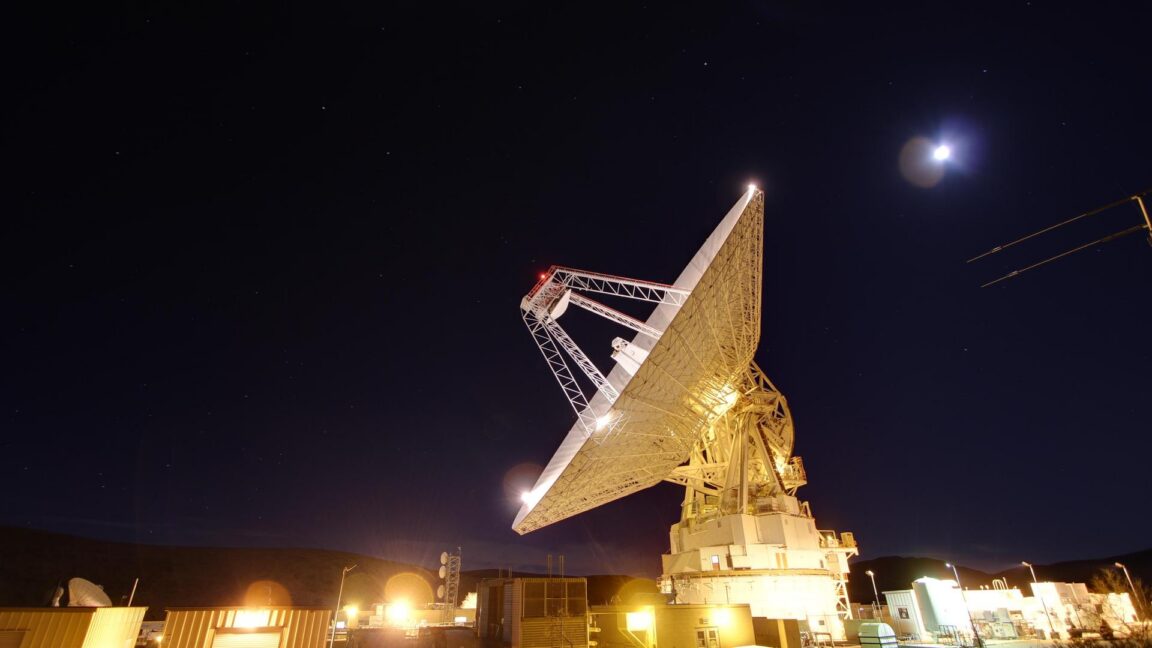
NASA’s Deep Space Network handled the crewed Artemis II mission better than it handled Artemis I, according to Greg Heckler, a deputy program manager in NASA’s Space Communications and Navigation Program. The improvement matters because the same global antenna system must support astronaut flights, science spacecraft and a growing wave of lunar missions.
Ars Technica reported that the network was strained in late 2022 during Artemis I, when NASA’s Orion spacecraft required heavy communications support while dozens of robotic missions also depended on the system. The pressure led to reduced or delayed data returns for missions including the James Webb Space Telescope and Mars rovers, according to Ars Technica.
Heckler said NASA changed coordination and scheduling practices before Artemis II, focusing on all missions using the system rather than Orion alone. Speaking Wednesday at a Small Bodies Assessment Group meeting, he said those changes “worked well,” and that NASA’s science division gave network managers positive feedback after the flight.
Shorter mission eased the load
Artemis II launched April 1 with four astronauts aboard Orion and flew more than a quarter-million miles from Earth, according to Ars Technica. NASA needed even more data from Orion than it did during the uncrewed Artemis I flight, but Artemis II lasted just over nine days, compared with 25 days for Artemis I.
Ars Technica reported that Artemis I also deployed 10 CubeSats into deep space, many of which needed tracking and communications through the Deep Space Network. Artemis II carried fewer CubeSats, reducing one source of pressure on the antennas.
Heckler said one technical problem from Artemis I also prompted investment before the next flight. He said a subsystem called the Private Cloud Appliance failed during Artemis I, and NASA used additional resources from its Moon to Mars program to install a replacement system before Artemis II.
Demand is still climbing
The Deep Space Network currently supports about 40 active missions through antenna sites in California, Spain and Australia, according to Ars Technica. Heckler said competition for antenna time remains a problem, even after the Artemis II improvements.
NASA expects about 40 additional missions to need the network over the next decade, while many current spacecraft may still be operating, Ars Technica reported. The Nancy Grace Roman Space Telescope, scheduled for launch in August, is expected to send back more data through the network than all previous NASA astrophysics missions combined, according to Ars Technica.
Heckler said NASA now requires a feasibility study before adding new missions to the network, to determine whether enough capacity exists. He also said managers are reviewing older missions because some are using more network time than their documentation indicates.
NASA is trying to shift some lunar traffic away from the Deep Space Network, according to Ars Technica. The agency is working with commercial providers on Lunar Exploration Ground Sites, and companies are developing lunar data-relay satellites; NASA also tested a laser communications terminal on Orion during Artemis II.
Goldstone antenna remains out
One major limitation is the loss of a 70-meter antenna at the Goldstone Deep Space Communications Complex near Barstow, California, Ars Technica reported. NASA investigators said the dish was tracking the Juno spacecraft at Jupiter last September when it over-rotated, damaging cables and water lines in a fire-suppression system.
According to NASA’s mishap report, about 200,000 gallons of glycol-contaminated water flooded the antenna base, creating an environmental hazard and leaving the antenna unusable. Investigators cited inadequate training, weak written procedures, undocumented practices and control-logic problems, and said technicians had bypassed safeguards that normally would have prevented the over-rotation.
NASA officials estimated repairs will cost $4.1 million to $4.6 million, Ars Technica reported. Heckler said NASA plans to combine mishap repairs with a planned upgrade cycle, keeping the Goldstone antenna offline into 2028.
This story draws on original reporting from Ars Technica.