
NASA keeps Blue Origin lunar plans on track after New Glenn pad blast
Jared Isaacman said Blue Origin’s cleanup and recovery work has improved NASA’s outlook, though the agency is reviewing backup launch options.
By James Whitfield · Staff Writer
3 min read
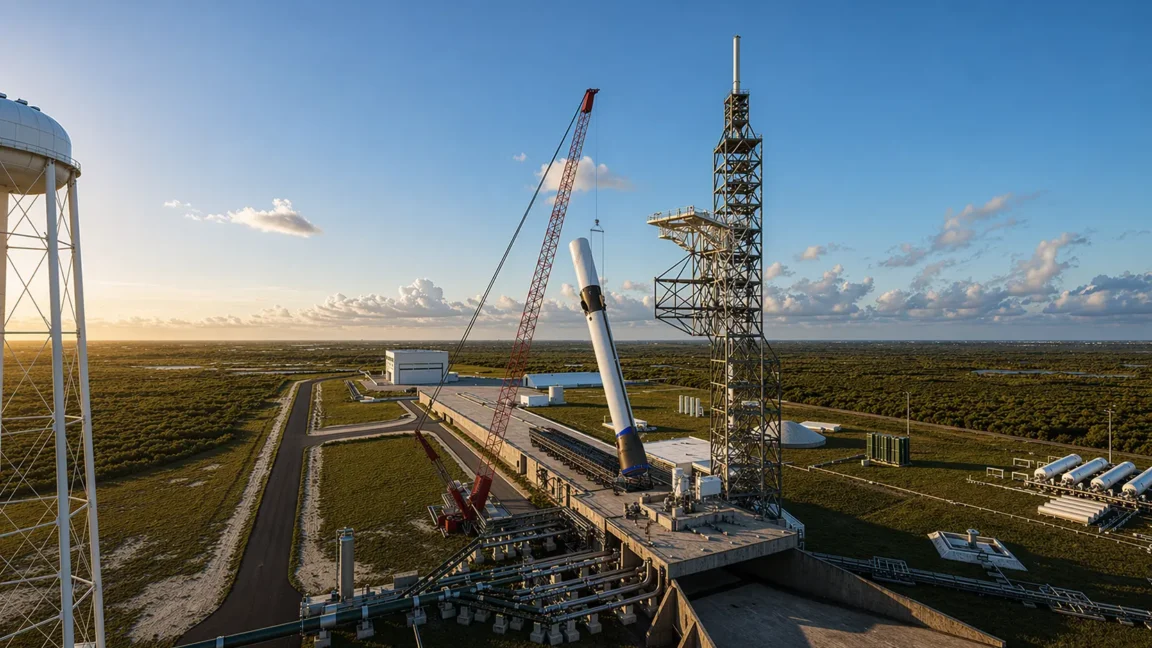
NASA still wants Blue Origin’s New Glenn rocket to launch a key lunar cargo mission despite a May test failure that disabled the vehicle’s only operating launch pad. NASA Administrator Jared Isaacman said Wednesday that Blue Origin’s response has improved the agency’s confidence, while NASA also studies other rockets in case the recovery takes longer than planned.
Isaacman told reporters that Blue Origin has put major resources into cleaning up and repairing the site after the May 28 anomaly during a test firing. He said the U.S. Space Force has also been closely involved in the company’s planning since the failure.
“Blue Origin’s response to the situation is almost beyond impressive, and that’s not just a NASA assessment,” Isaacman said, according to Ars Technica.
NASA has lunar missions tied to New Glenn
The stakes for NASA are high because Blue Origin’s lunar lander work is tied to the agency’s Artemis program. NASA is relying on the company’s Mk. 1 lander for cargo deliveries to the Moon and its Mk. 2 lander for later crewed lunar surface missions, according to Ars Technica.
Before the accident, Blue Origin aimed to launch its first Mk. 1 mission, called Endurance, later this year for a cargo landing on the Moon. NASA says the mission is set to carry two science and technology payloads to the lunar surface.
Blue Origin is also developing a test version of the Mk. 2 lander for Artemis III, which NASA hopes to fly in the second half of next year, Ars Technica reported. New Glenn had been expected to play a major role in launching both lander systems.
Isaacman said NASA’s preferred plan remains to put Endurance on New Glenn. He said Blue Origin is committed to returning the rocket to flight before the end of the year and that the situation looks better than it did several weeks earlier because of the company’s progress.
Agency is reviewing backup rockets
NASA is not relying on one path. Isaacman said the agency is also studying alternative launch vehicles for Endurance and for Blue Origin’s Artemis III lander work, including SpaceX’s Falcon Heavy and United Launch Alliance’s Vulcan rockets.
Blue Origin executives, including chief executive Dave Limp, have said the company is working to rebuild Launch Complex 36A, complete the anomaly investigation and fly New Glenn again before year’s end. Ars Technica reported that some NASA officials privately doubt that schedule, while many independent observers expect a more realistic return-to-flight timeline of 12 to 18 months.
Isaacman said he receives daily updates from his team on Blue Origin’s recovery. He said NASA has until 2027 before the timing becomes more worrying, adding that a shift toward mid-2027 would affect Artemis III and uncrewed landers.
Blue Origin changes pad recovery plan
Limp said Wednesday that Blue Origin is still investigating the anomaly. In a company update, he said the vehicle carried extensive sensors and camera coverage, and that early analysis points to the aft section of the first stage.
The test failure destroyed the launch site’s lightning tower and the transporter-erector used to move New Glenn from its integration hangar and raise it upright at the pad, according to Ars Technica. Limp said Blue Origin will not rebuild the pad in the same way or wait for a new transporter-erector, which would take significant time.
Instead, Blue Origin released a video showing a plan to use a crane to lift the joined first and second stages onto the launch mount. After testing at the pad, the company would add the payload fairing before launch.
Isaacman praised Blue Origin’s openness about the recovery work, according to Ars Technica, citing the broad interest across the space community in New Glenn’s return to flight.
This story draws on original reporting from Ars Technica.