
Le Mans returns with 62 cars and a reshaped top class
The 94th 24 Hours of Le Mans runs this weekend in France, with Hypercar, LMP2 and LMGT3 entries sharing the grid.
By James Whitfield · Staff Writer
3 min read
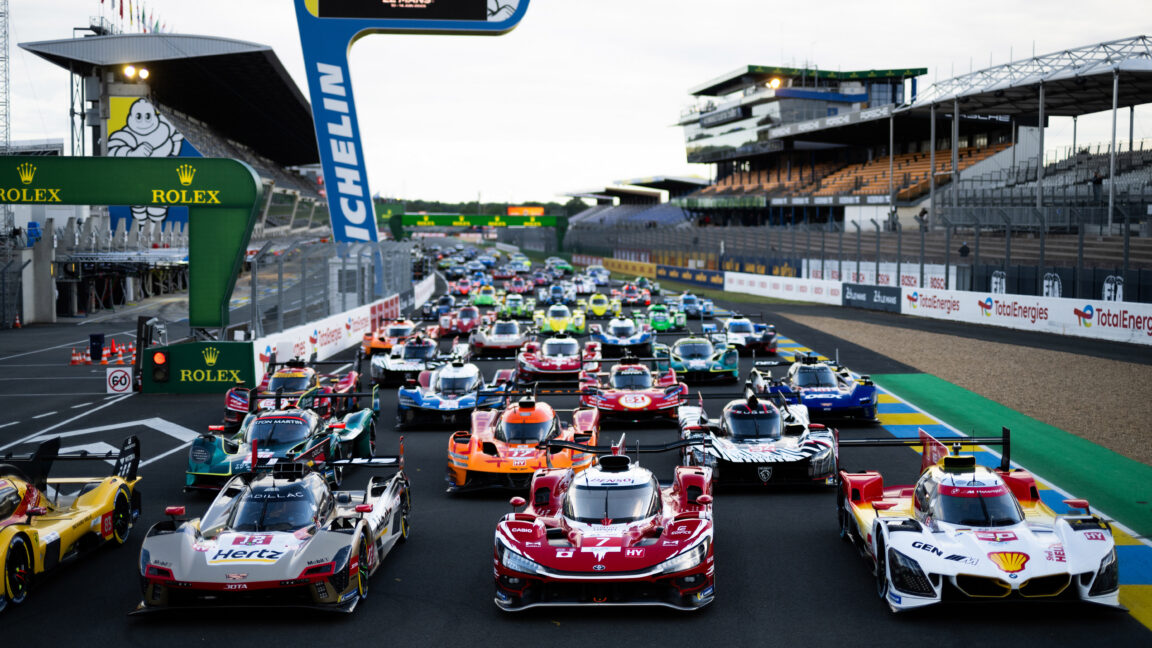
The 24 Hours of Le Mans is back this weekend, putting 62 cars on a French circuit that mixes permanent track with public roads. Ars Technica reports that the endurance race remains one of motorsport’s three marquee events, alongside the Indianapolis 500 and the Monaco Grand Prix.
The race was first held in 1923 and reaches its 94th running this year, according to Ars Technica. It began as a severe trial for new automotive machinery, and the outlet notes that Le Mans has helped move technology from racing into road cars, including disc brakes, hybrid systems, brake-by-wire equipment, direct-injection engines and advanced lighting.
Each entry has three drivers who rotate through stints over the 24 hours, Ars Technica reports. The field includes factory professionals, developing drivers and well-funded amateurs, with the LMP2 class featuring the creator of Ruby on Rails, a GitHub co-founder and a CrowdStrike co-founder. Ars Technica also reports that Valve’s Gabe Newell owns the Aston Martin team entered in Hypercar and LMGT3, with his son Gray listed among the LMGT3 drivers.
Three classes share the race
Hypercar is the top category and uses all-professional lineups, according to Ars Technica. The class includes factory-backed closed-roof prototypes, many of them hybrids, with Ferrari, Peugeot and Toyota building cars under the LMH rules. Those rules allow an electric motor on the front axle, but Ars Technica reports that the temporary all-wheel-drive function can be used only above 93 mph.
Aston Martin’s Valkyrie also runs under LMH rules, though Ars Technica reports that the race version had to give up its road-car hybrid system, power and downforce to fit the regulations. The outlet says Alpine, BMW, Cadillac and Genesis use the LMDh route, in which automakers pair their own bodywork, engines and software with an approved carbon-fiber chassis and common hybrid components.
Ars Technica reports that Ferrari has won Le Mans in each year since Hypercar arrived in 2023, while an LMDh car has not yet won the race. The class is managed through balance of performance rules that adjust cars toward parity, with maximum output capped at 670 horsepower.
LMP2 and LMGT3 fill out the grid
LMP2 sits below Hypercar and is built around the Oreca 07, according to Ars Technica. The cars use a 4.0-liter Gibson V8 rated at 600 horsepower and do not use hybrid systems. Ars Technica reports that 19 LMP2 cars are entered, with nine teams running pro-am crews and 10 using more professional lineups.
Doriane Pin, the French driver who won F1 Academy last year, is among the LMP2 names to watch after a strong first qualifying session, Ars Technica reports. The outlet says Pin is one of two women in this year’s race, along with Lilou Wadoux in an LMGT3 Ferrari.
The LMGT3 category is based on cars that began as road models. Ars Technica reports that Le Mans adopted GT3 in 2024 after earlier GT rules became too costly, and that the format uses balance of performance to control power and weight. This year’s LMGT3 field has 25 cars, all run by pro-am teams required to include at least one bronze and one silver-rated driver.
The Automobile Club de l’Ouest, IMSA and the FIA have also outlined new top-class regulations for 2030, according to Ars Technica. The future rules will create a unified class for Le Mans, the World Endurance Championship and IMSA’s WeatherTech series, with all cars using rear-wheel-drive hybrid systems.
Ars Technica reports that the race starts at 4 p.m. local time, 10 a.m. Eastern and 7 a.m. Pacific. U.S. coverage is available on HBO, Tru and the FIAWEC+ streaming service, with Radio Le Mans commentary streaming free online.
This story draws on original reporting from Ars Technica.