
Kalshi challenges Illinois tax on prediction market sports trades
The lawsuit tests whether states can regulate sports event contracts as gambling or whether federal commodities rules control the platforms.
By Hana Yoshida · Markets Reporter
3 min read
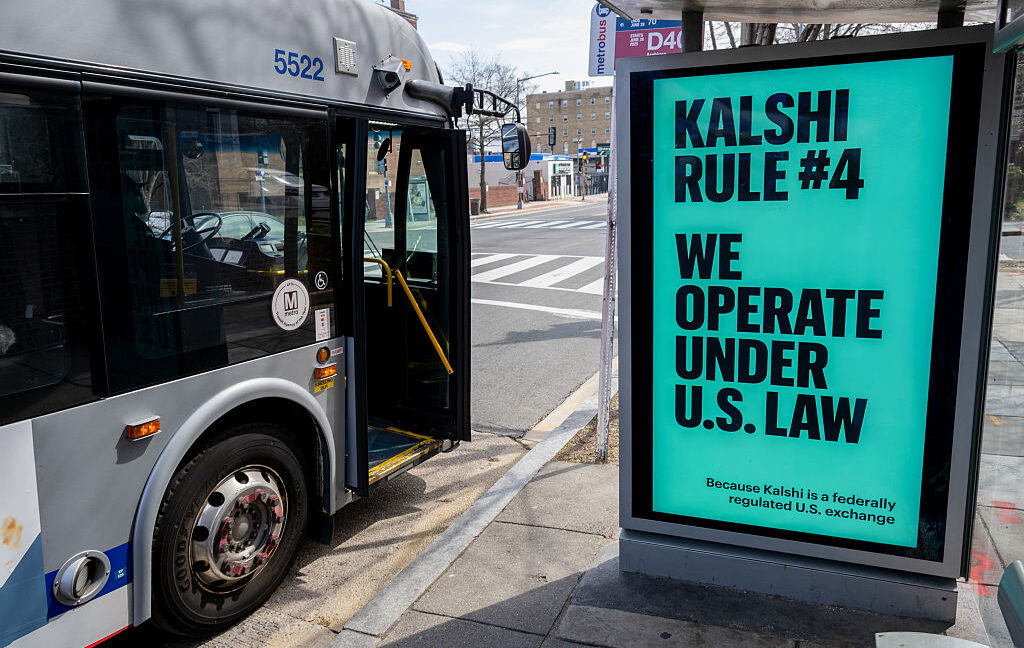
Kalshi has sued Illinois officials over a new state law that treats sports contracts on prediction markets as sports wagering. The case matters because it could decide whether states can tax and license those markets, or whether federal commodities regulators have sole authority over them.
The company filed its complaint last Tuesday against Attorney General Kwame Raoul, Gov. J.B. Pritzker and other Illinois officials, according to court records cited by Ars Technica. Kalshi said Illinois wrongly classified it and similar exchanges as unlicensed sports betting operators.
Under the Illinois law, sports wagering on prediction markets would face a tax of 1.75 percent on the first 5 million sports wagers in a fiscal year and 3.5 percent on later wagers, beginning July 1. Kalshi also said a state license would cost $15 million for the first four years and $1 million a year after that, according to its complaint.
Kalshi is asking a court to stop Illinois from requiring the license, location checks for bettors and the new taxes. The company said the Commodity Futures Trading Commission, not state gambling regulators, has exclusive power over its exchange.
Kalshi also argued that Illinois law would put it in conflict with federal requirements by forcing it to limit access for state residents. Without an injunction, the company said it could face civil and criminal penalties, lose income and suffer reputational harm.
The dispute over what counts as a bet
The central legal fight is whether sports event contracts are gambling wagers or federally regulated derivatives. Kalshi describes event contracts as financial instruments tied to future outcomes, with users taking opposing positions rather than betting against the exchange itself.
In Kalshi’s view, sports contracts can help sports-related businesses manage risk. Its complaint cited examples such as media companies concerned about audiences, advertisers assessing sponsorship value and insurers affected by ticket revenue.
Illinois and many other states reject that distinction. Earlier this year, Raoul joined officials from 40 states and the District of Columbia in a letter to CFTC Chair Michael S. Selig arguing that the agency lacks exclusive jurisdiction over sports gambling and is not equipped to regulate it.
The state officials said prediction-market users can place the same kinds of sports wagers offered by sportsbooks, including game winners, point spreads, point totals and player proposition bets. In that letter, they argued that staking money on the outcome of a sports contest is sports betting under federal and state law.
Pew Research found that sports accounted for 80 percent of Kalshi trading volume since 2024, according to Ars Technica. The Daily Herald reported that Illinois residents lost close to $1.5 billion on legal sports betting in 2025, the state’s highest total on record.
Federal regulators are already in court
The CFTC sued Illinois in April, according to court filings cited by Ars Technica. The agency argued that the contracts Illinois called illegal sports bets were permitted event contracts under federal commodities law.
Illinois has asked to pause the CFTC case, saying courts around the country are still sorting out whether prediction markets are gambling, federally regulated products or both. The state said early rulings on the issue have been mixed.
The CFTC has also proposed rules describing how it would oversee prediction markets under its claimed authority. Public comments on that proposal are open through July 27, according to the federal rulemaking notice cited by Ars Technica.
The dispute could reach beyond sports. In a recent filing, the CFTC warned that if Illinois prevails, the state could try to regulate contracts tied to elections and other political events, according to Ars Technica.
This story draws on original reporting from Ars Technica.