
Ozone damage could have been spotted years before CFC bans
A modeling study finds modern tools might have detected ozone loss in the 1950s, before CFCs became the main concern.
By Maya Lindqvist · Senior Technology Correspondent
3 min read
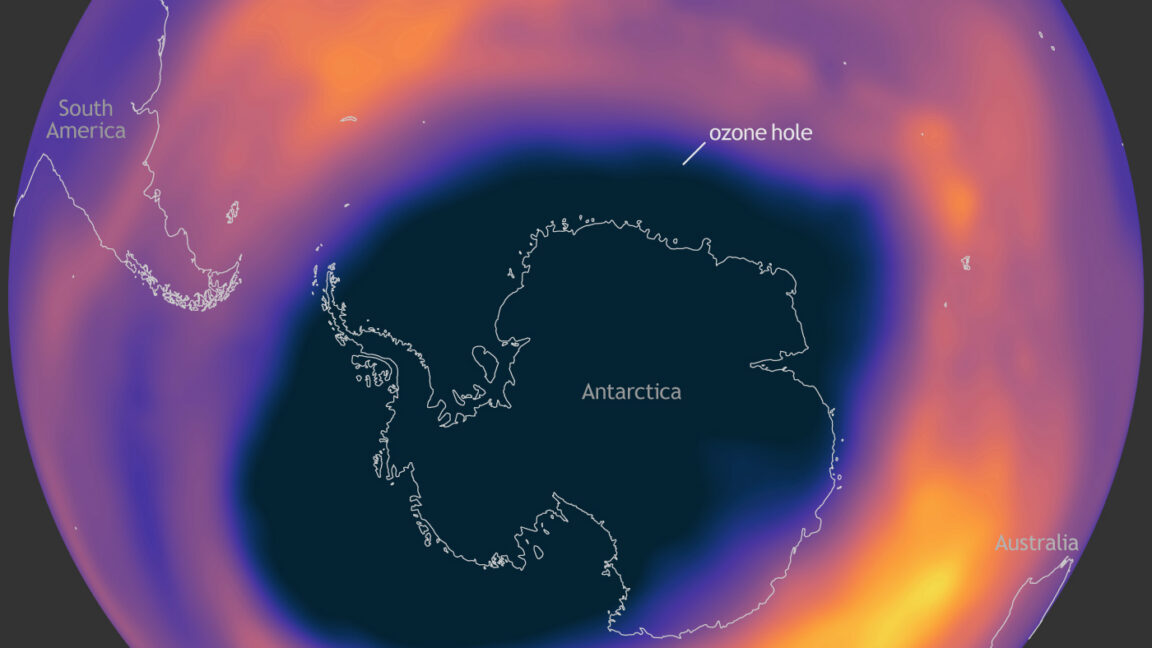
Scientists may have been able to detect human-driven ozone depletion decades before the Antarctic ozone hole was found, according to a new study in PNAS. The finding matters because it suggests early, altitude-specific monitoring can reveal atmospheric damage while it is still limited.
The study, led by Jian Guan at MIT, used modern climate and chemistry modeling to test whether ozone loss would have been visible in the 1950s if researchers then had today’s observing and analytical tools. The work does not challenge the later global response to chlorofluorocarbons, or CFCs, but asks whether the warning signs were already measurable.
Scientists identified in 1974 that CFCs, then used in aerosol products and refrigeration systems, could break down ozone in the atmosphere. National restrictions followed, and the 1985 discovery of the seasonal Antarctic ozone hole helped drive the 1987 Montreal Protocol, the international agreement to phase out CFCs.
Older chemicals also damaged ozone
Guan’s team looked beyond CFCs because another ozone-depleting compound had already been widely used: carbon tetrachloride, an industrial solvent. According to the study, production estimates and air trapped in dense snow above ice cores show that carbon tetrachloride was present in the atmosphere before CFCs became widespread.
In 1950, the study found, carbon tetrachloride was roughly three to four times as abundant as early CFC concentrations. That meant ozone-destroying chlorine was already entering the stratosphere in amounts that could affect the ozone layer.
Detecting that effect would not have been easy. Ozone levels shift for natural reasons, including the 11-year solar cycle and volcanic eruptions. Changes can also differ by altitude, so a measurement of total ozone through the whole atmospheric column can hide a decline in one layer.
Modern satellite observations separate ozone measurements across the lower, middle and upper stratosphere. Researchers also use model simulations to sort out how much of a change comes from pollution, greenhouse gases, volcanoes or other causes.
Model points to the tropics first
The MIT-led team ran a climate model with ozone chemistry, including historical greenhouse gas emissions, ozone-depleting pollutants and natural events such as eruptions. After setting a background from simulations beginning in 1850, the researchers ran multiple simulations from 1950 onward with slightly different starting conditions.
The model showed that ozone loss would have been hardest to separate from natural variation in the lower and middle stratosphere, where volcanic effects were stronger. The 1963 eruption of Mount Agung added to that noise, according to the study.
The upper stratosphere was different. The study found that ozone there varied less and responded clearly to ozone-depleting chemicals. Although the chemical effects were strongest at middle and high latitudes, lower natural variability in the tropics made the signal easier to detect there.
Using a 95 percent statistical confidence threshold, the researchers found that modern tools would have detected upper-stratospheric ozone depletion over the tropics around 1957. At that time, the study says, carbon tetrachloride still accounted for one-half to two-thirds of the ozone-destroying chlorine in that part of the atmosphere.
Detection in other regions and layers would have taken longer. By 1976, the model indicated that ozone loss would have been visible in the lower stratosphere, including over Antarctica, nearly a decade before the ozone hole was actually discovered.
The researchers also warned that today’s ability to track such changes is fragile. The satellite now measuring ozone at multiple stratospheric heights has operated since 2004 and is beyond its planned lifetime, and a previous White House budget proposal called for ending it. Without a replacement, the study says, small future changes in the ozone layer would be harder to catch early.
This story draws on original reporting from Ars Technica.