
Historians question retractions of two Max Planck papers
Two historians say a journal may have removed Max Planck papers over modern copyright checks rather than scientific flaws.
By Hana Yoshida · Markets Reporter
4 min read
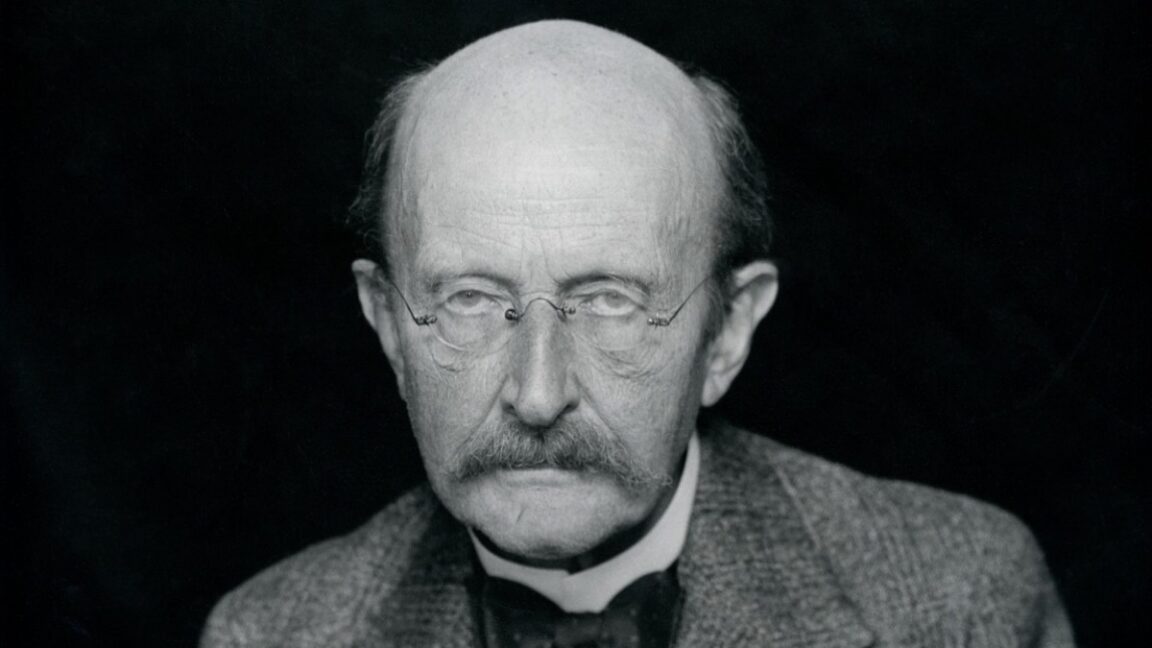
A scientific journal’s removal of two 1940s papers by Max Planck has drawn scrutiny from historians who say the action appears tied to copyright or cataloging issues, not problems with the physics pioneer’s work. The case matters because it shows how modern publishing systems can alter access to historical scientific records.
Planck, a central figure in the development of quantum theory and the 1918 Nobel laureate in physics, has not been associated with misconduct in his scientific work, according to the historians studying the matter. The affected journal is Naturwissenschaften, now published as The Science of Nature.
Physics historian Yves Gingras of the University of Quebec in Montreal noticed Planck’s name on Retraction Watch’s list of Nobel Prize winners with retracted papers, according to Ars Technica. Gingras then worked with Mahdi Khelfaoui of the University of Quebec at Trois-Rivieres to investigate the two retractions, and the pair described their findings in a preprint posted to arXiv.
Blank pages instead of papers
According to Ars Technica, The Science of Nature usually marks retracted articles online with a large notice while leaving the documents available. In Planck’s case, the two article pages now show blank records and empty PDFs, along with a brief note saying the papers were withdrawn because of an “article violation.”
Suzanne Scarlata, the journal’s editor-in-chief and a professor at Worcester Polytechnic Institute, told Science reporter Sam Kean that she had not known about the retractions before Kean contacted her. Scarlata told Science she did not understand why the papers had been flagged and said she thought an algorithm may have caused the problem.
Gingras and Khelfaoui wrote that the stated issue was copyright violation, according to Ars Technica. They said that means the retractions do not appear to reflect scientific errors in the papers, which they described as philosophical discussions about scientific knowledge.
A possible digital-era mistake
The historians found metadata showing that DOI records for the two papers were created in April 2005, around the period when many journals were moving older material into online archives, according to Ars Technica. Gingras and Khelfaoui suggested that a publisher-side review during that transition may have treated older publishing practices as a modern duplication problem.
One of the papers, “Meaning and Limits of Exact Science,” was published in 1942 after Planck gave a lecture in Berlin the previous year, according to the historians. Ars Technica reported that the same work also appeared as a booklet, in another journal and in an anthology of Planck’s essays and lectures.
The second paper, “Natural Science and the Real External World,” appeared in 1940, according to Ars Technica. Gingras and Khelfaoui found no evidence that it had been republished elsewhere, but they noted that Aloys Muller had published a critique of a Planck essay under the same title in the same journal that year, before Planck responded with an article using that title.
The historians argued that the matching titles may have created a cataloging problem, especially if software was used to detect duplication or self-plagiarism. They also said early 20th-century publishing norms differed from current rules, with lectures, proceedings, booklets, essays and journal articles often overlapping as scholars tried to spread work across languages and countries.
Publisher has not explained the decision
Springer Nature, the journal’s publisher, declined to comment in detail to Science, saying through a representative that information about specific retractions is usually confidential and can be shared only with relevant authors, according to Ars Technica. Planck died in 1947.
Ars Technica reported that Springer Nature also stopped an editorial Scarlata had planned to publish about the issue. Gingras told Science that the papers should be restored to the database, saying their removal is intellectually unacceptable.
Both papers are now in the public domain in most countries, according to Ars Technica, and copies remain available through the Internet Archive. Gingras and Khelfaoui concluded that applying modern publication standards to older works can damage the digital circulation of historical texts.
This story draws on original reporting from Ars Technica.