
Global fungal web mapped at 110 quadrillion kilometers, study finds
Researchers say underground mycorrhizal networks store carbon, support plants and are thinned by farming, with grasslands holding a large share.
By Hana Yoshida · Markets Reporter
4 min read
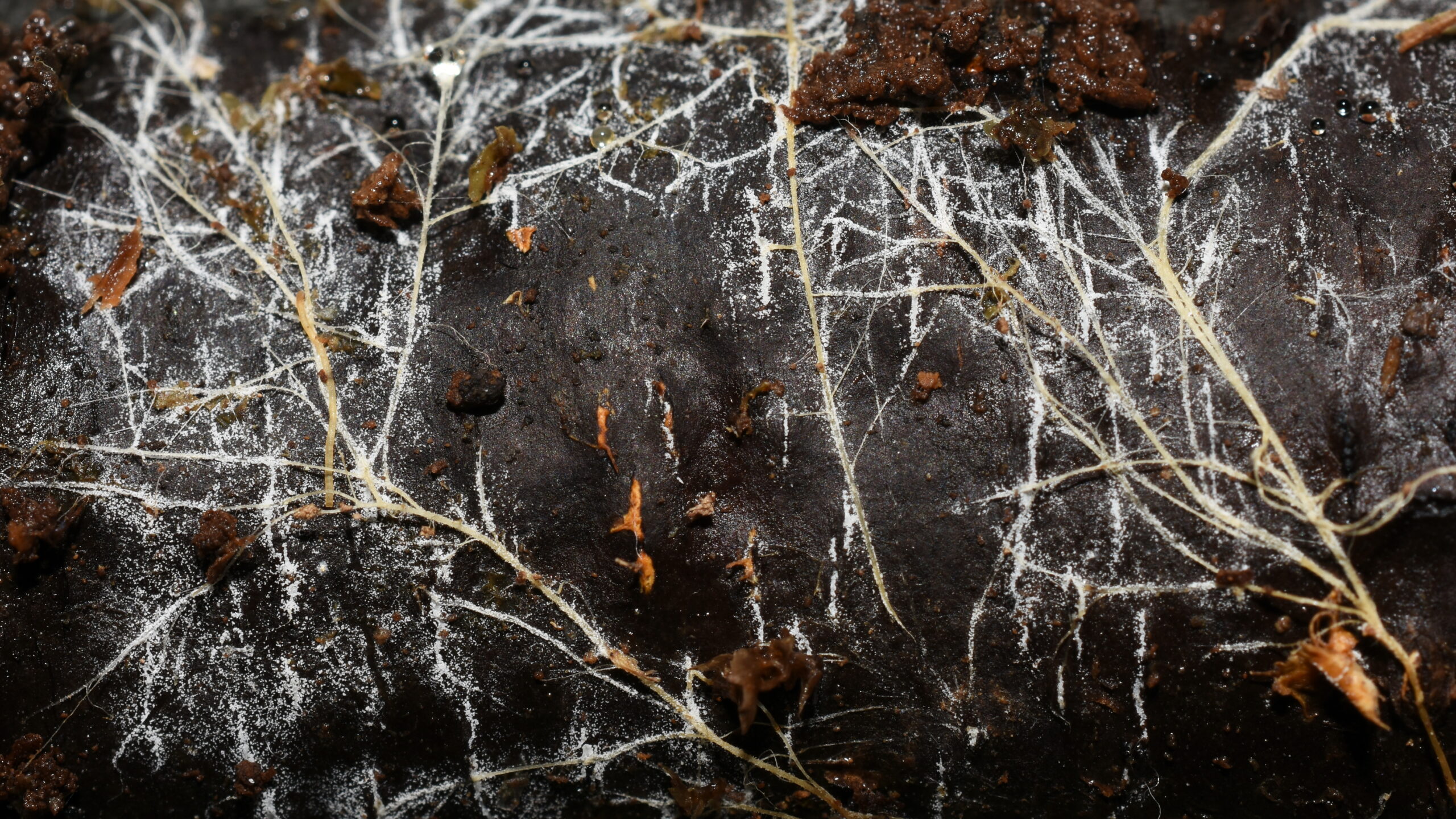
Scientists have produced a global estimate of living arbuscular mycorrhizal fungal networks, putting their combined length at 110 quadrillion kilometers. The study, published Thursday in Science, gives researchers a new way to assess underground systems that help feed plants and store carbon.
The work was led by the Society for the Protection of Underground Networks, or SPUN, a group founded to map mycorrhizal fungi. According to the study, if the fungal threads were laid end to end, they would stretch almost a billion times the distance from Earth to the sun.
Arbuscular mycorrhizal fungi live in close association with plant roots, trading nutrients such as phosphorus and nitrogen for carbon from plants. Previous research has estimated that these networks move about 1 billion tons of carbon underground each year, carbon that otherwise could add to atmospheric warming.
Researchers have long known that these fungi are linked to roughly 80 percent of plant species and occur nearly wherever plants grow, according to the study team. The new work tries to answer a different set of questions: how much fungal network exists, where it is concentrated and where it is being depleted.
Toby Kiers, SPUN’s executive director and co-founder and a study co-author, said the research shifts understanding from knowing the system exists to knowing where it is and how dense it is. James Bever, a University of Kansas ecology and evolutionary biology professor who was not involved in the study, told Inside Climate News that the findings help show how belowground organisms shape what happens aboveground.
How the map was built
The researchers began by reviewing earlier studies that included 16,000 geolocated soil core samples from ecosystems around the world. Those samples measured the length of fungal threads within a given amount of soil.
The team then used machine learning to build predictive global maps showing fungal network density. The model also highlighted places where the estimates remain uncertain and more soil data are needed.
Justin Stewart, an evolutionary ecologist at SPUN and the study’s lead author, said earlier work on fungal biodiversity could show which species were present, but not the physical structure of the underground network. Mycorrhizal networks are made of hyphae, living filaments thinner than human hair that carry nutrients and carbon between plants and fungi.
Because the filaments are long and narrow, Stewart said, they can reach soil areas that plant roots cannot. Under the right conditions, he said, that helps plants grow while placing carbon deeper underground.
To estimate the mass of the networks, the researchers worked with AMOLF, a research institute in Amsterdam, to measure fungal widths in the lab. They used a robot-mounted camera to record networks growing over time, then combined those measurements with the global length estimates. The study found the living networks weigh about five times as much as all humans on Earth.
Grasslands and croplands
The study found that fungal network density in croplands is about half the density found in wild ecosystems. It also found that wild grasslands contain about 40 percent of the world’s arbuscular mycorrhizal biomass.
Those grasslands face pressure, according to the researchers. They are among the least protected ecosystems and are converted to farmland at four times the rate of forests, raising risks for fungal networks that support plant life and carbon storage.
SPUN’s earlier research found that 90 percent of fungal communities worldwide are outside protected areas, and that some ecosystems, including deserts in the American Southwest, remain understudied. The new Science study covers only living arbuscular mycorrhizal networks; Stewart said dead fungal networks, which can also store carbon and add biomass, were not included.
The researchers said further work is needed to determine what is driving losses in mycorrhizal fungi and what those losses mean for ecosystems. SPUN plans to present the findings to policymakers at this year’s United Nations Climate Change Conference, COP31, as part of its case for considering fungal networks in climate and conservation decisions.
This story draws on original reporting from Ars Technica.