
Fossil hatchlings challenge tadpole model for first land vertebrates
A Science study says tiny fossils suggest early tetrapods developed as small adults rather than aquatic larvae.
By Hana Yoshida · Markets Reporter
3 min read
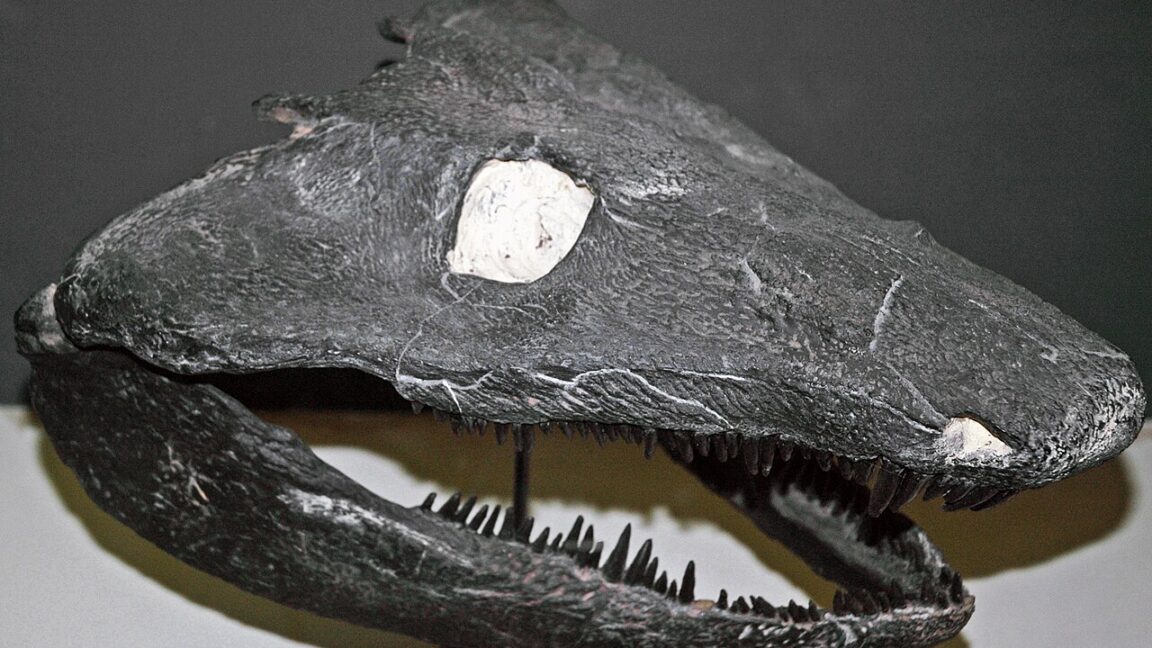
A new Science study reports that some early vertebrates near the water-to-land transition did not begin life as tadpole-like larvae. The finding challenges a long-running assumption that the first tetrapods used amphibian-style metamorphosis as they spread onto land more than 300 million years ago.
The study was led by Jason Pardo, a research associate at the Field Museum, and Arjan Mann, the museum’s assistant curator of early tetrapods. According to Pardo, biologists had often inferred an amphibian life cycle for early tetrapods because it seemed a plausible bridge between aquatic and terrestrial living, rather than because fossils had shown it directly.
The researchers focused on embolomers, an extinct group of large predators from about 300 million years ago. The animals had long bodies, big tooth-filled skulls and short limbs suited mostly to swimming, though the study describes them as capable of limited movement on land.
One key specimen, cataloged as FMNH PR 1082 at the Field Museum, had been in the museum’s collection for decades, Mann said. It was first identified as another kind of tetrapod because of its small size, but Pardo and Mann used modern imaging, including electron microscopy, to reclassify it as a newly hatched embolomere.
The specimen showed embolomere traits, including vertebral shape, tail spines and small fangs, according to Mann. The researchers also found an abdominal yolk reserve, indicating the animal had only recently hatched and had not yet fed.
Despite that early stage, the hatchling did not show external gills, which would be expected in a tadpole-like larva. Its bones also showed ossification, leading the team to conclude that it resembled a small version of an adult rather than an animal preparing for a dramatic metamorphosis.
More fossils showed the same pattern
The team then examined a second, smaller embolomere hatchling and found the same absence of external gills, according to the study. They also checked museum collections for young fossils from other early tetrapod lineages.
One tiny hatchling of Phlegethontia longissima, a limbless early tetrapod, had large eyes and a partly ossified jaw but no external gills, the researchers reported. Pardo and Mann also re-examined fossils once interpreted as larval lungfish and identified them as young megalichthyids, finned tetrapodomorphs that preceded embolomers by 20 million to 30 million years.
Some of the smallest megalichthyid specimens measured about 2 centimeters, and several were preserved together in the same concretion. The study says that grouping may indicate the animals stayed near one another after hatching.
Across the sampled lineages, the researchers found gradual bone development rather than the abrupt restructuring seen in many modern amphibians. Pardo said the fossils they examined did not show anything resembling a tadpole stage.
Metamorphosis may have come later
The finding changes how scientists may view amphibian metamorphosis, according to Pardo. Rather than representing an ancient holdover from the earliest land vertebrates, the tadpole stage may be a later amphibian adaptation to a particular way of living between water and land.
The study also suggests early hatchlings faced a tougher start than previously assumed. Without a separate larval niche, young embolomers may have shared habitat and food pressures with larger juveniles and adults, while their weak early limbs would have limited how far they could travel on land.
Pardo said the absence of a tadpole stage would have made life harder for these animals. The paper, published in Science with DOI 10.1126/science.aeb7635, argues that direct development may have been present before fully limbed land vertebrates became established.
This story draws on original reporting from Ars Technica.