
Europe’s heat waves sharpen search for cleaner air conditioning
Rising cooling demand is pushing Europe toward new AC technologies, but researchers warn buildings must first be designed to stay cooler.
By Hana Yoshida · Markets Reporter
4 min read
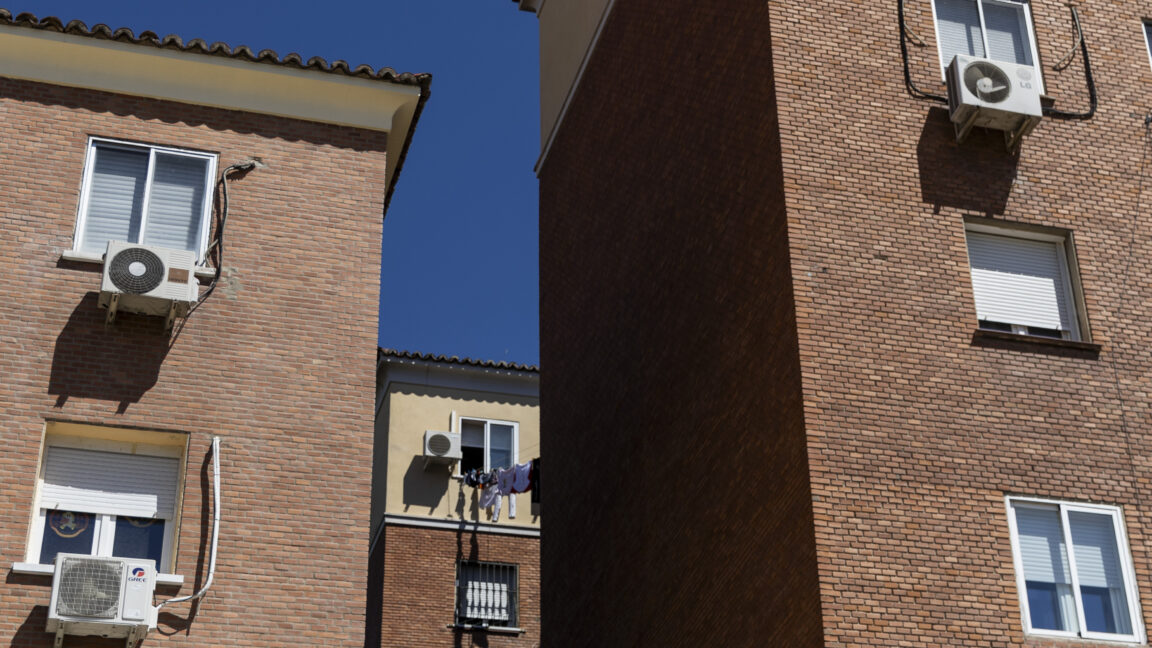
Europe’s hotter summers are turning air conditioning from a luxury into a public health and productivity issue. The International Energy Agency says cooling demand is rising worldwide and projects that two-thirds of households could have an air conditioner by 2050.
The shift is already visible during heat waves. Wired reported that shoppers in France rushed stores for fans and portable air conditioners in late June as temperatures rose above 40 degrees Celsius across parts of Europe.
Air conditioning remains far less common in Europe than in the United States. The IEA says about 20% of European households have home AC, while UK research puts the figure at about 4% in Britain; the US rate is roughly 90%, according to Wired.
The politics are heating up with the weather. Wired reported that Marine Le Pen has promised to expand air conditioning in France if her party takes power, while Britain’s Conservatives have said they would reverse net-zero rules limiting AC in new homes. Critics on the left argue that a broad AC rollout could favor wealthier households and deepen electricity demand.
Researchers cited by Wired say the need for cooling is becoming harder to dismiss. Air conditioning can help people sleep during hot nights, keep students attentive in overheated classrooms and protect older adults during extreme heat. A research group estimated in The Lancet that air conditioning prevented nearly 200,000 premature deaths among people over 65 in 2019.
Europe’s buildings face a hotter climate
Nicole Miranda, a senior lecturer in engineering at the University of Oxford, has studied how warming could affect cooling needs. Her research indicates that countries including the UK, Switzerland, Norway and Finland could see some of the largest relative increases in heat exposure and cooling demand if global temperatures reach 2 degrees Celsius above preindustrial levels.
The UK’s Climate Change Committee has warned that more than 90% of existing homes could overheat during severe heat waves by mid-century. Wired reported that northern European buildings designed to hold warmth in winter can trap dangerous heat in summer, while older southern European design features such as stone walls, white façades, blinds and small windows are under growing strain.
Conventional air conditioning carries climate costs. Our World in Data estimates that electricity used for AC accounts for about 3% of global greenhouse gas emissions, slightly more than aviation. Fabian Voswinkel, an energy-efficiency policy analyst at the IEA, told Wired that cooling is expected to become one of the largest sources of electricity demand growth, alongside data centers.
Refrigerants are another problem. The European Union adopted rules in 2024 to gradually phase down fluorinated gases, which can have far higher warming potential than carbon dioxide if they leak. Voswinkel said air conditioners and heat pumps using those gases will be barred from sale in Europe in coming years, while alternatives such as propane and ammonia bring flammability or toxicity concerns.
Solid-state cooling draws investment
Those limits are driving interest in cooling systems that do not use conventional refrigerants. Paul Motzki of Saarland University in Germany leads an EU-funded consortium studying nickel-titanium systems that cool when the metal is stretched and released. According to Wired, the group is testing a lab prototype and hopes to place the technology in new buildings within the next few years.
Other startups are pursuing different solid-state approaches. Mimic Systems in Brooklyn is testing a semiconductor-based heat pump in a Vancouver apartment, while Magnotherm, a Technical University of Darmstadt spinoff, plans to test magnetic cooling in a German supermarket chain. Barocal, a University of Cambridge spinoff, is working with plastic crystals that release heat under pressure and recently raised $10 million in seed funding, according to TechCrunch.
Lindsay Rasmussen of Third Derivative, a climate-tech accelerator founded by the Rocky Mountain Institute, told Wired that these technologies remain early and unproven at scale. She said progress will depend on capital and partnerships, while larger manufacturers such as Daikin and Samsung are watching emerging cooling technologies.
Miranda and Voswinkel argue that Europe should follow a cooling hierarchy: keep buildings from overheating first, then add active cooling where it is most needed. Their examples include trees, shade, reflective materials and natural ventilation, with priority for schools, hospital wards and care homes. Voswinkel also pointed to Paris, where chilled river water is being distributed through underground pipes to cool public buildings after an expansion tied to the 2024 Olympics.
This story draws on original reporting from Ars Technica.