
Cruz and Wyden propose bill targeting federal pressure on speech platforms
The bipartisan JAWBONE Act would let people sue federal officials accused of coercing broadcasters, tech platforms or AI services to alter speech.
By James Whitfield · Staff Writer
4 min read
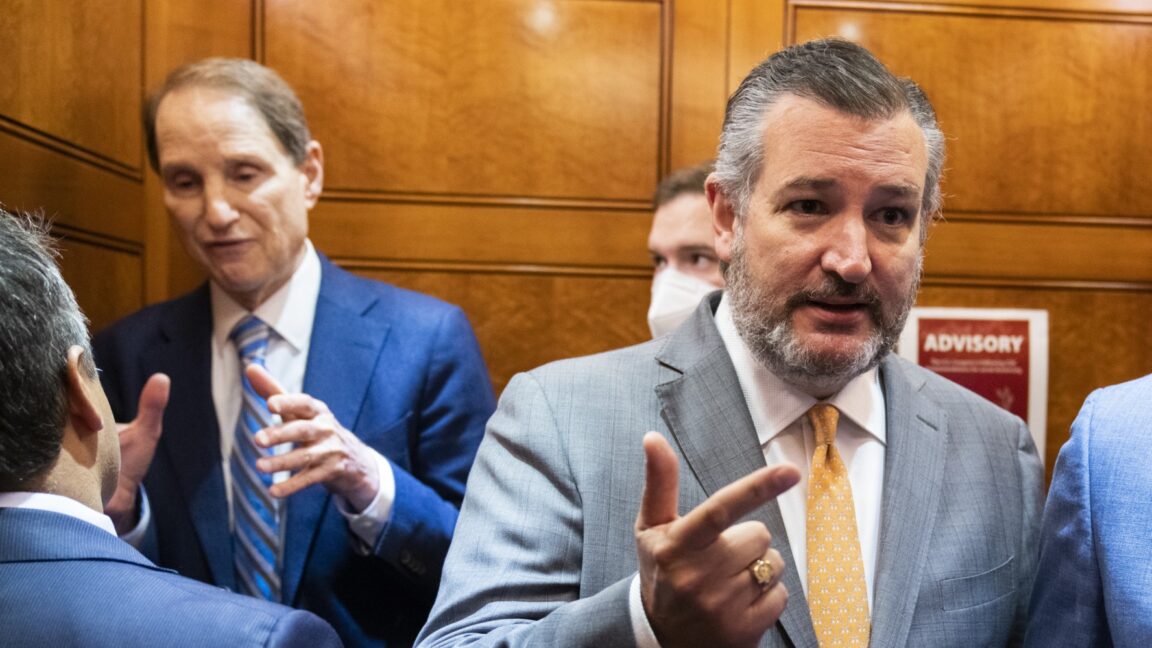
Sen. Ted Cruz and Sen. Ron Wyden introduced a bipartisan bill aimed at curbing federal pressure on companies that carry speech. The proposal matters because it would create a way for people to seek damages when officials try to push broadcasters, online services or AI providers to change or remove protected expression.
The bill, called the Justice Against Weaponized Bureaucratic Overreach to Networked Expression Act, would bar federal agencies and employees from coercing or attempting to coerce covered companies over content decisions. Cruz, a Texas Republican, and Wyden, an Oregon Democrat, described the practice as “jawboning” in a joint announcement.
According to the senators’ announcement, jawboning occurs when the government pressures private companies to censor speech protected by the First Amendment. The legislation would apply to broadcasters, social media and other online services, and speech-enabling artificial intelligence systems.
Private lawsuits and state enforcement
The JAWBONE Act would create a private right of action for people whose speech is affected by alleged government pressure. The senators’ bill summary says plaintiffs could seek compensatory damages from a government agency or employee even if the pressure did not ultimately cause a company to remove or change content.
The summary says current precedent generally requires plaintiffs to show that coercion succeeded in producing a content change. It also says current remedies are limited to injunctions to stop ongoing or future violations, while the bill would permit financial damages after the fact.
State attorneys general also could enforce the measure through civil actions, according to the proposal. The bill would allow compensatory damages but not punitive damages, which would limit the kinds of financial awards available.
The Foundation for Individual Rights and Expression said in a statement that the bill would allow Americans to sue federal officials who coerce social media companies, AI platforms or broadcasters to change or remove protected speech. FIRE said federal officials who act “willfully and wantonly” would personally pay damages, while the government would pay in other cases.
Trump and Biden examples cited
Cruz and Wyden each pointed to different recent examples of alleged government pressure. Cruz said in the senators’ release that the Biden administration used the Cybersecurity and Infrastructure Security Agency to pressure major technology companies over Americans who opposed vaccine mandates and made claims about election fraud.
Wyden said in the same release that the “most blatant example” was President Donald Trump threatening cable companies over late-night shows he disliked. Wyden added that jawboning is not new or limited to one political party.
A spokesperson for Wyden told Ars Technica that the bill would also cover situations such as the Trump administration pressuring app stores to remove apps including ICEBlock. The measure could also apply to pressure on television networks and broadcasters, including actions involving Federal Communications Commission Chairman Brendan Carr, according to Ars Technica.
Disclosure portal and definitions
The bill would require agencies to submit certain communications with social media companies, AI companies and broadcasters to a portal, according to the bill summary. The portal would include detailed public summaries and full access for Congress.
The summary says the disclosure system is intended to help people prove when their rights were violated. It says people may otherwise struggle to show jawboning happened because government communications with private companies can occur out of public view.
The bill text says broadcasters, online services and speech-enabling AI systems are important channels for information and expression, and that they have a right to independent editorial judgment. It also says such entities can become convenient “chokepoints” for government efforts to target disfavored speech and information.
The proposal defines broadcasters to include FCC-licensed stations and national television networks that provide programming to affiliates. It defines coercion to include taking, threatening or implying harmful, hostile or unfavorable action. The ban would include exceptions for lawful investigations, enforcement of federal or state law, and actions taken under a warrant.
Civil liberties groups back the bill
The bill has support from groups across the political spectrum, including the American Civil Liberties Union, Americans for Tax Reform, FIRE, the Knight First Amendment Institute at Columbia University and Public Knowledge.
ACLU Senior Policy Counsel Jenna Leventoff said the government has repeatedly used its authority to push private actors into censorship and said the bill would protect First Amendment rights. Grover Norquist of Americans for Tax Reform said the bill would create recourse for victims of indirect censorship.
The Knight First Amendment Institute said the bill would provide accountability when officials unlawfully coerce private intermediaries to suppress protected speech. Public Knowledge said the measure could address conduct by Carr toward broadcasters and Trump administration efforts involving social media.
This story draws on original reporting from Ars Technica.