
American Diabetes Association apologizes after scientists removed from meeting
The group’s CEO said it will order an independent review after five researchers were ejected while sharing an editorial critical of Trump policies.
By Hana Yoshida · Markets Reporter
3 min read
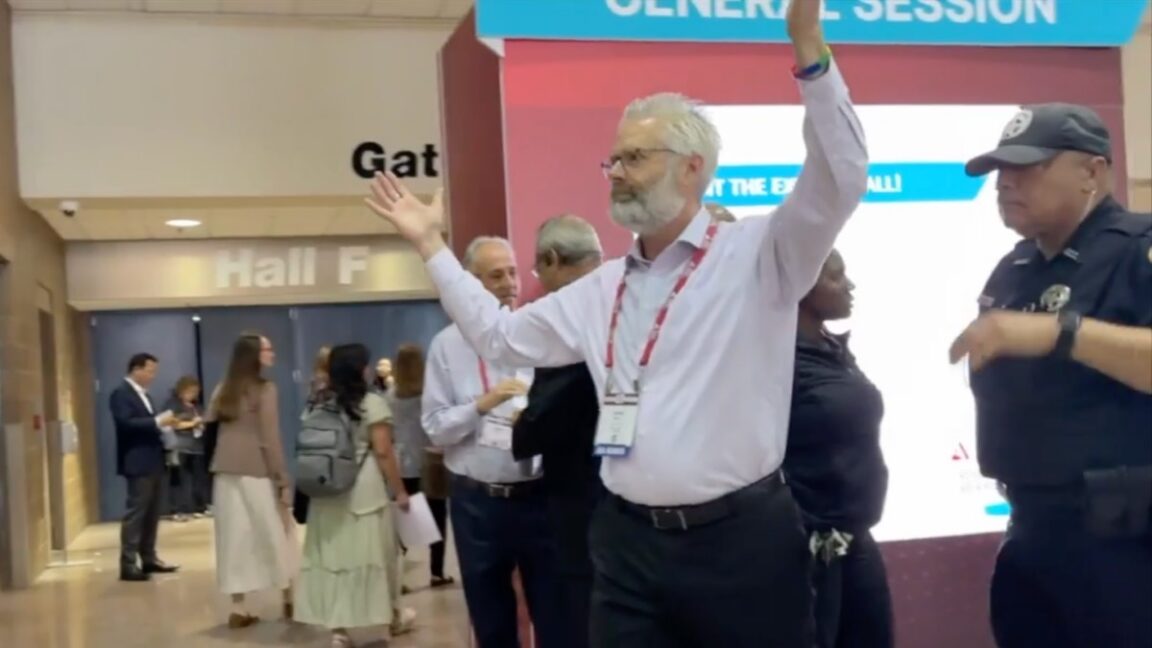
The American Diabetes Association has apologized after five diabetes researchers were removed from its annual meeting in New Orleans while distributing an editorial criticizing the Trump administration’s effect on biomedical research. The apology followed days of anger from scientists, resignations by ADA leaders and public letters demanding accountability, according to Ars Technica.
ADA CEO Charles Henderson posted a video Wednesday apologizing personally to the five scientists and to the broader diabetes research community. He said the organization would commission an independent review of the incident, including the policies, procedures and decision-making that led to the removals.
The five researchers were handing out copies of an April editorial published in Diabetes Care, the ADA’s own journal, according to Ars Technica. The editorial criticized the Trump administration over what its authors described as damage to biomedical research.
Among those removed were Steven Kahn, a University of Washington medicine professor, editor-in-chief of Diabetes Care and co-author of the editorial, and Desmond Schatz of the University of Florida, a former ADA president. Henderson also named Aaron Kelly of the University of Minnesota, Justin Ryder of Northwestern University and Irl Hirsch of the University of Washington in his apology.
The researchers distributed the editorial outside the conference’s opening address, Ars Technica reported. The speech had been scheduled for Jay Bhattacharya, the National Institutes of Health director under Trump, but he canceled shortly before the event, and senior NIH official Rick Woychik spoke instead.
Police escorted the scientists out within minutes, according to Ars Technica. The report said officers took their conference badges, threatened arrest if they returned and shoved at least one researcher. Louisiana State Police later told media outlets that they acted at the ADA’s request, and the organization then barred the five scientists from the rest of the meeting.
Henderson said in the video that what happened did not reflect his values and that he would work to bring the community together again. He also said the association wants to prevent similar incidents from happening again.
The apology marked a shift from the ADA’s earlier public explanations. MedPage Today reported that an ADA media team initially said the attendees had been escorted out by event security because their conduct did not comply with the meeting’s code of conduct.
Science reported that the association told members Saturday the scientists were removed because they lacked prior approval to distribute materials, and not because of the views in the editorial. In a Sunday statement, the ADA said that as a 501(c)(3) nonprofit it had to maintain a strictly nonpartisan environment at events while working across party lines to advance its mission.
Ars Technica noted that Internal Revenue Service guidance does not bar nonprofit leaders from expressing political views in a personal capacity or from speaking about major public policy issues.
The incident spread through social media after accounts and video circulated, according to Ars Technica, and traffic to the editorial rose. Several ADA leaders resigned during the backlash, MedPage Today and Science reported.
A letter signed by more than 40 ADA officials called the removal “outrageous” and described the association’s explanations as “unpersuasive” and “fatuous nonsense,” according to the letter cited by Ars Technica. The signers demanded an immediate public apology and a review of the episode.
A separate open letter titled “Shame on You” also called for an apology and had collected more than 6,500 signatures by the time Ars Technica published its report. The letter said the ADA appeared to endorse the administration’s approach to science and attacks on free speech, a charge Henderson’s apology sought to address by promising an outside review.
This story draws on original reporting from Ars Technica.