
Yeast latecomer killing may persist through feast-and-famine cycles
A model and yeast comparisons suggest changing nutrients can preserve a costly toxin strategy over hundreds of millions of years.
By Lucas Ferreira · Science & Environment Writer
3 min read
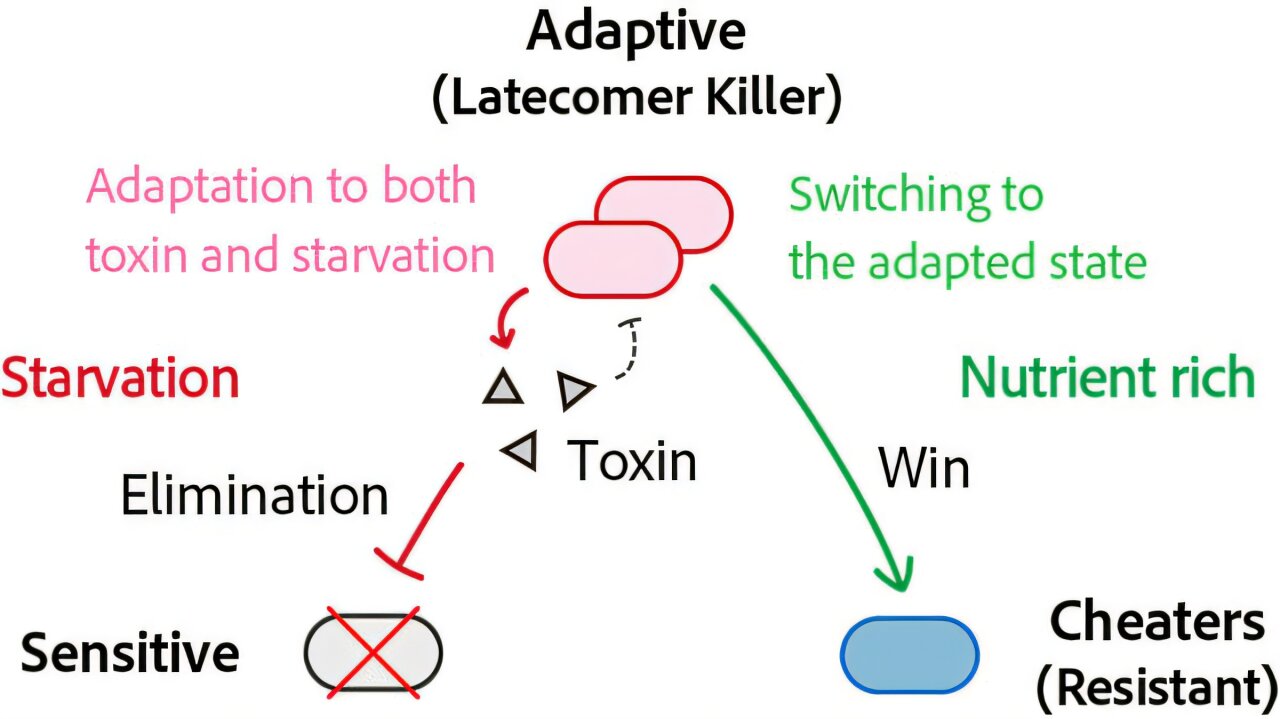
Yeast latecomer killing, a toxin-based strategy that can kill genetically identical rivals, may have survived for hundreds of millions of years because yeast environments shift between plentiful food and starvation, according to researchers at the Institute of Science Tokyo. The finding matters because the behavior appears costly enough that standard evolutionary expectations would predict its loss.
The work was led by Tetsuhiro Hatakeyama of the Earth-Life Science Institute at the Institute of Science Tokyo and published in the Journal of the Royal Society Interface. The team combined population dynamics theory with comparisons across yeast species to study why the system persists in some lineages.
What is yeast latecomer killing?
Latecomer killing occurs when yeast cells facing low glucose release toxins into their surroundings. Cells that have already adjusted to the toxins can survive, while later-arriving cells that have not adapted can die, even if they are clones of the toxin-producing cells.
The Institute of Science Tokyo said the puzzle is old and sharp: budding yeast and fission yeast split roughly 300 million to 600 million years ago, yet both retain the strategy and use the same autotoxins. That raises the question of how a costly system could remain in such distant species for so long.
The cost is central to the problem. Producing toxins takes resources, and maintaining resistance also carries a burden, according to the researchers. Evolutionary theory would suggest that cells keeping resistance while avoiding toxin production could gain an advantage over toxin producers and eventually drive the system out.
How changing nutrients support the toxin strategy
To test when the system could last, Hatakeyama’s group built a population dynamics model of yeast under different environmental patterns. The model did not support long-term stability under continuous abundance or continuous starvation, according to the study.
Stability appeared when nutrient-rich stretches were long and starvation periods were shorter. During food-rich phases, toxin-adaptation cells acted much like toxin-sensitive cells, while resistant nonproducers still paid the cost of resistance and declined in the population, the team reported.
When starvation returned, toxin-adaptation cells could produce and withstand toxins, giving them an advantage over toxin-sensitive cells. In that cycle, the researchers said, abundance reduces the “cheater” cells that avoid toxin production, while starvation reduces sensitive cells, allowing the costly strategy to endure.
“The surprising result was that neither constant abundance nor constant starvation could maintain this system,” Hatakeyama said in the Institute of Science Tokyo statement. “Only when the environment switched between the two did the toxin-adaptation strategy become evolutionarily stable.”
What yeast lineages showed
The team also examined yeast relationships across a phylogenetic tree. Budding yeast and fission yeast both showed latecomer killing and used the same autotoxins, while two species closer to budding yeast did not show clear evidence of the behavior, according to the researchers.
That pattern suggests the presence or absence of latecomer killing may reflect a species’ long-term ecological history, not only how closely species are related. The researchers said fluctuating environments can preserve biological strategies that would be unlikely to survive under one fixed condition.
The study predicts that similar toxin-adaptation systems should be more common in microorganisms that usually live with nutrients available but sometimes face starvation. The Institute of Science Tokyo said environmental surveys and laboratory evolution experiments could test whether comparable systems exist in bacteria and archaea.
This story draws on original reporting from Phys.org.